Celebrity Interview – Steve Orme Interviews KYM MARSH
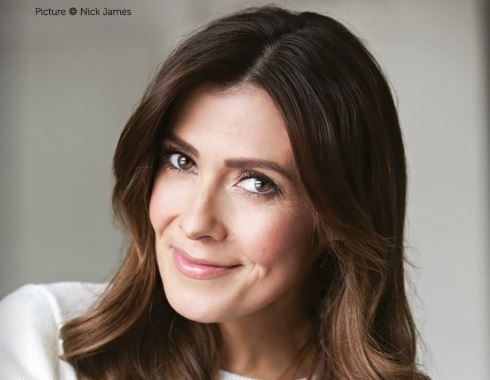
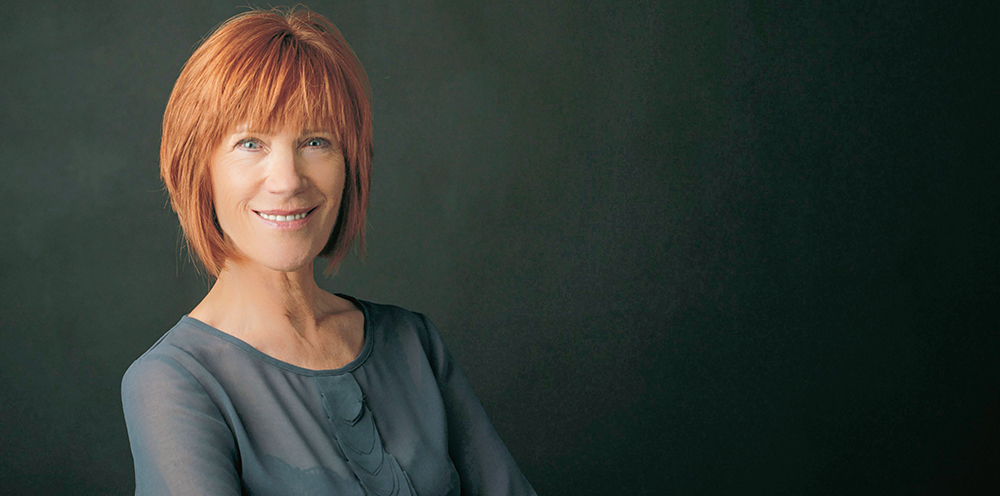
Kym Marsh is going through a stellar phase of her career, what she calls her “villain era”. And she’s about to undertake possibly her most challenging role to date. After playing Alex Forrest in a stage tour of Fatal Attraction – the character can alternatively be described as a villain or a victim – she took on the role of Cruella de Vil in 101 Dalmatians: The Musical which toured the UK and Ireland last year. Now she’s really excited to be appearing in Single White Female, an updated version of the 1992 thriller which “blends psychological tension and eerie intimacy, creating a chilling portrait of obsession and identity”. Kym came to prominence as a singer with the band Hear’Say who won the television talent show Popstars in 2001. After pursuing a solo career she went into acting, appearing in Coronation Street for 13 years. On stage she’s been in musicals as well as dramas. So why did she want to be involved with Single White Female? “Who wouldn’t want to? What an absolute classic. It stemmed from when I was in Fatal Attraction. I got such a buzz from playing the villain. The idea of Single White Female was floated and it’s finally coming to fruition. “It’s never been done on stage before. It’s been rewritten and reimagined by Rebecca Reid who’s a fantastic author and it’s been updated so we’re seeing it more in the modern day. The way it adapts to now is actually really brilliant.” Kym reveals she didn’t have to audition for the role – the producers wanted her in the show because of her performance in Fatal Attraction. She explains that the way audiences view stories now is very different to how they looked at them in the 1990s. “We live in a very different world, a different place. We don’t speak the same language. With Fatal Attraction it was very much a man’s world at that point and the woman was the villain of the piece. But actually the man was just as culpable in a lot of ways. He still had a part to play in what happened and yet he walked off into the sunset and everything was fine for him. “I think the characters I play are very damaged individuals, shall we say, and I think it will be the same with this one.” Kym explains the plot of Single White Female: “Allie is a recently divorced woman, she’s a single parent, she’s trying to get ahead in the world but she’s struggling for money, so she advertises for a lodger. “In walks my character Hedra (also known as Hedy) who comes in to save the day, or so it would seem. Life becomes intertwined and things get complicated. “Hedra is certainly a very multi-faceted individual. I’m looking forward to playing that part because there are lots of layers to peel back.” Kym who has been married three times and has three children is quick to dispel any thoughts that she brings plenty of her own life experience to the role. “I’m nothing like Hedra at all! There’s not much similarity in me and her. I think that’s the beauty of playing these characters that are so far removed from you – you have to dig deep and try to find ways in which you can empathise. “There are obviously lots of sides to her that are nowhere near me. It’s going to be a challenge, that’s for sure.” When Kym saw the film Single White Female in the cinema she was “totally gripped” by it and didn’t imagine she would be appearing in the world premiere of the stage production. Fans of the film will be delighted to know the stilettos which played such a prominent part on the big screen haven’t been booted out. More than 30 years after Jennifer Jason Leigh played Hedra in the film, Kym is able to play the character in a fresh way. “The actual story is different. What Hedy does for a living in the movie is not what Hedy does for a living in the play. So there are only certain aspects of the character that I can bring, which is why it’s so exciting because there’s a clean slate for me. It’s a great opportunity to be able to bring something new.” The tour of Single White Female will start in January and the second venue will be the Theatre Royal in Nottingham. At the moment the tour is scheduled to continue until the middle of June, something that’s not fazing Kym. “I’m used to touring. I’ve toured for the last three years with one thing or another. This is probably the longest thing I’ve done on a tour. But I wanted to do the whole tour because it’s something I’m quite passionate about. “Living out of a suitcase is always a challenge. But I’m away for five days and at home for two, so there are a lot of similarities with ordinary, everyday life, I guess. And I’m never that far away from home. No matter where I am I could get back if I wanted to. “I’ve also got a very supportive family network. My daughter will come and stay with me when she’s on school holidays. She’s nearly 15 now. “There are also a lot of venues where I can commute from home, so I’ll be staying at home when I can.” Kimberley Gail Marsh was born on 13 June 1976 in Whiston, Merseyside. She went to stage school in Liverpool before becoming a session singer. When she auditioned for the show Popstars she was chosen with Danny Foster, Myleene Klass, Suzanne Shaw and Noel Sullivan to be in the group Hear’Say. Their first single Pure And Simple went to number one. After less than two years the band split up. Kym made her television acting debut in 2005 in an episode of the BBC One series Doctors and also appeared in the Channel 4 soap
Celebrity Interview – Griff Rhys Jones: The Cat’s Pyjamas
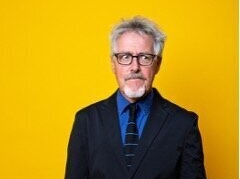
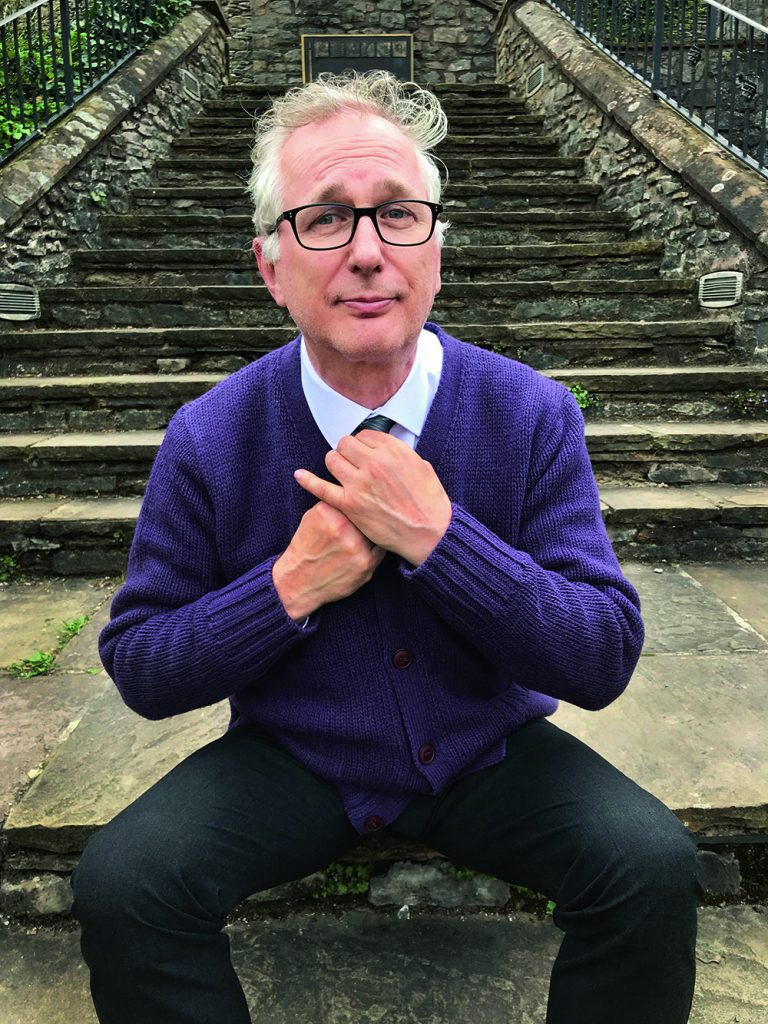
‘The jokes come faster than the rapids on the River Tay’ The Guardian Multi award-winning comedian, writer, actor, and television presenter Griff Rhys Jones is set to embark on a national stand-up tour this autumn with the second leg of his sell-out 2024 show ‘The Cat’s Pyjamas’. Sharing witty observations and rambling comic stories, Griff’s funny anecdotes have covered an astonishingly diverse range of subjects: from TV travel, his childhood, Welsh family, age, fraud, late night trains and nostalgia to the TikTok generation, crocodile smuggling, and opal noodling in Australia. Questions and improvised interaction with the audience mean the show varies from night to night. And takes him from adventures, holidays, dog sitting, burning boats, drink and anger-management, to meetings with rock celebrities and royalty. Wherever his associations wander. GRIFF RHYS JONES: THE CAT’S PYJAMAS What can fans expect from the show? It’s the fourth show I’ve done where I tell stories from my life – about myself and things I’ve been involved in. Trouble is, some of the stories get longer and longer and longer. I start out with list of about 20 and end up with a list of about two. If you come to see me early in a tour you tend to get all the stories. If you come late in the tour, a lot of them have gone by the wayside. There was one show on one tour where I was on stage at the Sherman Theatre in Cardiff, talking about my family and things like that. I looked into the wings and my stage manager was tapping his watch signalling the end of the first half and I hadn’t even properly started the show at all by that point. What’s the significance of the title The Cat’s Pyjamas? I just like the sound of it. Funnily enough my daughter said ‘You can’t call it that’ and when I asked her why not she said ‘Because it means you have to be good!’ But as I say, I like how it sounds. Also ‘the cat’s pyjamas’ is a very interesting phrase and I might talk about how it started in the 1920s in New York. Apparently there was a famous society hostess who used to take her cats for a walk along Fifth Avenue and she would wear pyjamas when doing so. But really what I’m saying at the start of the show is that it’s you the audience who are the cat’s pyjamas. I start with egregious flattery of my audience. After all these years, do you still get nervous before going on stage or indeed during a performance? I get nervous in the early stages because I’m wondering what I’m going to be saying once a tour starts. It’s never a walk in the park. It’s fun if it’s more of a walk on a tightrope. I did work with one stage manager who said to me ‘It’s amazing because what you do, Griff, is different every night’. After one show he told me ‘You left out the big punchlines tonight’. Some nights I’d be so keen on moving on to something else that I never got to the resolution of the very first story that I started, which left people wondering what on earth was supposed to be happening. Some people go on stage and they perform exactly what they’ve written every night. I’m sure that would be a much better way of doing it but I don’t always do it myself. I get sidetracked by talking about things like what happened to me in the car park on the way to the theatre. I once had a Birdman moment where I went to get a shirt out of the car and I couldn’t get back into the theatre unless I walked in with the audience. A woman turned to me and said ‘I hope you’re going to be good tonight’ and I replied ‘Well, I’ll do my best!’ Isn’t throwing it open to audience questions asking for trouble? Not really because I put up a list of topics for people to ask me about, although I don’t know if I’ll stick with it. That’s in the second half of the show and often it starts with people asking me about Not The Nine O’Clock News, which was so long ago can’t I can’t remember it, let alone answer questions about it. And if you play a really big theatre you have difficulty actually hearing the questions and you have to clamber down off the stage to find out what the question is. But I do put up a list which I scribble out in the dressing room before I go on and it’s a list of things that are currently on my mind. Is there a question you definitely don’t want to be asked? Probably but I don’t know quite what they’d be until I’m asked them. But it’s unlikely because what I usually do is sort of sidestep it by saying ‘I can’t answer that question’. Sometimes it might remind me of something else and off we go. One time I got into talking about Africa with the intention of moving on to killer bees. I got so bogged down in the story of the railways in Africa, which is the story of colonialism. When I looked at my watch I realised I’d taken the entire second half of the show just trying to explain colonialism. I’d been wondering why I hadn’t been getting as many laughs as usual. Is comedy harder in the current woke climate? I get asked that a lot and the honest answer is I don’t know because I don’t play the comedy scene. I don’t go to Edinburgh and all that stuff. So I honestly have no idea. It’s never affected me in any way whatsoever. With the idea that I might be canceled, for the most part my audience probably don’t know what being canceled means. I do tell quite a lot of jokes but
Celebrity Interview – Mark & Lard
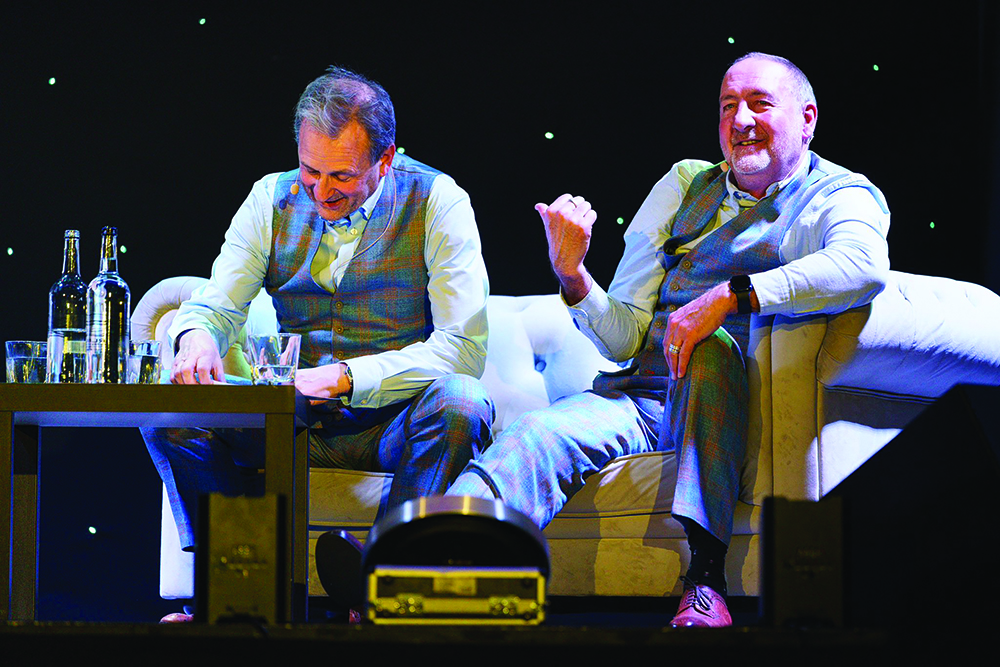
by Steve Orme Mark Radcliffe and Marc Riley presented various weekday shows on BBC Radio 1 from 1991 to 2004. Now they are on the road with their show Carry On – An Evening With Mark and Lard which is basically a series of clips from their afternoon programme. They will stop off at both Buxton and Nottingham over the next few months. Mark and Lard, both northerners, first teamed up in 1991. Radcliffe was a radio producer who began presenting specialist shows. Riley, formerly a guitarist with post-punk band The Fall, was a record plugger and tried to get Radcliffe to play his records. Radcliffe eventually took on Riley as his sidekick. Marc reckons getting kicked out of The Fall was the best thing that’s happened to him in his working life. “Being in The Fall was quite hard work. It was an honour and a privilege and I absolutely loved the band. But if I hadn’t got kicked out, then none of the rest of the things that have happened to me over the last 30 years would have happened. “The Fall was a massive thing for me. I’m still very proud of it but if I’d been in there for 20 years I think I would have been an emotional and nervous wreck instead of being on the radio to ten million people.” When Mark and Marc presented Hit The North they were allowed to play their own choice of records. They were snapped up by Radio One and given “the graveyard shift”, as it’s known in the industry – broadcasting from 10pm until midnight. Again they picked all the music which featured the likes of Oasis, Blur and Nick Cave. That led to their being given the breakfast show on Radio 1 after the departure of Chris Evans. They lasted only eight months – the shortest of any presenter in that time slot. “It was a massive culture shock,” says Marc, “because not only was the audience massive and not really used to us, we weren’t used to working at that time of day. It was awful for everybody. “We also had to play nothing but anodyne music that we didn’t like at all. It was a well-paid job, the profile was very high but we failed. “Then we went to the afternoon show which was hugely successful which is how we’re in the position now to be able to tour the country and get big audiences who basically want to see the afternoon show. The tour has to fit around the anarchic duo’s other work. Mark Radcliffe presents the Folk Show on Radio 2 on Wednesdays and a two-hour show with Stuart Maconie on 6 Music on Saturdays and Sundays. Marc Riley hosts an evening show on 6 Music from Monday until Wednesday which features sessions by artists that he chooses. Their live show has proved popular, with several dates selling out. “We start the show off by recounting the fact that we’re treading the same boards as Laurel and Hardy and Charlie Chaplin,” says Marc. “It’s mind-blowing really, an absolute privilege to be able to play those places.” Mark Radcliffe tries to put his finger on how the live gig works: “It’s not a resumption of the show, it’s the resumption of a friendship between Marc and I which isn’t to say we fell out. “We went on our separate paths for a long time but what we’re doing live is more akin to conversations we would have off air and in the pub.” Marc Riley adds his thoughts: “You don’t need two people to present a radio programme – it’s just largely music. But the relationship we had on air was largely about making each other laugh. “That’s what the audience are coming back to see and hear. A lot of them know the clips that we play in, they’re aware of the characters and the punchlines but they still laugh like an open drain at the end of it. We’re having a good laugh. Not every show is the same.” As well as presenting, Mark and Lard created a spoof rock band called the Shirehorses who released two CDs. Mark turned down Marc’s suggestion that they should resurrect the band – but when Marc pointed out it was the 20th anniversary of Mark and Lard’s last show, they agreed to do a couple of gigs. It soon became clear there was a big demand for their live show. So why has it taken them 20 years to stage this tour? Mark Radcliffe points out they were doing other things. When they started Mark was single while Marc Riley was married but didn’t have children. “We were very different people then in a different world,” says Mark. “We went to the pub and talked about things and made each other laugh. By the time the show finished I was married, we both had children and we didn’t live as close to each other. “I got to the point where I didn’t want to do it any more. You change as a person. A new Mark and Lard show could only be disappointing for fans of the old one. A lot of it was stupid and puerile. “We started together 30 years ago. I just don’t think it’s credible for two blokes in their sixties to be those people. “It’s a very different thing going on stage and talking about it in retrospect. Looking back and celebrating it, we do call the show an exercise in celebration, nostalgia and pension pot enhancement. That’s honest but accurate.” Mark Radcliffe will turn 67 at the end of this month and Marc Riley is 63. Neither is worried about the BBC being ageist and getting rid of them. “I don’t think you could accuse Radio 2 of being ageist,” says Mark. “Tony Blackburn’s on and he’s in his 80s. “I’ve been working in radio since 1979 so I can hardly complain about anything. “Mark and Lard
Celebrity Interview – Kiki Dee
There are few opportunities to see a genuine superstar performing in Derbyshire. One appearing at an intimate venue is even rarer. But Kiki Dee who is coming to Belper this month is no ordinary superstar. Kiki has done virtually everything in the music business. She secured her first recording contract when she was 16, was the first female UK singer to sign for Tamla Motown and her duet with Elton John, Don’t Go Breaking My Heart, went to number one both here and in the USA. For the past 30 years she’s been performing with English guitarist of Italian parents Carmelo Luggeri. Their eclectic mix of old and new songs interspersed with numbers by other great artists is proving hugely popular with audiences. Kiki is still in great demand, performing in front of several thousand people on Elton John’s farewell North American tour and being supported by none other than rock legend Robert Plant at a small venue in Birmingham. She says her show with Carmelo is not what a lot of people expect: “Although I’ve been working with Carmelo for 30 years now – which is hard to believe because it’s half my working life – it’s quite forward-looking. “For example, we do a slowed-down version of Don’t Go Breaking My Heart. It’s fundamentally a semi-acoustic show. We’re quite dynamic. We do I’ve Got The Music In Me and stuff like Amoureuse and some covers as well as original material.” She agrees that some of her well-known songs take on a new quality when they’re done acoustically. “That was the reason Carmelo and I started working together. I’d done the thing about trying to get in the charts and I just more or less wanted to do what my heart told me. “I enjoy singing Don’t Go Breaking My Heart in a slow way because you hear the lyrics differently. You really need a full production to do it in the original way.” Kiki laughs when she points out that Carmelo doesn’t try to be Elton John and doesn’t sing at all: “He said to me when we first met ‘I don’t want to sing Elton’s part!’ He’s very good at arranging songs, so we do quite an unusual version of Running Up That Hill by Kate Bush. “Carmelo is a really great guitarist and producer. We’ve done four albums and a couple of live ones over the years.” He’s worked with huge names including Bill Wyman, Julian Lennon, Billy Connolly, Andy Williams and Ralph McTell. Kiki and Carmelo met when the late Steve Brown, who had a big hand in Elton John’s early career, got them together for a recording session. Kiki pays tribute to Steve who ran Rocket Records. “I’d done the pop thing. The early days were about trying to make it. Of course what you realise is when you do make it, that’s when the work starts. “I’d also done musical theatre – I did Blood Brothers for a long time. Steve was a very open-minded, creative man. He knew that Carmelo and I were both moving on and trying to do something different. Our partnership was a natural progression. “We’ve had guys say to us ‘my wife dragged me along to the show and I’d no idea what it was going to be. I really enjoyed it.’ I feel quite pleased in a way that we’re still moving on.” Pauline Matthews was born on 6 March 1947 in Bradford. She began her recording career as a session singer, providing backing vocals for Dusty Springfield among others. She changed her name to Kiki Dee when she signed as a solo artist to Fontana Records. She joined Tamla Motown but it wasn’t until she signed with Elton John’s Rocket Records that she became a household name. Although she enjoyed working with Motown, she didn’t know what to do next, so she called the label’s UK music manager John Reid who was just about to become Elton John’s manager. “It was a fluke,” says Kiki. “He said ‘we’re starting a label. Would you like to meet Elton John?’ He was beginning to make it quite big then, in 1972. I said I would love to. “I think I would have done okay if I hadn’t met Elton but you have to take advantage of these moments in your life. I’m always grateful to John (Reid) for introducing us.” Kiki explains that when she started in the music business she was ambitious despite her shortcomings. “I wasn’t incredibly confident and pushy but I had this deep-down desire to see the world and do something because my parents never got those opportunities. “I’m very much a glass-half-full person. I appreciate what I’ve done. I could have had a bigger career, I could have been a rock star with a big house and smart cars. But I’ve discovered that I enjoy normality – I can do normal things. I don’t have to put my Kiki Dee hat on all the time. “I’ve just had a weekend with some friends in Oxfordshire, just enjoying life as much as possible. I’ve got some great family around me. I’m very grateful.” Kiki is respected throughout the music industry and recounts the story of how she worked with former Led Zeppelin lead singer Robert Plant about four years ago. “He was starting a new band called Saving Grace which is now established. He rang up and asked if he could support us in a small venue in Birmingham, his neck of the woods. We couldn’t believe that Robert Plant was supporting us! “It was because they didn’t have quite enough material for Saving Grace to go out on their own. We were so flattered. I like artists who move forward. I respect Robert for always trying new things.” Although Kiki likes moving forwards, her fans will be delighted to know all the material she recorded in her early days in the business is now available. The Demon Music Group is offering it on
Celebrity Interview – Billy Ivory
Imagine you’re writing a film and you’re asked who you would ideally like to play the two lead roles. That happened to Nottinghamshire-born screenwriter William Ivory on his last project and he had no hesitation: Michael Caine and Glenda Jackson. When approached both actors astonishingly said they wanted parts in The Great Escaper which was released last year. The film is based on the true story of 89-year-old British World War II Royal Navy veteran Bernard Jordan who “broke out” of his nursing home to attend the 70th anniversary D-Day commemorations in France in June 2014. William, also known as Billy, admits he was nervous about working with the two superstars: “It was a huge physical commitment to expect them to do it. We were all set to go and the producer rang me to say Michael’s back was bad and he couldn’t walk. Everything was off. “I was heartbroken. But then incredibly nearly a year later Michael rang up and said he’d had a back operation and was ready to go. He said ‘I want to make this film and I want to tell this story’. “By then Glenda had got other work but she said she could give us an eight-week window to film it. So we were back on, which was great.” It turned out to be the last time she would act on screen. She died last June. “Glenda saw the film and loved it,” says Billy. “It’s a heck of a thing to leave behind. She was the centre of the film which was terrific.” Working with such well-known names is nothing new for Billy. The first show he wrote for television, Common As Muck, a 1990s series about the lives of a crew of binmen, featured Edward Woodward, Tim Healey, Roy Hudd, June Whitfield and Paul Shane. His 2010 comedy drama film Made in Dagenham which dramatised a strike at the Ford car factory that called for equal pay for women starred Bob Hoskins, Miranda Richardson, Geraldine James and Rosamund Pike. And his 2013 TV film Burton And Taylor, based on acting duo Richard Burton and Elizabeth Taylor, boasted Helena Bonham Carter and Dominic West in the title roles. Billy reckons he found working with Michael Caine, “arguably our greatest film actor ever”, and Glenda Jackson an interesting process. “Michael was very funny because right from the start he said ‘it’s quite simple, Bill, I like to make them laugh or make them cry’. He’s extraordinary because he had some big speeches and he was going ‘nah, I don’t need all them words, I can do it with a look’. “You get a lot of younger actors saying ‘I’m a method actor, I’m doing this, I’m doing that.’ None of that with him – he just turned up, asked what lens was on the camera – he knew all the technical stuff – and then he’d just do it. He would inhabit the role so much that it became impossible to say to him ‘they wouldn’t do it like that, they wouldn’t say it like that’ because his reply would be ‘well, I just did’. Michael Caine described The Great Escaper as “the happiest picture I ever worked on”. He’s since announced he’s retired from films. Billy points out that Glenda Jackson was “incredible” but much more analytical. “On the first day she said to me the script says (her character) Rene is slumped on the sofa. I said she was nearly 90 and she wasn’t very well. Glenda said Rene was an ex-ballroom dancing champion and she wouldn’t slump. “She worked it out, she had her motivation and she delivered it beautifully. It was extraordinary. There are times when people do stuff and it’s just magical because you think you’ve rendered it in the most beautiful way or the most effective way and then they make it do a bit more.” William Ivory was born in 1964 in Southwell, Nottinghamshire to Bill, a journalist with the Nottingham Evening Post, and Edna. He always wanted to write and his plan was to get a university degree and become a lecturer so that he could write in his spare time. But he hated university, dropped out and became a dustman “which broke my mum’s heart”. But working on the bins around Nottinghamshire pit villages including Rainworth, Blidworth and Ollerton kept him fit. He told himself if he wanted to be taken seriously as a writer he had to send off examples of his work. Kenneth Alan Taylor had just taken over as artistic director at Nottingham Playhouse “and he was the first person to show me any encouragement. He said come in and we’ll talk about your work. “He said there was stuff he liked but it was nowhere near ready. I didn’t want to go back on the bins – winter was coming! I said ‘have you got any work here?’ He said not unless you can act. I said of course I can act, how hard can it be?” Billy got a part in a play called Me Mam Sez by Mansfield writer Barry Heath which was about kids growing up in the Nottinghamshire town during the war. “I got little bits of work,” says Billy. “I wasn’t the best actor but I wasn’t the worst. Then I got a job on Coronation Street and played a character called Eddie Ramsden for about a year. It was fantastic because I started earning proper money. “For the first time I saw a television script. They just looked to me as though they’d be really easy to write. I thought it would be quick as well.” Billy’s mother had recently died from motor neurone disease and he wanted to write a piece to celebrate her life. “I thought I’d write a telly play rather than a theatre play. I wrote Journey To Knock and one of the producers on Coronation Street said it was really good and I should send it to the BBC.”
Celebrity Interview – Henry Normal
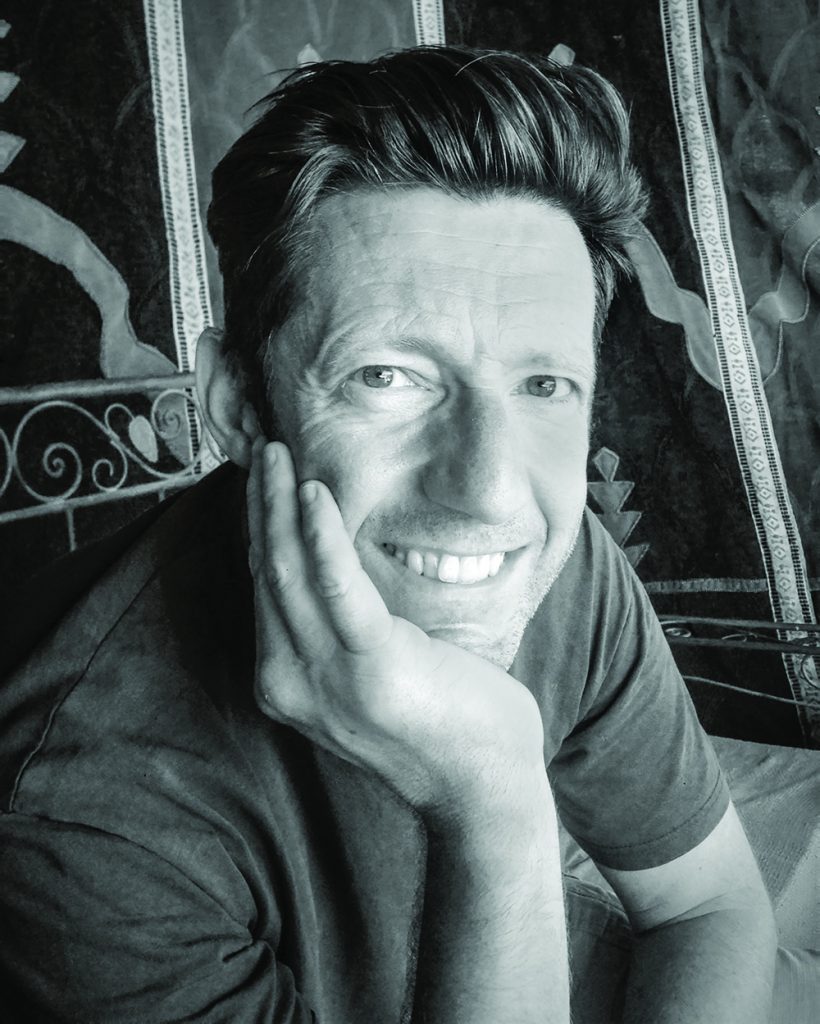
It’s not normal for anyone to have a beer and a bus named after them in their home city. But not everyone can be like Henry Normal. He was the man behind hundreds of comedy programmes as a writer and producer, being honoured with a special BAFTA for services to television. He then went into semi-retirement and returned to his first love – poetry. Henry will perform his new show, Collected Poems and Other Landfill, in both Nottingham and Buxton this month. He took time off from preparing for the show to talk about being brought up in Nottingham, moving to Manchester where he set up a production company with Steve Coogan, the bereavement that encouraged him to spend more time with his family and why he can’t disguise his accent, even when he appears on BBC Radio 4. He’ll be going on the road at various times this year and explained that all the shows will be slightly different. “I like to experiment and enjoy meself. The trouble is if you do exactly the same thing all the time it becomes a bit like karaoke or you become a tribute band to yourself! “I’m doing bits from all my poems which I’ve written since I was about 14. I’ve written over 1,200 poems, I would say. There’ll be a few jokes, a few stories and a few poems – a mixture.” So as a performer what does he get out of doing live dates? “Lots of things. Just to be in the moment, to be with people and enjoy people’s company. I’m always exploring, so that brings new things and I have a laugh. I get to express myself. “For me, doing the gigs is great fun. Luckily they pay me. It’s lovely to be paid for something you enjoy doing. Usually I learn something and I try to apply that for the next gig.” When I ask him how he defines his poetry, he laughs. “To me it’s all about communicating my perception of the world. And that’s all it is really. “Essentially what you’re trying to communicate is that I see this particular part of the world and the universe in this way and I’m trying to say does that resonate with you or does that give you a different way of looking at it. “Very often people laugh because you’re telling them something they know – we’ve either forgotten it or we didn’t know we knew it.” Henry James Carroll was born on 15 August 1956 in St Ann’s, Nottingham. When he was 11 his mum died in a car crash. “There were lots of skinheads around at the time and disenfranchised youth. And for me getting into books was my escape. “I went to the library and I got out lots of comedy books, the Goon Show books and Monty Python. Then I saw a book by Spike Milligan called Small Dreams of a Scorpion. I thought it was a comedy book but it was a book of serious poems and they made me cry. I thought it was magical that somebody that’s so funny can touch me in such a way. I thought that’s what I want to do.” Henry, his dad and his four siblings moved to Bilborough, with Henry pursuing his interest in books by visiting Bracebridge Drive library and also going to the Angel Row library in Nottingham city centre. “I went to a writers’ group when I was about 19. That made me take myself seriously as a writer because I saw other working-class writers and I thought it’s not just for posh people in tweed jackets and (smoking) pipes – it’s something I can be involved in. “Luckily by doing that I’ve built a career and bought a house and made a living as a writer and a TV producer.” Henry moved to Hull and Chesterfield before settling in Manchester where he met comedy greats including Steve Coogan, Caroline Aherne, Frank Skinner and Linda Smith. “It was quite a hotbed and a brilliant place to be. A lot of bands used to do acoustic sets alongside poets. It was a fun time to be there.” Henry was the first of the Manchester crowd to get a television series. In 1991 he appeared in Channel 4’s late-night comedy series Packet of Three. He tried to get all his mates involved – and when they got their own shows, they asked Henry to help. He wrote the Mrs Merton Show and the first series of The Royle Family with Caroline Aherne as well as the Paul and Pauline Calf Video Diaries and Coogan’s Run for Steve Coogan. Writing took over from performing. That led to Henry and Coogan setting up the company Baby Cow. Among their successes were Red Dwarf as well as programmes by Coogan’s alter ego Alan Partridge. Henry said the company always looked for quality: “I would ‘ope that when you look at all the shows I’ve been involved with either as a writer or a producer, not only are they funny but there’s a certain poetry to them, a certain truth in there and a certain authenticity. “It was fun doing it but I was working very hard. We made 450 television programmes and a dozen films in 17-and-a-half years and I thought that was probably enough. “My dad gave me a very big work ethic so I was trying to obtain security as well as express myself.” When his brother died of cancer Henry decided to step back and enjoy himself more at his current home in Fairlight, East Sussex. “I get to enjoy the seaside and the countryside and I get to ‘ave fun with people doing gigs, so it’s not bad.” So what was the highlight of his time with Baby Cow? Henry cites a film he made with his wife, screenwriter Angela Pell, called Snow Cake. The romantic comedy starred Sigourney Weaver and Alan Rickman. “It’s based a little bit on my
Celebrity Interview – Aled Jones & Russell Watson

Take two of the world’s greatest classical voices, get them to sing a selection of their favourite hymns, arias and popular songs, and what do you have? One of the fastest-selling albums nowadays of any genre. Aled Jones and Russell Watson are continuing their partnership with their first tour together, stopping off in Nottingham where they will perform numbers from their debut offering In Harmony. And after speaking to the pair of them I reckon they could carve out a new career for themselves: on the stand-up comedy circuit. Aled was in London where he had just presented the breakfast show on the radio station Classic FM while Russell was in Cheshire. Despite being more than 150 miles apart, they continually made each other – and me – laugh. So much so that at one point no one could speak because they were guffawing so much. I ought to have known what to expect when I joined a conference call which linked the three of us. When prompted to state his name, a voice called out “the one who’s not Russell Watson!” The conversation soon had a light-hearted edge. When I asked Aled and Russell, who first sang together on the Songs of Praise show The Big Sing nine years ago, why it had taken them so long to collaborate again, Aled chimed up: “It took us that long to get over how bad it was the first time!” Russell shot back: “I haven’t slept since.” For a brief moment they became serious. “To be honest with you,” said Aled, “we both lead busy lives and the time I suppose wasn’t right. For the first album the time was right. It took a couple of calls, a couple of texts and the next thing we know we’re doing the album.” Russell said the pair had known each other for almost 20 years and had met at a charity event at the Royal Albert Hall. Since then they had become “good pals”. “You can walk into a room, meet somebody for the first time and immediately you know whether you can have a laugh with them and whether you’re going to get on with them. Aled makes me laugh, I enjoy his company and we get on really well.” Russell says he can’t wait to go on tour because they will have fun as well as doing something they both enjoy: singing. Aled agrees. “The thing that’s come out of it which is brilliant is that our voices really blend together. There was no guarantee at all that that would happen.” When I ask who chose the tracks that would go on the album, they were back to their mischievous selves. “We had a massive fight, I won and I got what I wanted,” says Russell. In reality they quickly agreed on the tracks. They also concurred on what the touring show should be. “The tour is very much a reflection of the album,” says Aled. “We’re both used to being on stage on our own but this is the first time properly that we’re doing a tour with somebody else. We’ve sung with other people in one-off concerts but for this tour we’ll be singing duets for all of it.” One of the problems facing any entertainer is “corpsing” – laughing uncontrollably. My fear is that this will happen to the pair of them while they’re on stage. Aled is concerned too – but in Aled’s individual way. “We were having a chat about this the other day. We’re the biggest corpsers in the world. Sometimes Russell has this glint in his eye which sets me off – which is very unprofessional of him.” “We’ve had a couple of moments,” says Russell, “where we’ve been doing certain things that are meant to be very serious and then I’ll give Aled a little look, raise an eyebrow and he’ll start laughing. As soon as he starts laughing I start laughing and that’s it, game over.” But once the tour actually starts, Russell hopes sanity will be restored: “Once we get on stage and there’s an audience, the dynamic changes. You’ve got the adrenalin from being in a big venue and everything else. “Initially I hope I don’t forget the words, remember where to walk on stage, where to come off, say the right things between the songs. There’s all these different things going on in your head.” Aled interjects that he’s hoping to remember the dance routines as well. “Yes, the dance routines are huge,” maintains Russell. “There’s this moment when I do a triple back flip into a full pirouette and then I end up in the splits. I’ve practised that a lot but I’m struggling with the splits.” “I’d pay good money to see that,” states Aled. People have been paying to see Aled and Russell for a number of years and both are successes in their own right. Aled Jones MBE was born on 29 December 1970 in Llandegfan, Anglesey. He became famous for the cover version of Walking In The Air, the song from Channel 4’s animated film The Snowman, based on the book by Raymond Briggs. By the time his voice broke when he was 16 he’d recorded 16 albums, sold more than six million records and sung for Pope John Paul II, the Queen and the Princess of Wales. He married Claire in 2001 and they have two children, one of whom is an actress. Russell Watson was born on 24 November 1966 in Irlam, Lancashire. While he was spending the first eight years of his working life in a factory making nuts and bolts he never imagined he would later be described as one of the world’s greatest classical singers. After winning a local radio talent competition his career took off. His debut album The Voice held the number one spot in the UK classical charts for a record 52 weeks and also held the number one spot in the USA. He suffered
Celebrity Interview – Kate Humble
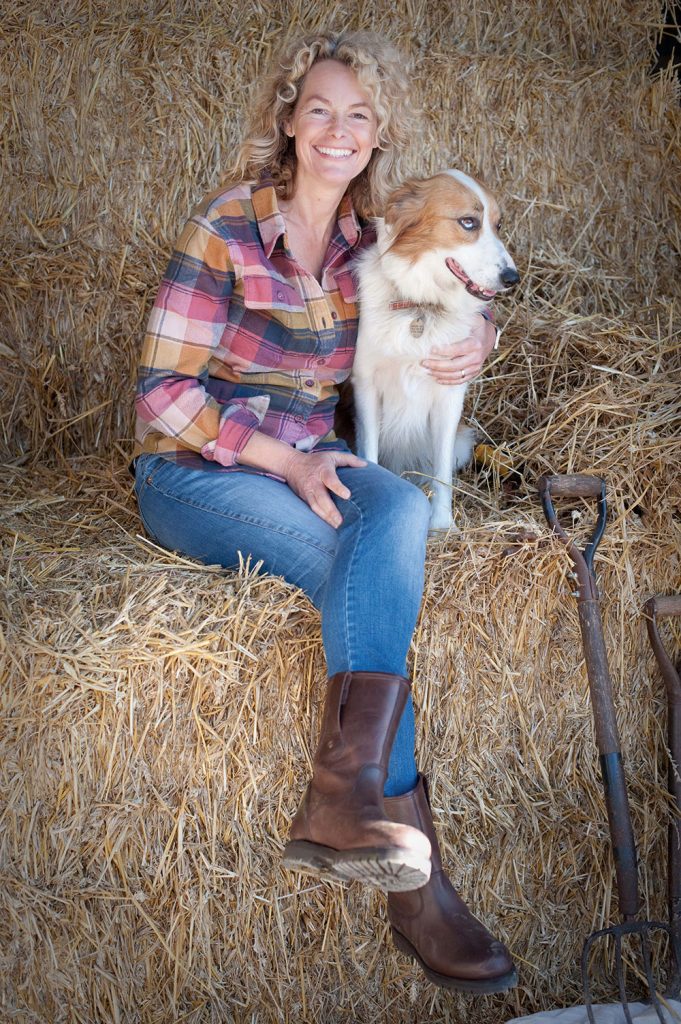
“There’s nothing better than walking into a mucky stable or a mucky barn with a pitchfork and a wheelbarrow and cleaning it out” The feeling of writer and TV presenter Kate Humble who’s known mainly for specialising in wildlife and science programmes for the BBC. She’s also appearing in theatres around the country and will bring her show An Evening With Kate Humble to Derbyshire next month as part of the Buxton International Festival. She broke off from preparing for that show to tell me how she thrives on live television, how appearing in front of an “Evening With” audience can be “scary“ and why she has a lifelong passion for mucking out. Her appearance in Buxton will be one of a series of dates that she’s fitting in around her television work. Kate takes to the stage only a couple of times a week to present an evening of stories and adventures that she’s experienced over a 20-year career in broadcasting. The show is in two halves and during the interval Kate gets the audience to write down questions which she then goes on to discuss. “I show video clips of some of the programmes that I’ve done and I talk about some of the madcap things that I’ve ended up doing in the name of a career,” says Kate. “The second half for me is entirely unpredictable. There are still clips and stories but there’s also this lovely, unplanned element which is dependent on the audience, which I really enjoy.” Kate admits being on stage is very different from appearing on TV: “It’s a lovely opportunity for me to be face to face with an audience. It’s quite scary. I’m nervous before every single show. But it’s lovely to be able to have a more direct connection with the audience.” Our chat actually started more than an hour-and-a-half later than scheduled. That was because Kate had to meet a deadline for an article she was writing for the Daily Telegraph. She’s always been a freelance writer and had her first article published by the Telegraph in 1996. She admits her latest assignment was a tough one. “My father died earlier this year and they asked me to write about that for their Father’s Day edition. It was a really important tribute to my dad and I hope it resonated with people dealing with the incredibly complex emotions that go alongside grief.” Katherine Humble was born on 12 December 1968 in Wimbledon. She grew up in rural Berkshire in a house next to a farm. She had what she describes as a “proper childhood” – building camps, racing snails and climbing trees interspersed with trips to hospital to get patched up when she broke bones. She reckons she’s still a tomboy. When she was 18 she left home and did odd jobs so that she could fund a year travelling in Africa. She wrote for the Telegraph about her adventures. Then she got her first job at the BBC, working as a runner on Animal Hospital and then The Holiday Programme. On her second day in the Holiday office the programme’s editor realised that Kate would make a good presenter despite her reservations. “It was never my plan or intention and when people say ‘how can I have your job?’, the truthful answer is the best thing to do is not to want my job and it might just come along by accident. “In my case it came along because it’s that awful trite line of, I was in the right place at the right time and I could offer the thing that they wanted, which was somebody who was a genuine traveller who enjoyed doing things at a local level. The first bit of filming I did was doing a local journey around France telling people about it. And it went from there.” Since then she’s become well-known for appearing on programmes such as Springwatch, Wild In Africa and Volcano Live. She feels that she’s been “very lucky” to have done lots of different things. “I’ve done documentary series that I’m enormously proud of, things like Living With Nomads (a BBC2 series in 2015, filmed in some of the world’s most remote wildernesses) and Extreme Wives (a 2017 series exploring the roles of women in three communities in Kenya, Israel and India). “I’ve also loved doing things like Animal Park (a BBC documentary series about the lives of keepers and animals at Longleat Safari Park, Wiltshire) which I’m still doing after 20 years. I’m also very lucky that new projects come along. I’m always challenged and excited by those. “I’m very careful about what I choose to do and I only take on projects that I genuinely care about because I think the audience are very smart – they can spot somebody who’s just taking a job because they want to be on telly rather than really believing in the programme.” Live television is known to be hugely problematic but it holds no fears for Kate. “People always say what happens when something goes wrong? Well, in my view nothing goes wrong – you’re just showing exactly what’s happening. Some things may not go according to plan and you may not be able to predict everything, particularly when you’re dealing with wildlife which jolly well does what it wants. “But that’s the exciting thing about doing something like televising wildlife live. And that’s why I love it so much. It’s unpredictable, it’s exciting, there’s a very good reason for it to be live. You want people to be there, to feel absolutely connected with the action. So as far as I’m concerned it’s a lovely, exciting way of broadcasting. I don’t see it as something that’s problematic at all.” When Kate was 23 she married television producer Ludo Graham. Nine years ago they moved from Chiswick, west London to a smallholding in the village of Trellech, Monmouthshire. They live with a variety of feathered and furry livestock
Celebrity Interview – Sergei Podobedov
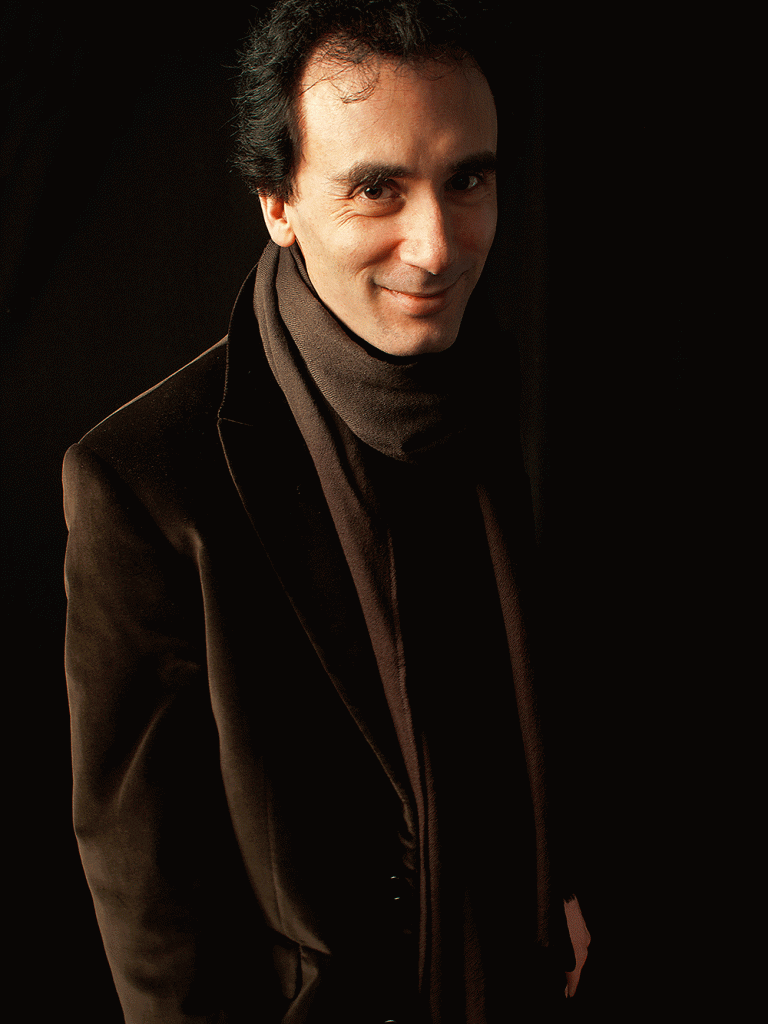
A strand of his wispy hair falls over bushy eyebrows as Sergei Podobedov, dressed in a dark T-shirt and casual trousers, makes coffee. There’s nothing unusual about his demeanour as he goes about everyday tasks without taking undue care of his hands. But this isn’t a manual labourer or someone who’s been thrust into the uppermost echelons of celebrity without having a talent. This is a Russian-born classical pianist who’s given concerts all over the world – and he’s living in Belper. He admits he doesn’t do any heavy lifting. Otherwise he just gets on with life, paying little attention to the dynamic digits that have catapulted him to the top of his profession. His hands aren’t even insured. I first came across Sergei when some friends invited my wife and I to a concert he was giving last September at the Strutts Centre in Belper where he also practises. Everyone who experienced it was captivated by his dexterity, natural ability and mastery of the piano. I also wondered how someone with his virtually unparalleled talent had made his home in Derbyshire and was playing at the former Herbert Strutt School. “I don’t know. It has something to do with the laws of the universe!” he told me. “I had a studio in London but I had to move because the house was going on sale. I wanted a change. So a friend in Bonsall invited me to stay on her farm for a couple of months. “I thought ‘I really like it here’ and eventually I ended up with friends who invited me to stay long-term. It’s all their fault!” During our chat 46-year-old Sergei laughs a lot. He speaks confidently and eloquently. On occasions he takes his time answering questions but that’s not because he has problems with the language; he’s thinking deeply about what he wants to say. He’s obviously content in his new surroundings which are unlike London: “It’s really nice here. Everybody is so friendly – it’s a different world.” When he was in the capital he enjoyed practising at night. He can do the same in Belper. But if you drive past the Strutts Centre in the early hours, don’t expect to see lights on in the building when he’s playing his piano – he likes to practise in the dark. “If you see lights it’s probably because someone forgot to switch them off! But to me the atmosphere in this building is very positive. He says those who attended last September’s concert were “fantastic”. They were “a very warm audience and I feel that I’m somehow useful to the community, which for me is important.” The programme included Beethoven’s Piano Sonata No 14, the “Moonlight” Sonata, as well as Schumann and Chopin. He maintains that he tries to practise “as efficiently as possible” and doesn’t want to do too much. But he confesses he had to work hard on the Chopin Mazurka that he played for an encore. “It’s a very short piece, it’s very simple. But basically I practised the last two lines for a whole night. I sat down around one o’clock in the morning and by the time I felt that I owned those last two lines, I think it was around nine. But then once you’ve done that you own the piece.” Sergei Podobedov was born in 1972, growing up in Moscow and spending three summer months in a Black Sea resort. He started playing the piano when he was five or six. “My mother was a first violin in one of the major orchestras in the Soviet Union. I grew up in an orchestra because she took me to all the rehearsals and concerts. And I listened to a lot of records when I was a kid. “I was fond of every possible instrument. I think she was a bit apprehensive when I was near the violin because she always said it’s torture for a child to start playing it.” He chuckles loudly before explaining what drew him to the piano. “I went to a concert where my mother’s orchestra was playing. There was Tchaikovsky’s Piano Concerto No 1 on the programme and I came back home and started listening to it obsessively. “My uncle came for my birthday and he brought a recording of the concerto by Emil Gilels (regarded as one of the greatest pianists of the 20th century). He told me ‘this is better than the pianist you are listening to’. “I listened to it and I didn’t like it at first. But after listening to it a few times I thought ‘it is better!’ Gilels has amazing sound which was uniquely his own. In terms of musical breath it was completely different. Other recordings weren’t so alive. “Since then I’ve heard many recordings of the concerto. Some of them are great but there’s still nothing like Gilels. I guess you can’t really explain it but it will always remain something very special.” Sergei made his orchestral debut when he was 12. Shortly afterwards he went to the Moscow Central School of Music. “We got a sense of what it’s like to be on tour and what it’s like to play on all sorts of instruments in all sorts of circumstances. It was fun.” Six years later, in 1990, he came to London to study at the Royal College of Music which he describes as a “great experience”. He and another pianist were the first two Russians ever to study at the College. Its patron was the Queen Mother who that year celebrated her 90th birthday. Sergei played for her and was invited back the following year to do a joint concert with Sir John Gielgud who read poetry. It’s another event which Sergei remembers as being “very special”. Since then Sergei has played all over the world including the United States, Paris and, surprisingly, Turkey where he says audiences for classical music are “amazing”. He has performed at London’s Wigmore Hall, the Tchaikovsky
Celebrity Interview – Peter James

Three years ago crime fiction legend Peter James was in Nottingham to see his stage play, Dead Simple, performed on the Theatre Royal stage. In a question-and-answer session afterwards he slammed television producers who wanted to make big changes as a condition of transferring Peter’s police detective Roy Grace to the small screen. Now, as Peter is preparing to return to the East Midlands, his desire to retain control of how his principal character should be depicted is about to pay off. So what got Peter so hot under the collar? One TV company wanted to turn Roy Grace into a woman. Another wanted the location moved from Brighton, Peter’s home where all the Roy Grace books are set, to Aberdeen. Those producers didn’t realise who they were dealing with. Peter James is not only a best-selling author whose books have sold 19 million copies and been translated into 37 languages – he’s also been a scriptwriter for a children’s daily show in Canada and an executive producer on a number of major films. The last one was Shakespeare’s The Merchant of Venice starring Al Pacino and Jeremy Irons which was nominated for a BAFTA. So Peter should know how to get the best out of an adaptation. Peter will be back at the Theatre Royal later this month to see his fourth play, the stand-alone thriller The House on Cold Hill. It follows The Perfect Murder which featured Les Dennis when it visited Derby Theatre in 2014 and Not Dead Enough which bypassed the East Midlands on its 2017 tour. The creative team for The House on Cold Hill is the same: Sean McKenna is the stage adapter, Josh Andrews is the producer and Ian Talbot directs. So how did Peter come to write the book? In 1989 I had my first big writing success with a thriller called Possession and followed it with a book called Dreamer. “My first wife and I did pretty much what the characters in the book do – buy this big, beautiful wreck of a house in the countryside about eight miles out of Brighton. “It was a Georgian manor house that had a long history. There’d been a monastery on the site in the 14th century and before that there’d been a Roman villa there. Peter and his wife saw various things that couldn’t be explained. Then one day Peter took his dog for a walk and met an old man who used to house-sit for the previous owners when they spent the winter abroad. Peter believes everyone has risen to the challenge of putting The House on Cold Hill onto the stage. “I think a story works best when there’s a sense of claustrophobia by having everything take place inside one location. It’s a thriller and a chiller.” Peter even had a hand in choosing the cast which includes Joe McFadden, winner of BBC1’s Strictly Come Dancing in 2017, and Rita Simons who used to play Roxy Mitchell in EastEnders before going into the jungle in the recent series of I’m A Celebrity…Get Me Out of Here! Peter explains what he loves about theatre: “One is the danger of it. You can pick up a copy of my novel anywhere in the world and it’s going to be exactly the same. Not a single word will be different. But every time a play’s performed things can go wrong. “What I love most of all is sitting at the back of a theatre and watching the audience’s reaction. I’ve learned quite a lot as a writer from doing that.” Peter James was born on 22 August 1948 in Brighton. He is the son of Cornelia James, a former glovemaker to the Queen. He went to film school and then moved to Canada. At one point he was writing horror films for the drive-in cinema circuit. Later he produced a comedy with Terry-Thomas and Leslie Phillips called Spanish Fly which came out in 1976. Film critic Barry Norman called it “the worst British film since the Second World War”. In his twenties Peter had two spy thrillers published but they didn’t sell. Shortly afterwards burglars broke into Peter’s house. A policeman arrived to take fingerprints and saw Peter’s books. He told Peter he should call him if he ever wanted any help with his research. Peter became fascinated with the police’s job: “I realised that nobody sees more of human life in a 30-year career than a cop. That was the starting point and I began to write crime fiction.” Now Peter has 34 books to his name. The latest, Absolute Proof, is another stand-alone thriller. It began in 1989 when Peter had a phone call “out of the blue” from an elderly man. “He said: ‘I’ve been given absolute proof of God’s existence and you’re the man who will help me to get taken seriously’. What took me so long was that I first had to really learn and understand all the world’s religions before I could write the book.” There can be few writers as prolific as Peter James. He spoke to me from a hotel in New York where he was staying after he’d given a talk on a cruise ship. On his return he’ll follow The House on Cold Hill around the country before the next Roy Grace book, Dead at First Sight, comes out in May. In October he’ll publish the sequel to The House on Cold Hill called The Secret of Cold Hill. How does he keep coming up with ideas for his books? “My head’s constantly buzzing. I think it would be quite nice to take my foot of the pedal sometimes and have a fallow period. But I actually love writing. I really enjoy telling stories.” He praises his second wife Lara, who he married in 2015, for being a “wonderful help”. He says: “She’s got a very creative brain. When I’m writing she’ll make suggestions about characters. It’s not completely an isolated life.” There’s