Family days out with the National Trust this February half term
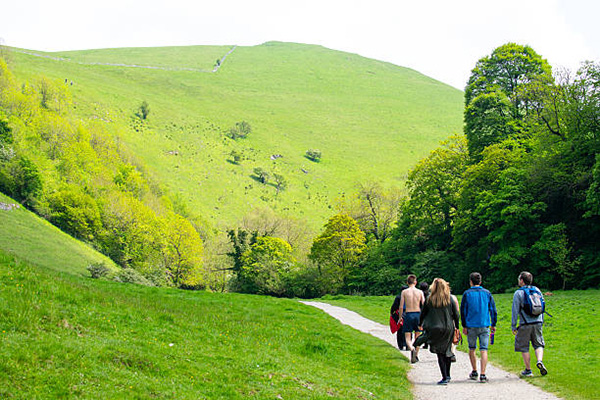
From seasonal crafts and activities to outdoor trails and winter wildlife, there’s lots to keep young explorers busy this half term at the National Trust’s places in Derbyshire and the Peak District. With miles of gardens, parkland and countryside to explore on those crisp winter days and indoor activities for when the rain sets in, there’s plenty to do, whatever the February weather brings. The National Trust’s cosy tearooms offer warming treats and kids lunch packs, and the shops have lovely selections of pocket money toys for little ones to browse. Here’s a round-up of the half term events and activities at the National Trust’s places near you. To find out more visit, http://www.nationaltrust.org.uk. Hardwick Hall, Derbyshire Half term has never been more ‘love’ly! Explore the exciting Elizabethan themes of St Valentines through outdoor play and crafts. Expect play activities in the Stableyard inspired by themes of connection, pairs, gratitude and love such as ‘Match the pairs’, Connect Four, create your own sonnet in our blackboard den, and rustle up a valentine’s feast in the mud kitchen. Find out more information: February Half Term | National Trust Calke Abbey, Foremark & Staunton Harold Discover hidden worlds this February half-term with themed trails inspired by the book ‘Wonder World: Earth’ written by Ben Lerwill and illustrated by Xuan Le. From 14-22 February, hunt for minibeasts and uncover fascinating facts about worms, and continue the adventure by visiting all three properties for unique activities at each. For avid bookworms, join a storytelling session in the Riding School at Calke to hear the story brought to life. Sessions include creative crafts and colouring, and can be booked online via Calke’s website, with SEND-friendly sessions available in a more relaxed environment, as well as shorter sessions for under-5s. ‘Wonder World: Earth’, published by Nosy Crow in collaboration with the National Trust, can be purchased onsite at Calke, so the fun can continue long beyond half-term. Longshaw Estate, nr Sheffield, Peak District. Bring your curiosity, eagle eyes and a sense of adventure to uncover secrets about the fantastic bird species of Longshaw, on The Bird Box Detectives Trail. Find 6 secret bird boxes hidden around the estate. Lift the lids to hear their calls, solve the puzzles, and tick off each bird as you go. £3 per trail sheet. On 22 February Longshaw’s rangers host a very special event; Family Bird Box Building – to celebrate National Nest Box week. Using simple hand tools, each family or group will be instructed on how to build their own bird box to take home. £15 per bird box. Special family crafts celebrating the birds of Longshaw are also being hosted on 18 and 19 February, at Longshaw’s Moorland Discovery Centre. Suitable for children aged 4-11, £8 per child. Find out more here Ilam Park, nr Ashbourne, Peak District. Get ready for a feather-filled adventure, between 14 – 22 February, on the Bird Box Detectives Trail. Secret bird boxes are hidden around Ilam Park and it’s your job to find them. Each box has a clue about the amazing bird that lives there, on this treasure hunt – but with more feathers! £3 per trail sheet, with a prize at the end! Fly down to the Dovedale National Nature Reserve for the Big Bird Count, from 14 – 21 February. You can climb Thorpe Cloud to search the skies or follow the river Dove to spot birds along the valley. With every £3 trail sheet you’ll get your own DIY binoculars and help count the different species you see, to add to the Big Dovedale Bird Count Board. Learn About the Birds Pop Up station: learn about the fascinating birdlife of the White Peak, on 21 February in Milldale. Drop into the National Trust information barn to meet our team of guides. Share your sightings on our community spotter’s board as you explore this beautiful part of the Peak District. Find out more here Kedleston Hall, Derby Enjoy a winter wander at Kedleston this half-term and discover willow wildlife sculptures along the way. The Short Walk has welcomed some new friends for all to see. Be sure to say ‘hello’! Available 14 – 22 February, 9am until 4pm. The Children’s Country House at Sudbury February Half term: Challenge your friends and family to a classic board game in the Parlour, perfect for a rainy afternoon. Solve the mystery in a game of ‘Sudbury Sleuth’, collect the clues as you explore the rooms in the Hall. From February half term onwards: Take a trip down memory lane and re-visit favourite video games from the past in the Museum of Childhood. Discover the wonders of soil science along the nature trail in Wellies Wood inspired by the Nosy Crow book ‘Wonder World: Earth’ 00
Walk Derbyshire – Beeley Moor & Chatsworth
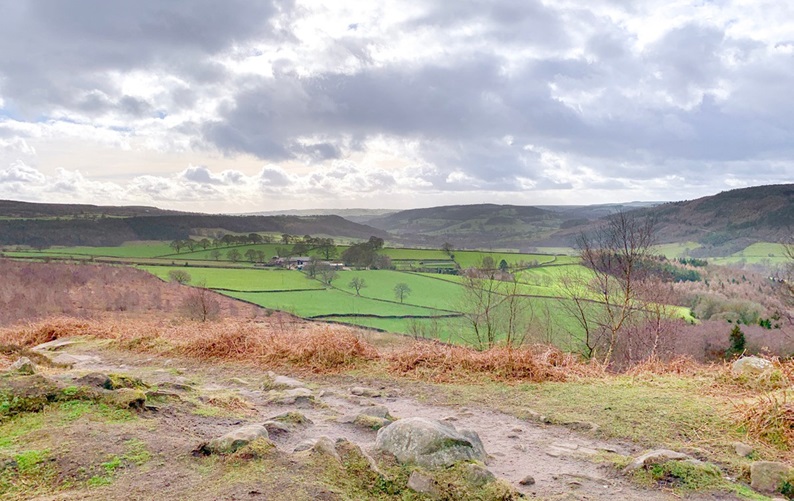
This is one of the places you may have driven past in recent years, seen the usual ice cream van and lots of cars but thought “I wonder what they are doing.” We have thought this and then carried our drive down the hill in to Beeley and onto Chatsworth for our usual walks. (Sadly the road down into Beeley is closed and has been for some time so this is no longer a cut through). Here on the corner of Beeley Lane / Chesterfield Road you will see cars, always have and always will. When you try this walk you will wonder why you hadn’t been before. It is beautiful with panoramic views of the moorland and down into Beeley past a river and small waterfalls. Our children would come here on their residential school trips and they actually let them have fun(!) and play sliding down the slope into the river. This walk takes in hills, roads and fields and makes a lovelyafternoon out. Remember to take some water and food as you will only pass the pub in Beeley if you happen to stay on the long route. (It is worth it for that!). Parking is free along the roadside but be mindful of not blocking the road for emergency services. THE WALK We start the walk from the corner of Beeley Lane where all the cars are usually parked. At the stone wall on the left you will see a little gap and we head through there and slowly amble down. We head to the bottom of the path and you will see that you can go left or right. We head left here and start to head into the woods. From here a little way down again, you will see a route taking you either left or turning right. We want to head right and start to go down the path. You will know you are on the right path if after a little while you see the river on your right hand side. Many times we’ve had fun having a paddle in this water or even the children deciding they would try to walk through that path instead of the more sensible one we were on. Why not – you are only young once. So here is really pretty. Don’t rush but enjoy the lovely water views and the pretty trees on your left. It is quite a straight forward route so no getting lost – unless you want to. The trees at the bottom are quite magical. Eventually you will hit where the river crosses the footpath – in the summer this is perfect as you can just hop across. However, if you come after much rainfall, this becomes really slippery and shimmying across a log or hopping over the stepping stones provides much fun – especially when your nephew takes an epic fall for the team. Continue down the path in front of you and when you open the gate you have two choices – one is to immediately turn up the road to the right and basically head back on yourself but going up the road so a different route. If you just want a shorter walk that is pretty then this is for you. However, we are heading straight down and we come out at Beeley. This is a gorgeous little village with the houses painted in the Chatsworth Estate blue. It is one of those villages that you just want to live in and enjoy peaceful afternoons pottering in the garden. (Maybe that’s just me!) Head through the village and you can continue to The Devonshire Arms for a swift pint. They do have a beer garden to the left hand side. Or there is the Old Smithy cafe too. After a refreshing drink and a packet of crisps – time to head back out and finish the walk. We are over half way at this point. We head out of the pub and go slight right past the houses immediately in front of you up Chapel Hill. We pass a kids play park on your left hand side and the Old Smithy on your right. When we get to the top of this road there are a couple of chocolate box cottages in front of you – take your pick for your dream house. You will see a footpath heading up a hill on your right hand side. The last time we did this walk there was a horse in the field but it was not in the slightest bit interested in us so don’t worry! Now it gets fun! Head up the hill and through a little gate. This is a steep hill so take your time. When you get to the top – take a breather and look back at the amazing view. We head up the hill and follow the footpath diagonaly all the way up to the farm. The footpath heads through the farmers track only for a short while but sometimes the cows are out. No don’t worry – these are the most well kept cows and during the winter they are in the barns, they have opera music playing and fish in their water to keep them entertained. Go through the farmers gate and after about 100 feet you will see a footpath sign on your right. Head through the small field and back out onto the track. Go straight over the track and off up a steep incline that takes you though some amazing ferns. Once at the top, you’ll come out at a track where we go right. But make sure you stop and admire the amazing views first. Now we follow the track all the way and it is a long way. Just take lots of rests it isn’t a hard walk at this point but a meander up hill. Eventually, you will come back to a part you recognise to be the beginning of the walk. And
Walk Derbyshire – Ashover & Littlemoor via Ashover Rock
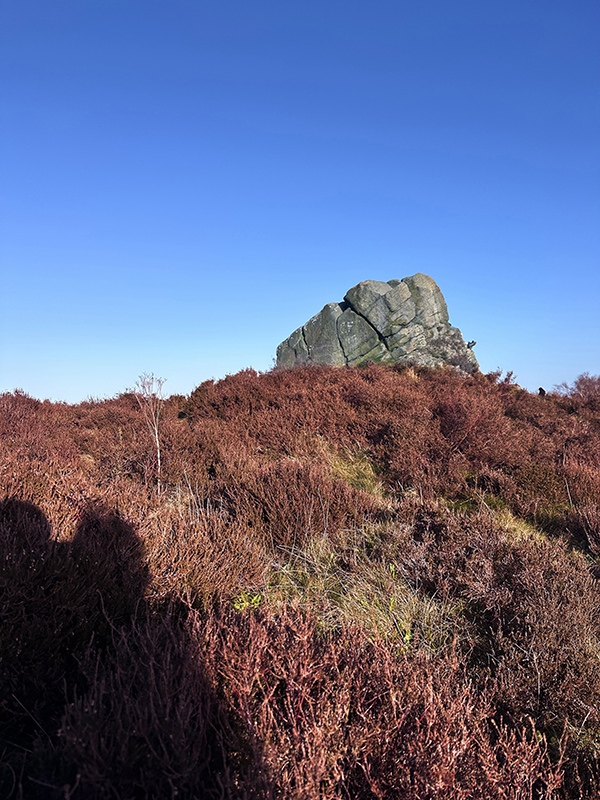
Such a pretty little village with stone cottages, lovely country pubs and stunning walks which feature water and hills with awesome views. Ashover is definitely a walkers paradise and offers nice places for a drink or meal after. This month’s walk features a beautiful view through the heather which should hopefully be out in full beauty about now, a small amount of walking on the road, a walk past Ashover Family Farm which was full of tulips when we did the walk but this changes throughout the year so it’ll be sunflowers in the summer and pumpkins in the autumn. When you get to the top of the hill, where the rock is, here is a lovely opportunity for a picnic and seems a reasonably popular place to watch the sunset. There is one quite steep incline up the road so take your time but it isn’t too far and definitely worth making the extra effort to reach. THE WALK :: THE WALK :: THE WALK You can park on Hockley Lane near the Old Poet’s pub. The village is awkward to park in as it is small. If you struggle to park here then you can use the Village Hall and just walk down to the start of the walk.///obviously.conclude.looms We start the walk just down the little lane to the left of the Old Poet’s pub. If it has been raining this can be a tricky little start to the walk as there are a few rocks and dips so be careful. If it is dry – still be careful but this is only for about 5 minutes. Follow the bridle path all the way down the lane, over the little bridge with the stream and up the steep incline to the top of the hill. No need to rush, take your time and enjoy the view behind you.///beards.bolts.reporting At the top of the hill head straight ahead and follow the track to the road at the bottom. From here we cross straight over to where you will see a footpath. This takes you into the woods for a little while. Hopefully rhododendrons will be out – if they are enjoy! Carry on until you exit the woods and you will be in the old quarry now. From here you need to head to the path which will take you downwards. You will notice a large disused chimney so you will know if you are going in the right direction.///blogs.wheels.handbags Again, if it has been really raining, this section of the walk will be very muddy and quite slippery underfoot so be careful. You will come out to a farm house on the right hand side. Carry on straight left down the road. You will usually see the beautiful belted Galloway here in the fields. We now walk onto Gin Lane and from here we are just a stones throw away from Milltown. If you are in desperate need of a drink at this point then from here head right to the pub which is open 12-3pm most days. We now walk past the side of the river. Have a little paddle if it’s hot. When you come to the end of the path, there is a bridge over the river and we end up on the road for a short distance. Turn left and head along the road until you see a little path slightly to the left which starts to head up in-between peoples gardens.///simmer.useful.divider When we reach the top of this path we head across Hockley Lane – be careful as it is a fast road but not particularly busy! Just past the couple of houses on your left you will see a footpath sign on the opposite side of the road up a couple of steps. Head up here and you will go past the quarry on your left hand side. From here follow the lane all the way for a few minutes. You will come out onto a road. Keep to the side as this again is a fast road but we literally need to walk 100 yards or so and you will see Eastwood Lane to your right. This is where Ashover Family Farm have the huge field to the left so hopefully you will see something beautiful growing here. We past a field with a herd of gorgeous sheep on the right which were really friendly. We start to climb up now, so again, take your time. We head all the way up to the top of the lane. This now takes you through the village of Littlemoor. What a sweet village. You can from here see views of Ogston Reservoir in the distance. Carry on along the lane and you will see the road eventually goes off to the right. Here we head straight ahead which is now Milken Lane. ///waxing.proceeds.scorpions From here you will find a footpath to the right which is going into the trees and moorland. This is now Fabrick Wood where another beautiful viewing point awaits. Head to the top for yet again another beautiful picnic spot. Enjoy! Just past the rock you will be able to see the village of Ashover down to your left. You will see a path heading down, this is the one we are taking. You will end up on a lane again and will then turn right and head down through a tunnel ///renews.credible.cleanest and into a field. Cross the field to the right hand side. You will come out at the Black Swan in Ashover. Grab yourself a swift pint and some pork scratchings! Then head down through the village to where you parked your car. There is a really cute little village shop here selling ice cream, lovely home made cakes and other items. I still believe it is cash only so please support local businesses and take some cash with you. INFORMATION Parking: Roadside along from the Poets Corner
Walk Derbyshire – Calton Lees, Chatsworth to Rowsley
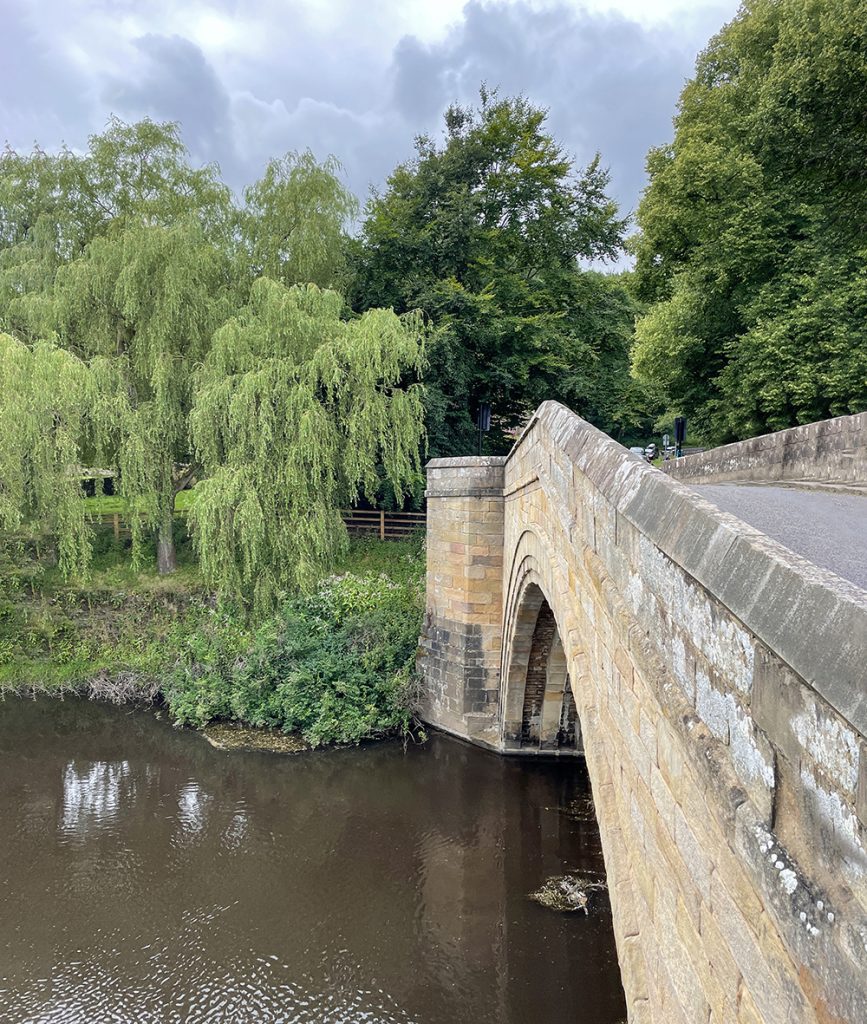
There are some beautiful walks around Chatsworth as the river there is so pretty and, attracts many people each year for picnics and walks. We decided to head out from Chatsworth for some panoramic high up views of the valley from Calton Lees car park up into Rowsley. I’m sure you have visited Chatsworth before. People come from around the world to visit the beautiful house and gardens on the banks of the River Derwent. The house and gardens are open to visitors most of the year and, there are stunning walks around the gardens. For families there is a farmyard and park area too. Even though there is a charge to access the house and gardens (check out their website for more up to date information), you can visit the courtyard with restaurant, cafe and shops for free and there are walks in the park which you can enjoy without going through the gardens. Down by the banks of the river is a beautiful place to picnic in the summer with friends. The village of Rowsley has many picturesque riverside walks starting from the village. The river here is world renowned for its rainbow trout, brown trout and grayling and, attracts anglers from all over the world. The village has a small shopping centre called Peak Village which is worth a little visit. The beautiful Peacock Hotel is a grade II listed building dating from 1652 and a visit is recommended. THE WALK :: THE WALK :: THE WALK We park in the Chatsworth Estate Calton Lees car park which during the winter is usually free but a fee is payable from the Spring onwards (but you can pay by card!)///backfired.losses.backers From the car park entrance we head right and walk past the road to the garden centre. We follow the road all the way up past the houses and keep the stream on your left hand side. We walk past Lees Wood on your left hand side. Follow the road straight until you eventually come across a couple of Chatsworth estate houses which you can rent for holiday homes. ///slug.convinces.cobras Carry on past here and you will come to a gate where you can go pretty much straight ahead onto the track or right. We are going straight ahead – there is a sign here which gives you a little background. At the farm gate we head left, and left again, where we start to go up quite a steep hill. We all had a race to get to the top!! Have a rest here and enjoy a flask of coffee or just the lovely views. Over the stile and we go into the woods.///sits.nylon.theory Follow the track in the woods for a short distance and then follow the track left. When we were here we came across quite a few cyclists (albeit on their cheating electric bikes!) Follow through the woods and turn left at the end. Here you will come out onto a small road. We are going to turn left. Follow the road all the way and it will bend right slightly.///disengage.diplomat.oils At the end we turn right here and just follow the road. We end up on Church Lane and walk through the village of Rowsley. After you pass St. Katherine’s Church, head to the corner and turn left onto the Derwent Valley Heritage Way. Now we walk keeping the river on the right hand side. We cut across a lovely large field, still with the river on your right. Eventually you will head into Calton Lees and where you started! Turn right and you will see the garden centre on your right and the car park ahead. We’d love to see the photo’s of your walk – please send them in tovicky@imagespublishing.co.uk INFORMATION :: INFORMATION :: INFORMATION Parking: At Carlton Lees car park within the Chatsworth Estate near their Garden Centre. Pubs: There are a couple to choose from on the route, if you take a short detour at Rowsley. Distance: Long 5.6 miles and approximately 2hrs 15min. Terrain: A fair bit of up hill on the first half of the walk, but a decline and flat finish awaits! 00
Walk Derbyshire – A Wander With An Ogston View

This has got to be one of our favourite walks which we discovered just coming out of lockdown. It takes in the beautiful views over Ogston Reservoir. You also get a bit of height on this walk so the view down the hills at one or two points is pretty stunning. Ogston Reservoir is owned by Severn Trent Water and is a Site of Special Scientific Interest. There is a public hide overlooking the reservoir in the West Bank Car Park. Ogston Reservoir is known for its sailing club and many twitchers come here to view the vast array of migrating birds. You can’t actually walk all the way around the reservoir directly, but there are some beautiful places to walk and where you can take in the views, it really is idyllic and so is a firm favourite. Ogston Sailing Club is worth checking out as they have paddle-boarding sessions and social sailing sessions, so take a look at their website for more details. The walk starts from the West Bank Car Park at the reservoir. It is a moderate walk but after we have had a downpour, you will find you definitely need wellies to go through the farmers field as it can be very muddy – also they sometimes have the cows in one specific field so please be aware and extremely cautious when walking with dogs. THE ROUTE There is free parking in the West Bank car park, then walk back towards the entrance and follow the road straight up ahead. Don’t go around to the right but straight up and you will see a house. Follow the track to the right and walk to the top of the track where you will already start to take in the views. Follow this up until you get to the farm in front of you and go straight through the gate, keeping to the right. The footpath is clearly signed so be respectful of the livestock and property. This can be the very muddy field in wet conditions. Go straight ahead and over the stile at the other side. Follow to the left of the field and it will eventually bend right. Follow this till you see a stile heading left through another field. Walk diagonally through the field and you will eventually come to a metal gate where you can go over the stile. You will walk through a garden with a house on the right. Keep walking and you will end up on the road, White Carr Lane. Be careful as it is a little narrow here. Turn right at the end of the drive. Follow the road to the right and up the hill. At the top of the hill you will see a footpath sign to your left which looks like you are going up someone’s drive. This is the correct way! All the way to the top and through the gate. Carry on a little and take time to take in the panoramic views!! Be careful underfoot as you pass through this next field as it does slant a bit to the right and we don’t want any roly-poly’s down the hill. Keep going till you end up on the road. Turn right here and continue to the T-Junction. Here we go left and walk down the road, keeping your eye open for a track on the right which is past the place which currently has a yurt on the land. Go down the lane all the way and keep following the lane– it is really straight forward. You head into the woods here so be careful underfoot. Upon the clearing keep heading along the footpath and you will eventually come out onto the Dark Lane. You should recognise where you are now. Go across the road and follow the road to the car park on your left hand side. THE DETAILS Parking: There is free parking in the West Bank car park. Pubs: The White Horse at Wolley Moor is a fantastic pub that servers great food and real, local ales. Distance: Short =3.5 miles, 6k Time: Short = 1hr 30min Terrain: Moderate, a couple of steep hills to climb, but well worth it for the amazing views. 00
Walk Derbyshire – An Amble through Ashover
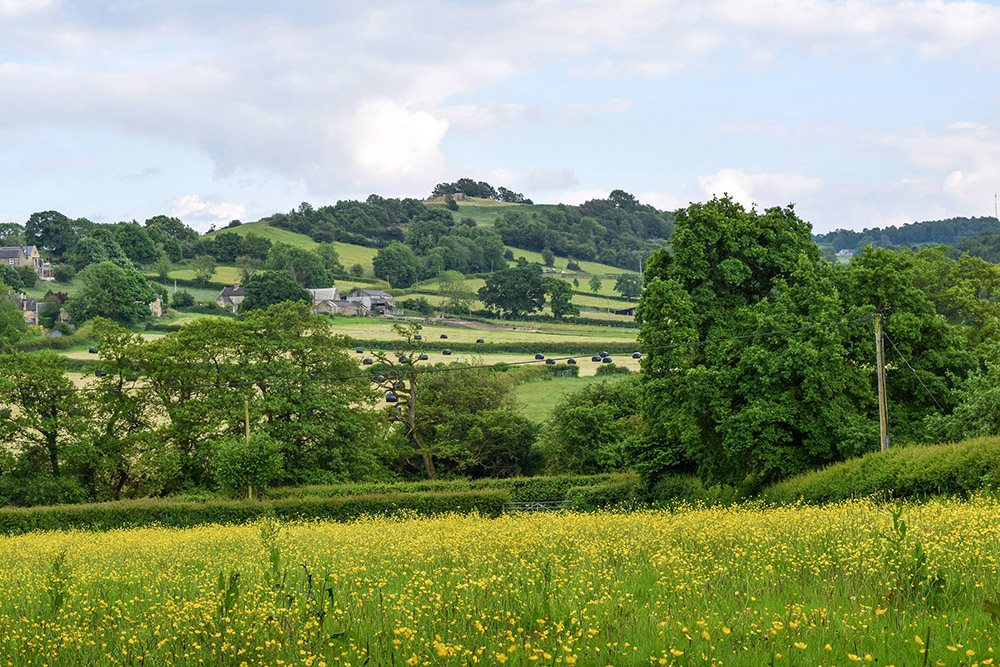
Set alongside the River Amber is the picturesque village of Ashover. Quaint cottages, stone houses and old pubs fill this favourite Derbyshire village of mine. It may take you a while to drive through the village as it is so pretty, with many cute cottages for you to stop and admire. Ashover has a truly rich history with quarries, lime kilns and lead mines. It holds All Saints Church dating from between 1350 and 1419 which was built by Thomas Babington. (One of his family members was executed for plotting against Elizabeth I). Ashover is also the home to the long standing Ashover Agricultural & Horticultural Show – this year’s show takes place on Wednesday August 14th. It is a great day out for all the family. In the village there are three pubs, a cafe, a cute coffee shop and gorgeous little village shop which sells gifts, cakes and ice cream (cash only!). There is a lovely cricket pitch with football goals, a nice children’s park and play area, and tennis courts, so plenty to occupy you. Adjacent to the cricket pitch is Ashover Parish Rooms now the Village Hall, which can be hired for weddings and events. There’s a plethora of walks in and around Ashover featuring stunning views, high vantage points, buttercup filled meadows and babbling brooks. You can see why this is a favourite for myself and many other walkers. USEFUL INFORMATION This walk is pretty easy to do. Takes just over an hour or longer if you are taking time to take in the beautiful scenery. We came through a field of cows with calves so please be careful if you have dogs. It’s a very peaceful walk which goes through fields, meadows, along the river and is easily shortened or extended. Near the end you pass 3 pubs so take your pick! Track with … https://www.outdooractive.com/en/route/hiking-route/central-england-and-the-midlands/drafted-on-2024-06-25/295370954/?share=%7Ezzgg3age%244osstcjj Parking… there is a free car park at the village hall and also plenty of spaces on the road (please park responsibly!) Pubs… three in the centre of the village. The Old Poets Corner, The Crispin Inn and The Black Swan. Distance – 4.35km Time – 1 hour-ish Terrain – Easy to moderate THE ROUTE Starting from facing the cricket pitch we walk to the bottom left hand corner to the small pavillion and follow the footpath to the left as it goes all the way through the fields, through the woods (where you will smell the wild garlic at the moment), till you hit a little junction in the path. Turn right through the gate and you will come to the Fall Hill quarry. Follow the path as this goes head straight onto Hockley Lane so please be careful! Head left on Hockley lane for a few yards where, on your right, you will see a footpath sign which looks like somebodies driveway but this is the footpath – honestly! Carry on down onto the road, don’t go down the bridleway. We are now walking alongside the River Amber and after 20 or so yards on Fallgate you will come to the SLOW sign on the road, here you will see an opening on your right which will take you along the river. Follow along the River Amber and then take the path to the right. This will go down a couple of steps and then up a couple more and through the trees. When you come out onto the lane you have an option of making this shorter by taking the bridle path to your right but this is a little treacherous underfoot, especially if it’s been bad weather. We are carrying on straight up Gin Lane in front of you. When you get to the fork in the road, take a right along the track which slowly makes its way uphill. Climb all the way to the top. You will pass Overton Hall on your right. You will come to a clearing with a path to the right. Take this. You will come to a small gate with the yellow footpath arrow. Take that and go down the stone steps – slippery when wet. Follow the stone steps to the bottom, you will go over a little bridge and following the path up Salter Lane eventually coming out onto Hockley Lane with Old Poets Corner on your left. Once you’ve had a swift pint at one of the pubs, follow straight up past the Black Swan on your left and continue around the corner till you see your car. Enjoy a pint at one of the pubs! 00
Walk Derbyshire – Shardlow’s Inland Port and Eighteenth Century Walk

When the eighteenth century Duke of Bridgewater’s fiancé gave him what we might today call the push, he decided that not only was he secretly pleased to be rid of her, but to be honest, he was also bored by London, which took up too much of her time through the London Society she frequented. Moving north, back to his estate outside Manchester, the Duke of Bridgewater didn’t take long to come up with the idea of what to do with his spare time. He also decide how to use his growing wealth from the coal being mined beneath his estate. This growing fortune we must realise had come about at the start of what became known as ‘The Industrial Revolution’. What had once been carried out mainly by hand, was now increasingly mechanised, run by entrepreneurs such as Richard Arkwright on steam-driven spinning and weaving machines, machines demanding mechanical power. That power was provided by steam engines, engines driven by coal. The Duke of Bridgewater supplied a large share of the coal, but it had to be carried to the mills on the backs of mules, an extremely slow process. So slow was the movement of coal over the comparatively short distance that mill-engines were frequently running out of fuel in their attempt to keep up with the insatiable demand for produce. The duke had the coal and the finance to develop his side of the business of producing cotton fabrics. There were thousands of tons of the stuff lying a mere hundred feet or so beneath the ground; access to it was comparatively easy, but it was one which eventually led to a new industry, together with an expansion of the duke’s coal sales. The answer to the problem of how to reach Manchester in the shortest possible time was easy. Simply dig a canal direct to the coal face and fill a barge, then float it all the way to the centre of Manchester. Hazards such as the eventual building of the Manchester Ship Canal were simply circumnavigated by innovations such as swing bridges and tunnels. Having successfully developed a canal directly from the productive end of his coal mines and the rapidly expanding cotton mills in and around Manchester, a place soon to become known as ‘Cottonopolis’, the duke used the services of a completely untrained engineer and surveyor known as James Brindley. Barely literate and with no formal education, Brindley was able to calculate, purely by eye, the best route for a canal across otherwise open country. Canals had first been built by the Romans, as a means of transporting heavy goods over long distances. Their arrow-straight roads were simply there to move foot soldiers as rapidly as possible across open countryside. Everything else was carried by barge away from sea-ports that sprang up around the country. It took until the seventeen hundreds for the likes of the Duke of Bridgewater and his engineers such as James Brindley to become enthused with developing canals. For a brief time until superseded by the railways, a sort of canal mania swept through the British countryside It had long been a pipe dream of the likes of Brindley to link North Sea ports with Liverpool, where a port devoted to the import of raw cotton and other Caribbean based raw materials like tobacco and sugar were being off-loaded. With raw materials coming in from the west and a ready market in Europe to the east, all that was needed was to move these finished goods eastwards and timber for builder’s needs from the Scandinavian forests in return. At first this was dealt with by road transport, but ideally it would be more efficient to move them by barges floating on convenient canals. We cannot be sure who spotted this answer to the conundrum, but it lay in the fact that land between the Humber Estuary and Liverpool is served by numerous rivers, but mainly the Mersey and its tributaries in the north of a large area of flat land, and also the eastward-draining Trent in the middle. With the finances of Francis Egerton, Duke of Bridgewater and the untrained skills of James Brindley, a system of inter-linking canals through surrounding counties were dug in order to create the Trent and Mersey Canal, England’s major barge-only canal. Of the three local rivers, Erewash, Derwent and Trent, only the Trent which starts life above Leek in Staffordshire has sufficient water flowing westwards between its banks, but within its eastern confines there as a steady growing flow towards the North Sea. The now named Trent and Mersey Canal makes a turn towards the River Mersey and the Port of Liverpool where nowadays goods are mainly confined to container carrying vessels offloaded directly on to lorries for delivery throughout the north of Britain. Of the two Derbyshire rivers joining the middle Trent, only the Erewash has ever profitably carried goods; this was along the short-lived Erewash Canal running between Derby and Nottingham. The Derwent was never suitable for navigation, except for using its water for the Cromford Canal. What the Derwent can do, is provide water for the Trent, which it does near Shardlow and in doing so, forms a complex of basins and boatyards complete with warehouses and workshops. The Trent & Mersey Canal was opened in 1777, initially designed to carry locally dug clay to the Potteries, but later used as a safe route for the fragile products on return journeys. Surrounding all this, is a level 3 mile path, which is the subject of this month’s walk starting from Shardlow Port. This rarity on English canals was the commercial hub of the region, where goods both finished or were an essential part of ongoing production. At one time it would have been busy with carters offloading raw materials ranging from China clay, to silk and raw cotton, carefully packed finished crockery from Stoke, knitted stockings and lace from Nottingham, or preparing cotton yarn for the weavers. USEFUL
Walk Derbyshire – High Peak Trail Across Middleton Moor

When the civil engineer William Jessop and his associate Benjamin Outram finished building the Cromford Canal. While they were linking the expanding industries of the Derwent Valley to the Midlands, it was soon realised that if the canal was continued in a northerly direction, it would open the burgeoning new cotton industry to markets around and beyond the Trent Valley, and vice versa for mutual growth. The original idea of continuing the canal across the limestone moors and linking with the Peak Forest Canal at Whalley Bridge, was soon dropped for the simple reason that the linking canal north from Cromford would have to climb almost 1000 feet across the comparatively waterless limestone uplands of the White Peak. Even then the canal mentality still held sway and following an Act of Parliament dated 2nd May 1825, permission was granted to build a 33mile long railway, still following the canal pattern, costing an estimated £32,880, one of the earliest railways built soon after the opening of the Stockton and Darlington Railway. Permission to build what became known as the Cromford and High Peak Railway, was awarded to Josias Jessop, the second son of William Jessop, the canal engineer responsible for the design and building of the Cromford Canal. As Josias Jessop had been trained in canal engineering, it is hardly surprising that his railway was designed as though it was a dry canal. Rather than go round or underneath hills, the route climbed on steep gradients, with trains hauled up and down by cables powered by stationary steam engines. Still thinking in canal terminology, stations were called wharfs and the inclines took the place of canal locks. There are several sharp bends such as the one at Gotham where the track turns through ninety degrees in less than a hundred yards. Side branches served the small quarries dotted along the line’s route. One of the inclines, that at Middleton Top where this walk starts, has a well preserved winding engine which is frequently ‘steamed’ on advertised holiday dates. Although rolling stock is no longer hauled up and down the incline, there is sufficient track still giving a clear indication of the mechanics of this method of climbing the local hills. It is also possible to admire the handiwork of local stone masons who laboriously created the stone sleepers which carried the original track before being replaced by timber. There is a section of the original track and its original stone sleepers on display outside the Information Centre at Middleton Top car park where the walk starts. While Middleton Top Incline is well known, there were others along the way. Hopton was the next incline, but its winding gear was removed when locomotives became powerful enough to climb the gradient without assistance. In later years the Cromford and High Peak Railway made a link with the mainline by way of a side track into Buxton from Harpur Hill. This diversion removed the need for an incline down to Bunsall Cob and the Goyt Valley from the top of Long Hill. Two other inclines on either side of Whaley Bridge station were abandoned. This is an easy walk with wide ranging views across the local countryside. On the first leg of the walk, the view to your front across Middleton Moor looks along the Derwent Valley and across the Via Gellia towards Bonsall and Matlock’s limestone crags of High Tor. When the path across the grassy moor reaches a side track where the route turns left, the strange looking green fencing opposite, with its stern notices to keep out, is thought locally to be a long-term trial of fencing used to surround open prisons. The structure is even illuminated at night, making an eerie glow that has led to talk of UFOs flying nearby. So, the best advice is to obey the warning, and Keep Out! From the turning, the way follows a partly trackless way over pasture enjoyed by dairy cows. Bearing left, a cart track soon develops, swinging downhill to the left as far as an abandoned dairy farm. A gate marks access to the High Peak Trail. Turning left here the way back to the Information Centre and Car Park is one of ever widening views south into Leicestershire and beyond. Wirksworth parish church spire is visible below and slightly to your left, while beyond and marked by radio masts, is the last fling of Pennine Gritstone at Alport Height. USEFUL INFORMATION: A 2½mile (4km) easy walk with little or no steep ascent, over grassy meadows well known for their wild flowers including orchids. Suitable for young children. One slightly difficult stile. RECOMMENDED MAP: 1:25,000 Ordnance Survey Outdoor Leisure Map – White Peak, Sheet OL24 PUBLIC TRANSPORT:6.1 Derby to Matlock service as far as Rise End, Middleton-by-Wirksworth. Walk uphill past the Rising Sun Pub on the Ashbourne Road. Go under the railway bridge and then turn right along the lane signposted to Middleton Top. PARKING:Beside Middleton Top Information Centre or on its nearby field. REFRESHMENTS:Tea and coffee at the Information Centre. The Rising Sun back down the Ashbourne/Cromford road has a good range of real ales. Home cooked food a speciality – all at reasonable prices. THE WALK :: THE WALK :: THE WALK :: Level with the cycle hire office, cross the trail and climb the short flight of stone steps and then bear right at the top. The engine house and driving wheel for the cable, once capable of hauling trains up and down Middleton Incline. After a yard or two, bear left beside a part ruined limestone wall and follow it gently uphill on to the grassy moor’. Continue to walk, still uphill until you reach a horse rider and pedestrian stile. Cross by striding over the anti-motor cycle barrier. Turn left on to a rough farm track. The depression below and to your right was caused when the roof of a limestone quarry gave way. Much of the stone quarried below ground was valued for War Grave
Walk Derbyshire – A Walk Above Matlock

by Rambler I don’t think I have ever written about a walk where the instructions needed to mention street names, but as this walk involves the use of streets dating back to Matlock’s origins as a spa town, it will be helpful if I name the handful of them necessary, in order to reach the forests surrounding the eastern side of the town. Fortunately street walking will be at the minimum once the height gained by climbing Bank Road from the town centre is accomplished. The reason for all this climbing on pavements and a narrow side alley, or jitty, is due to long term parking currently being difficult around the town centre while the extensive flood prevention works are carried out on the river bank, beyond the road bridge near Crown Square. In the hey-day of Smedley’s Hydro (now Derbyshire County Council headquarters), trams hauled by an underground cable ran up and down Bank Road from Crown Square. Unfortunately present day traffic has made it impossible to have trams cluttering up the town centre, struggling for space with the never ending convoys of heavy vehicles carrying Derbyshire’s limestone to markets far and wide. Until Smedley had his brainwave, the great and good seemed to have managed quite well without the need for the likes of high pressure water sprayed all over their quaking bodies, but they did and flocked to Matlock in their droves, that was until the fashion died out around the mid 1940s. Fortunately the white elephant the building had become soon fulfilled a need for new county council headquarters away from overcrowded Derby. While the fashion for the water cure was at its height, Smedley became very rich and encouraged his senior employees to open smaller versions of his hydropathic establishment, rather like chickens around a mother hen. He also built Riber Castle that still dominates the townscape, despite its history of failure. The eastern hillside above Matlock and as far as the joining of Derwent and lower Wye Valleys was once renowned for plant nurseries, specialising in shrubs and the kind of plants that prefer acid soils, such as that found to the east of the Derwent Valley, especially above Darley Dale. There is even a rich ruby-flowered heather called Erica darleyensise that was developed by one of the hillside nurseries. Regrettably only one of those nurseries survived. Beyond County Offices, the walk has one last climb, directly up to the attractive housing estate accessed by Cavendish Road. Further on, the way is through established pine forested plantations along with mature mixed woodland which is soon left in order to drop down to the Sydnope section of Two Dales and where a woodland track winds its way towards the stone cottages and small farms bordering Boam Lane. A pleasant high level road walk with many views later descend, leading towards the need to cross a busy main road, the A6. Luckily this is brief and a short field track is joined, going under Peak Rail’s track and then onwards towards the river which together with the railway is followed all the way back into Matlock town Centre. THE WALK STEP BY STEP From Crown Square walk up steep Bank Road until you reach County Offices and the site of Smedley’s Hydropathic Institute as it was known in the days of the ‘water cure’. Turn left at the corner of the main building and follow Smedley Street, past the entrance to County Offices. Cross over the junction with Wellington Street corner marked by the attractive tower and residential property on the site of ‘Tinker’ Wright’s hardware store where you could buy such things as nails and screws in any quantity rather than coming away with the unwanted contents of whole packets. Cross over to the other side of the junction and walk on for about a hundred yards to reach a side turning to the right into Smith Street. Follow Smith Street uphill to its junction with Jackson Road. Cross the double junction and go to the left along Jackson Tor Road, following it to its end and then turn right on to a steeply inclined jitty – the local word for an alley. Leave the narrow jitty at the top where it passes a children’s play area in order to join Cavendish Road. Turn left along this road, walking past houses on your right and the local sports ground on your left. Where the road turns sharply to the right, continue forwards along a narrow tree lined track winding steadily uphill and into mature woodland. When the track begins to bear right, continue along it, climbing steadily right, uphill and beginning to bear left, scrambling upwards as far as the remains of an old stone boundary wall. Turn left at the wall and walk on, joining a level grassy path running between mature mixed woodland on your left and a plantation of pines on the right. At the end of the path turn right and then go diagonally left to cross a grassy fire break. Currently work is in progress to remove fully grown trees destined to be converted into woodchip used for building purposes. Look out for notices advising current operations and listen out for machinery and loaded trucks. Continue into pinewood and follow a path through the dense woodland. Where the woodland path reaches a forestry track, turn left and follow it for about a quarter of a mile, turning right and then left at a track junction after another quarter of a mile. Follow this section of track for around half a mile, past open fields grazed by sheep on your left. Continue until the track bears right opposite the boundary of a private garden developed in an abandoned gritstone quarry. From the middle of May, the wild garden is filled with the pinks and reds of rhododendrons. About a hundred yards beyond the turning, go to the left following the garden boundary, along a rough path winding between
Walk Derbyshire – A Walk to the Bull Ring at Snitterton

By Rambler Before I begin my description of this walk, I must put in an explanation of what I mean by Bull Ring. First and foremost I have no intensions of sending walkers all the way down the A38 in order to walk round Birmingham’s busy Bull Ring commercial district. The bull ring (notice the use of lower case ‘b’ and’ ‘r’), we are referring to is a four or five inch iron ring set in a flat low stone in the corner of a tiny roadside green at Snitterton village near Matlock. Its original purpose was to tether a bull as part of the barbaric so-called ‘sport’ of bull baiting by teams of dogs, a practice banned in 1835. The walk starts and ends on Matlock Bridge, near to which is currently the site of an extensive flood prevention scheme. The work involves the use of a massive crane that currently dominates the town centre skyline. The crane has become such a popular item, that a fund-raising competition to give it a name was arranged – the winning title was (drum roll), ‘Liftymacshifty’. From the bridge and its interesting civil engineering works, the walk leaves the main road where it bears left. Continuing forward, the way is past a wine merchant’s warehouse and over the railway bridge. Continuing forwards and steadily uphill through a small farmyard, steps lead to a stile giving access to a path climbing steeply towards a wood next to a tree shaded house. Across its access drive and through the belt of trees, the way then continues uphill on a field path heading towards a farm. A right had turn on the farm lane and then almost left through a kissing gate opposite leads on to another path bearing half right and then uphill beside a hedge in order to reach another track. Here a right hand turn takes the walker past a welcoming seat with a delightful view over Matlock, an ideal place for a rest. Slightly to the right above the seat, a field path continues to climb the hillside, then crosses a farm lane. Beyond the far side of the lane, a level path crosses meadowland, past two old stone barns until it reaches a five-way path junction. Taking the second path to the right of the one you are on, walk beside a stone boundary wall to reach a narrow road – this is Salter’s Lane once used by teams of packhorses carrying salt from Cheshire onwards to North Sea fishing ports. Across the road, a signposted path leads to a five-way junction of paths, and then downhill to Jug Holes, an abandoned lead mine. Swinging left from the mine, we follow the path downhill and then right at a cottage to Leawood Farm. Its access lane leads downhill into the attractive hamlet of Snitterton. This is where in the corner of a small roadside green marked by a wooden seat the bull ring can be found, set in a flat low stone next to the road. The road makes a tight right hand bend beyond the ring; follow it for about 100yards and then go left through a stile. Ignoring a path leaving to the left, the walk continues forwards as far as the road which is joined almost opposite a minor side lane. Follow this lane, to the right, almost as far as the river. Turn right along its bank and continue over a series of meadows until the path reaches a factory producing macadam blocks, the shaded riverside path continues all the way back into Matlock and its bridge. USEFUL INFORMATION: A moderate walk of 4½ miles (7.25km) on field and riverside paths. One steep uphill climb at the start of the walk. Good views of the Derwent valley as it curves away to the hills and moors of the Dark Peak. Muddy sections of the riverside path, especially in wet weather. RECOMMENDED MAP: Ordnance Survey Explorer Map Sheet OL24, 1:25000 scale The Peak District – White Peak area. PARKING: Roadside to the right above Sainsbury’s petrol station, although all day pay and display parking can usually be found in the riverside car park on the Matlock Bath side of the railway bridge over the A6. PUBLIC TRANSPORT: Rail from Derby. Bus from Derby or Ripley. REFRESHMENTS: Pubs and cafes in and around Matlock town centre. THE WALK STEP BY STEP The walk starts at Matlock Bridge. Cross it and walk on beyond the road junction opposite. Continue over the railway bridge and then onwards and upwards to a farmyard. Climb the stone steps next to the farm house and go through a stile to enter a field. Climb the steep grassy path directly uphill until it reaches the lane to a large house. Cross this lane and walk through a small belt of trees. Climb the stile at the far side of the trees and then follow a path alongside a hedge. Swap sides with the edge and continue uphill towards a farm. Cross the farm’s access drive by going right and left as indicated by the position of two stiles. Walk uphill diagonally half right, crossing the line of a mature hedge. Continue uphill, the path now bearing half left to reach a tumbled down wall; (hopefully the wall may be repaired in the near future and a stile restored). Cross the rough farm lane immediately below the wall. Directly opposite, the twin stones of a squeezer stile in a dense hedge give access to a level path crossing a series of meadows marked by two abandoned stone barns. Where the path reaches a five way path junction, take the second path on your right. Go down to and cross Salter’s Lane, part of the old Saltway between Cheshire and the east coast. Begin to go downhill, steeply at first, then bear left next to the lower entrance of Jug Holes Mine (lead). From the mine go directly downhill for a short distance to link with a