Family days out with the National Trust this February half term
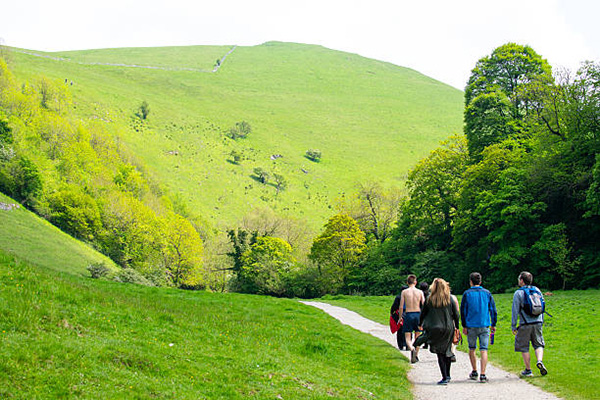
From seasonal crafts and activities to outdoor trails and winter wildlife, there’s lots to keep young explorers busy this half term at the National Trust’s places in Derbyshire and the Peak District. With miles of gardens, parkland and countryside to explore on those crisp winter days and indoor activities for when the rain sets in, there’s plenty to do, whatever the February weather brings. The National Trust’s cosy tearooms offer warming treats and kids lunch packs, and the shops have lovely selections of pocket money toys for little ones to browse. Here’s a round-up of the half term events and activities at the National Trust’s places near you. To find out more visit, http://www.nationaltrust.org.uk. Hardwick Hall, Derbyshire Half term has never been more ‘love’ly! Explore the exciting Elizabethan themes of St Valentines through outdoor play and crafts. Expect play activities in the Stableyard inspired by themes of connection, pairs, gratitude and love such as ‘Match the pairs’, Connect Four, create your own sonnet in our blackboard den, and rustle up a valentine’s feast in the mud kitchen. Find out more information: February Half Term | National Trust Calke Abbey, Foremark & Staunton Harold Discover hidden worlds this February half-term with themed trails inspired by the book ‘Wonder World: Earth’ written by Ben Lerwill and illustrated by Xuan Le. From 14-22 February, hunt for minibeasts and uncover fascinating facts about worms, and continue the adventure by visiting all three properties for unique activities at each. For avid bookworms, join a storytelling session in the Riding School at Calke to hear the story brought to life. Sessions include creative crafts and colouring, and can be booked online via Calke’s website, with SEND-friendly sessions available in a more relaxed environment, as well as shorter sessions for under-5s. ‘Wonder World: Earth’, published by Nosy Crow in collaboration with the National Trust, can be purchased onsite at Calke, so the fun can continue long beyond half-term. Longshaw Estate, nr Sheffield, Peak District. Bring your curiosity, eagle eyes and a sense of adventure to uncover secrets about the fantastic bird species of Longshaw, on The Bird Box Detectives Trail. Find 6 secret bird boxes hidden around the estate. Lift the lids to hear their calls, solve the puzzles, and tick off each bird as you go. £3 per trail sheet. On 22 February Longshaw’s rangers host a very special event; Family Bird Box Building – to celebrate National Nest Box week. Using simple hand tools, each family or group will be instructed on how to build their own bird box to take home. £15 per bird box. Special family crafts celebrating the birds of Longshaw are also being hosted on 18 and 19 February, at Longshaw’s Moorland Discovery Centre. Suitable for children aged 4-11, £8 per child. Find out more here Ilam Park, nr Ashbourne, Peak District. Get ready for a feather-filled adventure, between 14 – 22 February, on the Bird Box Detectives Trail. Secret bird boxes are hidden around Ilam Park and it’s your job to find them. Each box has a clue about the amazing bird that lives there, on this treasure hunt – but with more feathers! £3 per trail sheet, with a prize at the end! Fly down to the Dovedale National Nature Reserve for the Big Bird Count, from 14 – 21 February. You can climb Thorpe Cloud to search the skies or follow the river Dove to spot birds along the valley. With every £3 trail sheet you’ll get your own DIY binoculars and help count the different species you see, to add to the Big Dovedale Bird Count Board. Learn About the Birds Pop Up station: learn about the fascinating birdlife of the White Peak, on 21 February in Milldale. Drop into the National Trust information barn to meet our team of guides. Share your sightings on our community spotter’s board as you explore this beautiful part of the Peak District. Find out more here Kedleston Hall, Derby Enjoy a winter wander at Kedleston this half-term and discover willow wildlife sculptures along the way. The Short Walk has welcomed some new friends for all to see. Be sure to say ‘hello’! Available 14 – 22 February, 9am until 4pm. The Children’s Country House at Sudbury February Half term: Challenge your friends and family to a classic board game in the Parlour, perfect for a rainy afternoon. Solve the mystery in a game of ‘Sudbury Sleuth’, collect the clues as you explore the rooms in the Hall. From February half term onwards: Take a trip down memory lane and re-visit favourite video games from the past in the Museum of Childhood. Discover the wonders of soil science along the nature trail in Wellies Wood inspired by the Nosy Crow book ‘Wonder World: Earth’ 00
Walk Derbyshire – A Hike Through Dovedale & Beyond
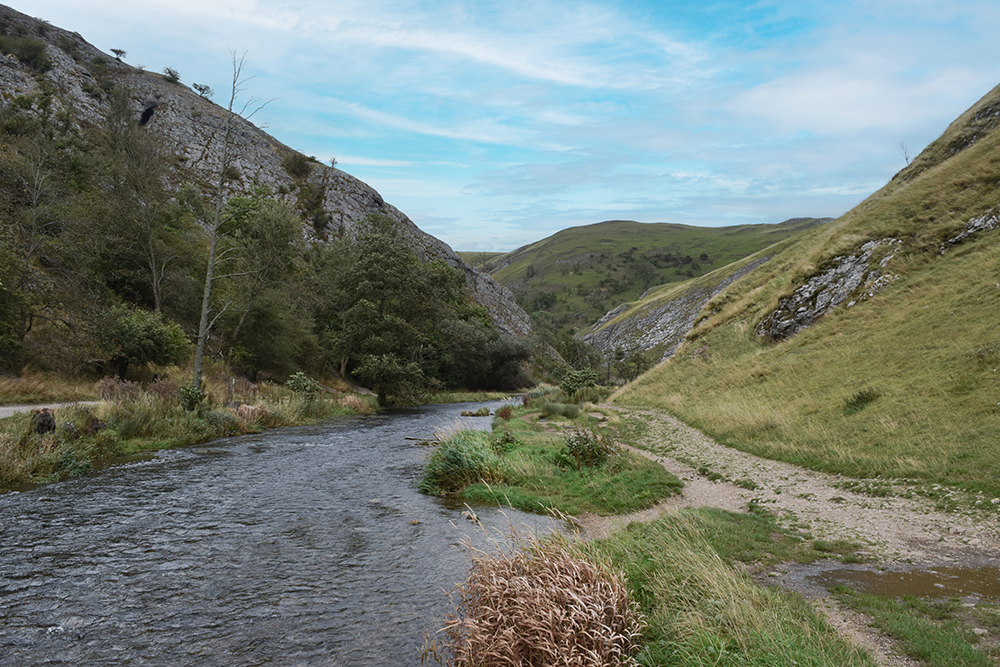
Dovedale is one of those iconic places in Derbyshire which everyone knows about, but finding a circular route can be a little tricky. You have a few choices on this walk to either walk down to the stepping stones, have a paddle, head up to Thorpe Cloud for the views or just picnic by the river. However, on an extremely wet September day we decided to venture a little further and enjoy a circular walk we had done once before. It is challenging though so best to be enjoyed on a dry day as the rocks are very slippery in parts. Also, the ascent is tough but there are a few tree stumps on the way up, should you need to rest your little legs. Along the way, we pass the stunning River Dove which is always teeming in wildlife. We pass by Thorpe Cloud (summit 287m) on your right, which you can always head up to before you start the walk if you want a really long hike. Thorpe Cloud and Dovedale were used as filming locations for Robin Hood (2010) with Russell Crowe. Dovedale is well known for its many limestone rock formations. On this walk you will pass Lover’s Leap where a young woman who believed her lover had been killed in the Napoleonic War, threw herself from the hill. Her skirt got caught in the branches of a tree as she fell which saved her life. When she returned home, she heard that her lover was alive. When you reach Ilam Rock, you can then turn around to see a formation called the Twelve Apostles. Details Parking: National Trust car park at Dovedale (£4 for 4 hours or £7 all day unless you are a NT member then it is free). Pubs: The Old Dog at Thorpe or a number to choose from just a short 5 minute drive away in Ashbourne. Distance: 7.85km 4.9 Miles Time: Approx 2.5 Hours Terrain: Quite tough, one big climb including steps. A few rocky scrambles. When wet many areas can be quite slippery. Walking boots are a must! THE ROUTE Head with the river on your right – you have a choice of straight ahead for the easy route to the stepping stones or cross the bridge on your right, then stick to the river to you left for a slightly more tricky (but more interesting) route to the stepping stones. If you went left of the river, you’ll need to cross the stepping stones when you get to them. If you went to the right you’ll already be on the right side to go through the gate and carry along with the river on your left. Follow the walk all the way along. You may spot Dippers and Kingfishers if you are lucky. Along the way you may also spot fossils in the limestone rocks on the path. You will eventually come to a bridge with a huge rock (Ilam Rock) to your left – cross the bridge and you will see a cave in front of you – bring a torch as this is well worth a look inside. However it’s usually flooded, so you may need wellies. We want to follow the public footpath to the right, then to Ilam via the steep ascent. And boy – is it a steep ascent! You will need good walking shoes. When you get to the top of the hill and it may make your ears pop– follow the sign left to Ilam. Follow the path through the trees, occasionally taking in the view on the left of the valley that appears between the gaps in the trees. You’ll eventually come to a gate, which you head through and turn left, follow along the steep grass (children will love sliding down here!) and you’ll eventually see a well worn little path in front of you amongst all the rabbits. When you get to the top, be careful, admire the view but the rocks are a little slippery. You will see a post on your left hand side. You can use either path here and you will come to a yellow footpath arrow signpost. When you come to the trees, you will notice that the path stops, so head right between two bushes up towards the top of the hill and then you will see a couple of yellow footpath signposts pointing to the right. Head up this hill towards the farm house. You will come to a wooden gate next to a barn – go through it and head left. There are farm eggs for sale here so bring some cash and a bag. Here you will see a random gorilla and a giraffe to your right– I kid you not! There is sometimes livestock in this field so be mindful. When you come to a gate head left, keeping the stone wall on your right as you walk up a track lined with trees. Carry on up the farm track where you will see a signpost on your right hand side ‘Bunster Hill’. Carry on up towards Bunster Hill. You have a choice here, there is a very steep path to the left or you can go straight to the bottom of the field to the stone wall. Head through the gate and down the field. When you come to the bottom where you can see the road and a farmhouse on your right – we are following the footpaths left all the way through the fields to eventually hit the car park. There is a choice at one point to not go through the livestock field. Gratefully back at the car park, the little kiosk was open so we were able to enjoy a well earned cup of tea and sausage roll! 00
Walk Derbyshire – A Wander With An Ogston View

This has got to be one of our favourite walks which we discovered just coming out of lockdown. It takes in the beautiful views over Ogston Reservoir. You also get a bit of height on this walk so the view down the hills at one or two points is pretty stunning. Ogston Reservoir is owned by Severn Trent Water and is a Site of Special Scientific Interest. There is a public hide overlooking the reservoir in the West Bank Car Park. Ogston Reservoir is known for its sailing club and many twitchers come here to view the vast array of migrating birds. You can’t actually walk all the way around the reservoir directly, but there are some beautiful places to walk and where you can take in the views, it really is idyllic and so is a firm favourite. Ogston Sailing Club is worth checking out as they have paddle-boarding sessions and social sailing sessions, so take a look at their website for more details. The walk starts from the West Bank Car Park at the reservoir. It is a moderate walk but after we have had a downpour, you will find you definitely need wellies to go through the farmers field as it can be very muddy – also they sometimes have the cows in one specific field so please be aware and extremely cautious when walking with dogs. THE ROUTE There is free parking in the West Bank car park, then walk back towards the entrance and follow the road straight up ahead. Don’t go around to the right but straight up and you will see a house. Follow the track to the right and walk to the top of the track where you will already start to take in the views. Follow this up until you get to the farm in front of you and go straight through the gate, keeping to the right. The footpath is clearly signed so be respectful of the livestock and property. This can be the very muddy field in wet conditions. Go straight ahead and over the stile at the other side. Follow to the left of the field and it will eventually bend right. Follow this till you see a stile heading left through another field. Walk diagonally through the field and you will eventually come to a metal gate where you can go over the stile. You will walk through a garden with a house on the right. Keep walking and you will end up on the road, White Carr Lane. Be careful as it is a little narrow here. Turn right at the end of the drive. Follow the road to the right and up the hill. At the top of the hill you will see a footpath sign to your left which looks like you are going up someone’s drive. This is the correct way! All the way to the top and through the gate. Carry on a little and take time to take in the panoramic views!! Be careful underfoot as you pass through this next field as it does slant a bit to the right and we don’t want any roly-poly’s down the hill. Keep going till you end up on the road. Turn right here and continue to the T-Junction. Here we go left and walk down the road, keeping your eye open for a track on the right which is past the place which currently has a yurt on the land. Go down the lane all the way and keep following the lane– it is really straight forward. You head into the woods here so be careful underfoot. Upon the clearing keep heading along the footpath and you will eventually come out onto the Dark Lane. You should recognise where you are now. Go across the road and follow the road to the car park on your left hand side. THE DETAILS Parking: There is free parking in the West Bank car park. Pubs: The White Horse at Wolley Moor is a fantastic pub that servers great food and real, local ales. Distance: Short =3.5 miles, 6k Time: Short = 1hr 30min Terrain: Moderate, a couple of steep hills to climb, but well worth it for the amazing views. 00
Walk Derbyshire – An Amble through Ashover
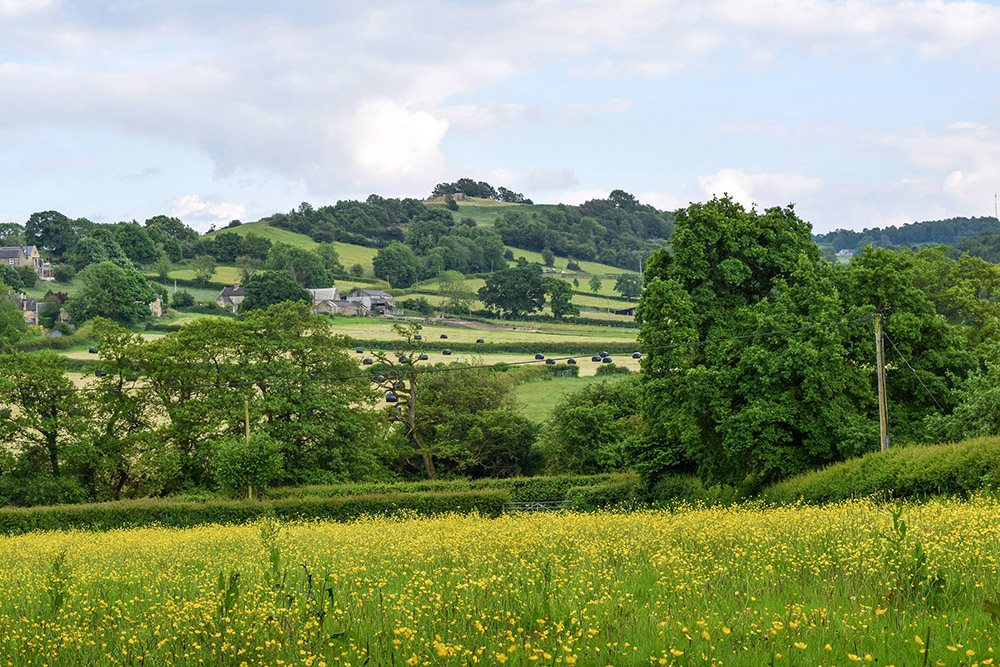
Set alongside the River Amber is the picturesque village of Ashover. Quaint cottages, stone houses and old pubs fill this favourite Derbyshire village of mine. It may take you a while to drive through the village as it is so pretty, with many cute cottages for you to stop and admire. Ashover has a truly rich history with quarries, lime kilns and lead mines. It holds All Saints Church dating from between 1350 and 1419 which was built by Thomas Babington. (One of his family members was executed for plotting against Elizabeth I). Ashover is also the home to the long standing Ashover Agricultural & Horticultural Show – this year’s show takes place on Wednesday August 14th. It is a great day out for all the family. In the village there are three pubs, a cafe, a cute coffee shop and gorgeous little village shop which sells gifts, cakes and ice cream (cash only!). There is a lovely cricket pitch with football goals, a nice children’s park and play area, and tennis courts, so plenty to occupy you. Adjacent to the cricket pitch is Ashover Parish Rooms now the Village Hall, which can be hired for weddings and events. There’s a plethora of walks in and around Ashover featuring stunning views, high vantage points, buttercup filled meadows and babbling brooks. You can see why this is a favourite for myself and many other walkers. USEFUL INFORMATION This walk is pretty easy to do. Takes just over an hour or longer if you are taking time to take in the beautiful scenery. We came through a field of cows with calves so please be careful if you have dogs. It’s a very peaceful walk which goes through fields, meadows, along the river and is easily shortened or extended. Near the end you pass 3 pubs so take your pick! Track with … https://www.outdooractive.com/en/route/hiking-route/central-england-and-the-midlands/drafted-on-2024-06-25/295370954/?share=%7Ezzgg3age%244osstcjj Parking… there is a free car park at the village hall and also plenty of spaces on the road (please park responsibly!) Pubs… three in the centre of the village. The Old Poets Corner, The Crispin Inn and The Black Swan. Distance – 4.35km Time – 1 hour-ish Terrain – Easy to moderate THE ROUTE Starting from facing the cricket pitch we walk to the bottom left hand corner to the small pavillion and follow the footpath to the left as it goes all the way through the fields, through the woods (where you will smell the wild garlic at the moment), till you hit a little junction in the path. Turn right through the gate and you will come to the Fall Hill quarry. Follow the path as this goes head straight onto Hockley Lane so please be careful! Head left on Hockley lane for a few yards where, on your right, you will see a footpath sign which looks like somebodies driveway but this is the footpath – honestly! Carry on down onto the road, don’t go down the bridleway. We are now walking alongside the River Amber and after 20 or so yards on Fallgate you will come to the SLOW sign on the road, here you will see an opening on your right which will take you along the river. Follow along the River Amber and then take the path to the right. This will go down a couple of steps and then up a couple more and through the trees. When you come out onto the lane you have an option of making this shorter by taking the bridle path to your right but this is a little treacherous underfoot, especially if it’s been bad weather. We are carrying on straight up Gin Lane in front of you. When you get to the fork in the road, take a right along the track which slowly makes its way uphill. Climb all the way to the top. You will pass Overton Hall on your right. You will come to a clearing with a path to the right. Take this. You will come to a small gate with the yellow footpath arrow. Take that and go down the stone steps – slippery when wet. Follow the stone steps to the bottom, you will go over a little bridge and following the path up Salter Lane eventually coming out onto Hockley Lane with Old Poets Corner on your left. Once you’ve had a swift pint at one of the pubs, follow straight up past the Black Swan on your left and continue around the corner till you see your car. Enjoy a pint at one of the pubs! 00
Walk Derbyshire Cromford Meadows & Black Rocks

Cromford owes its birth to Richard Arkwright, founder of the water-driven cotton spinning frame, one of the leading inventions of the Industrial Revolution. Harassed by home-based cotton spinners and weavers in his native Lancashire, in 1771 he opened his first mill, using the convenient power of the nearby River Derwent, close to the Crom Ford, a name that was taken by the factory village he built to accommodate his operatives. Later on he was awarded a knighthood and died an extremely wealthy man – a man who once offered to pay-off Britain’s national debt from what he claimed was ’petty cash’. Developed as aself-contained village, Cromford provided all the amenities necessary for life in what was then a remote corner of Derbyshire. It had every available kind of shop, ranging from the proverbial butcher and baker, to haberdashery and even traditional blacksmiths and leather workers to cater for the day to day needs of the village and surrounding farms. Health problems were also catered for by an early version of the chemist’s dispensary. In order to protect it from unwelcome disturbance, the mill became more like a fortress when viewed from outside; guarded by narrow windows rather like gun-slits, and certainly no windows or unlocked doors were accessible from street level. A reasonably benevolent employer, at least by the standards of the time, Sir Richard as he became, and his later sons, gave Cromford its church and founded a school teaching the basic three r’s. North Street, part way up the hill towards Wirksworth was built to both accommodate textile workers, but also provide space for traditional stocking-frame knitters of the fashionably Derby-ribbed stockings. Stocking frame knitters traditionally required the best possible light for their work. To suit all needs, the knitters worked in specially adapted upper rooms, each house connected to its neighbour by an opening in the adjoining walls. North Street runs roughly east-west, giving opposite sides of the street a fair share of available sunlight, morning and afternoon. As the fame of Arkwright’s invention spread far and wide, studied by visitors from all over Britain and Europe, it became necessary to provide some form of high-class accommodation. His answer was to build what became the Greyhound Inn beside Cromford’s market square. In later years Cromford was linked to the countrywide canal network, when a branch of the Trent and Mersey Canal reached the village. There was also an ill-fated attempt to take this canal over the limestone moors to Whaley Bridge, but lack of a reliable water supply doomed the plan. However, by using canal engineering techniques in the design, one of the earliest railways connected the Derwent Valley to Manchester, the leading light of the burgeoning cotton empires. This walk starts by exploring the narrow back streets of Cromford, before climbing across flower-filled meadows to reach the first of the inclines lifting the railway high above the surrounding countryside. Dominated by Black Rocks, a rugged gritstone outcrop above Sheep Pasture Incline, which is the first section of the High Peak Railway, connects it to the Midland Main Line. The path across Cromford Meadows follows part of High Peak Trail and also the Midshires Way long distance path. Hereabouts, our path route goes under Sheep Pasture Incline about half way between High Peak Junction and the stone tower that once held the first of the series of winding engines along the High Peak Railway. A forest track is followed across the wooded hillside as far as a footpath junction off to the right. This is followed as far as another path junction where a right turn leads to delightfully named Wigwellnook Farm. Its access drive is followed beyond the farm, down to a minor road with wide ranging views. A right turn here for a couple of hundred yards or so, reaches a footpath climbing to the right, up into woods surrounding the gritstone outcrop of Black Rocks. Here a nature trail is followed, winding below the crags and down to the car park for a section of the High Peak Line. A path on the opposite side of the car park drops down to the Cromford to Wirksworth road where a right turn leads back into Cromford. THE WALK :: THE WALK :: THE WALK :: The walk starts and finishes opposite the Greyhound Inn beside Cromford Market Place. It is easily reached from the canal terminus wharf car park beyond Arkwright’s Mill. Walk up the Cromford Hill road as if heading towards Wirksworth, heading for North Street. Wander the twisting route of the head of a series of streets, always avoiding the main road and its traffic. Continue as far as Baker’s Lane and turn left, following the lane to its end. Leave the lane and join a field path crossing the broad grassy slopes of Cromford Meadows. Pause now and then to admire the views along the Derwent Valley. Sir Richard Arkwright’s Willersley Castle stands proudly at the foot of a limestone crag. He had had it built for his retirement, but unfortunately it was badly damaged by fire and he died of old age before it was completed. High Tor stands proudly near the head of the gorge and the Heights of Abraham are opposite – you can reach it by cable car from the bottom station close to Matlock Bath Station on the Derby/Matlock railway line. Ignoring any side paths to the left or right, go forwards towards the High Peak Railway’s Sheepwash incline. The line was opened in 1831 and the winding house is just about visible at the top of the incline to your right. Follow the path, going under the incline and then out into mature pine woods. Climb for about 150 yds up to a forest drive and turn left along it. After roughly a quarter of a mile look out for footpaths on either side of the drive. Turn right on to the uphill path. Walk as far as a crossing of two paths
Walk Derbyshire – Riber Via the Front Door

Standing at 850 feet above sea level on an isolated hilltop, Riber Castle, to give it its acknowledged title, has dominated Matlock’s eastern skyline ever since John Smedley built it in 1862. His idea was to make it the de-lux version of the spa hotels springing up around the town, venues of places offering accommodation for those taking part in his ‘water cure’. Visitors from all stations of society came to this attempt to copy a European spa such as Baden Baden in order not simply to drink the waters, but to be subjected to high pressure hosepipes blasted by evil-minded operatives, wielding hoses aimed at various parts of the victim’s anatomy. This rather curious method of health improvement, enjoyed a short-lived popularity until changes in attitude and two world wars brought about its demise. With its departure, Matlock took advantage of the spas. Some became nursing homes and others developed as apartments; the main one found a use as the headquarters of Derbyshire County Council. Smedley first had the idea of his ‘water cure’ when he was in recovery following a nervous breakdown. Part of his cure was time spent at one of the European spas. Feeling much better after the spell of being sluiced by the Germanic system of being mauled with powerful jets of water, he came home with the idea of turning the tiny market town of Matlock into the spa of dreams. Already a successful businessman, owning a garment knitting factory in Lea Mill that still flourishes, he decided to use his captive team of employees as guinea pigs in order to try out his new cure-all ideas. There is no record of his employees’ willingness or otherwise to take part in his experiments, but, as none of them appear to have suffered more than a loss of their dignity, they did at least form the basis of those who came for this so-called cure. Smedley was so successful that his fortunes grew and he was able to encourage his senior management to open subsidiary branches around the town, and even sponsor the building of a cable-hauled tram that climbed Bank Road from Crown Square in the centre of Matlock, conveniently near the railway station serving trains on the London to Manchester main line. All that is left of the long-abandoned cable car, is the slight widening of the street about half way up the hill, where trams could pass; the steam engine powering the cable was housed in the building now used as a car workshop at the top of Bank Road where it joins Wellington Street. He persuaded his senior employees to open satellite establishment. All of those satellites together with the main which is now DCC’s headquarters, have been put to other uses in recent times, ranging from care-homes, to luxury apartments. John Smedley decided to build his main feature Riber Castle, not just as a luxury spa hotel, but as his home. Although the pretentious towers of this mock-citadel act as vantage points for views along the valley and, one must suspect, it was where he could keep an eye on the activities of his workforce in Matlock and Lea, both of which can be clearly seen from Smedley’s eerie. It was to become the major building in a substantial group of medieval buildings which had stood there and in fact still do, since before the 17th century. Unfortunately his plan to build Riber Castle as a super hydro came to nothing, due to one simple yet overlooked fault – the builders couldn’t find sufficient water needed for the complex equipment his plan envisaged. As a result it became where Smedley spent his last days. The place seems to have been dogged by bad luck ever since; it became a minor public school for boys, then during World War 2 large quantities of sugar were stored in rooms where Victorian ladies and gentlemen once took their ease. In more recent times its ruins became a European wildlife zoo, where locally bred European lynx were exported to a Spanish national park. Their transfer was carried out by the RAF, using lynx helicopters! The latest scheme intended to preserve the future of the castle is to develop it as a luxury set of apartments, complete with a helicopter landing pad. Only time will tell if this scheme will be the success its planners envisage. This short walk in the brief but steep climb up to Riber passes through much of Matlock’s history. Starting at the medieval bridge, then moving on past the shelter that once stood at the tram terminus, the walk moves on by way of award winning Hall Leys Park that still holds the ambience needed for gentle exercise, or admiring the flower beds full of colour each summer. Where there was once a cycle race-track, youngsters can enjoy the thrills of the new track. Following jitties through Knowleston Place, the walk passes one of Matlock’s two flour mills now finding fresh uses. The mill stream that once powered their grind-wheels is followed as far as the cluster of buildings at the foot of Lumsdale. Next and after crossing the Alfreton road, a steep path climbs up to Riber’s cluster of medieval stone houses; its castle dominates the view along the Derwent valley, from a glimpse of High Tor’s limestone crags, to Masson Hill across the gorge. The walk leaves this ancient view by dropping steeply down to Starkholmes and then a riverside track will take us back into Hall Leys Park and the centre of Matlock. THE WALK From Crown Square in the centre of Matlock, follow the riverside track through Hall Leys Park as far as the side road beyond the children’s play area. Following Bentley Brook, go past the houses of Old Matlock and turn right along the main road. Cross over at the pedestrian crossing and turn right. Follow the main road, over the turning for Chesterfield and continue as far as the last houses.
Walk Derbyshire – A Walk Along the Monsal Trail

During the height of the railway mania tracks were being laid often with little or no purpose, throughout the land. While there were already lines running up the east and west coasts, linking London to Edinburgh and Glasgow, with cross country connections to Birmingham and other major industrial areas across industrial Midlands, Manchester and the burgeoning cotton towns of east Lancashire had no direct link to the south of England. As a result, a line was planned, running directly up the middle of the country, with off shoots east and west linking it to both the engineering giants of Birmingham and the ‘pot banks’ of Stoke on Trent. It would start at the ‘cathedral’ station of St Pancras in London and finish as befitted Manchester’s status at the business-like Central Station right in the heart of Cottonopolis. George Stephenson being the leading railway engineer of the time, was invited to build the line that became known, for obvious reasons, as the Midland Railway. Running the track directly up the country, he encountered no major problems in driving it more or less due north, through Leicester and Derby. It was when the line began to cut its way to the north of Derby, where Stephenson was so confident in the line’s potential that he made the then small market town the manufacturing centre of his operations. He also laid the foundations of lines running east and west, east to Nottingham and Lincoln and southwest to Birmingham and west to Liverpool by way of a hub of Crewe, eventually the manufacturing and traffic control of lines reaching north and west. It was while Stephenson was carving his Midland Line north of Derby that he hit the first of many problems. South of Derby all had been plain sailing so to say. Unlike today with HS2, there had been no serious objections, in fact landowners were falling over backwards in co-operation, hoping to fill their pockets with the wealth offered by both selling the land allowing the line to cross their land, and more importantly, lining their pockets with dividends from the business created by this, the most profitable way of carrying goods up and down the country. His troubles began once his line made its way beyond the hitherto easy-going flat countryside in the south, with no serious hills to cross or tunnel through. It was at Whatstandwell, whose tiny station became Florence Nightingale’s link with the rest of England, where the hard work began. Also, it aroused political in-fighting by two dukes. Beyond this tiny village, the route had to carve its way through the massive limestone bulk of High Tor and similar outcrops further north. It was when the line reached Rowsley that Stephenson’s troubles really began; it was here incidentally, that an important marshalling yard for goods trains running north and south eventually developed, probably one of the few advantages that came his way. Stephenson’s original plan, and one that amazingly had the blessing of the then Duke of Devonshire, was to run the line along the Derwent Valley, joining it with the planned Sheffield to Manchester Railway at Hathersage. His planed route would not spoil Capability Brown’s masterpiece of Chatsworth Park with its view from the Palace of the Peak. Here his line would travel between the green fields of Beeley and Baslow, running beneath the park, by way of a tunnel created by a method known as ‘cut and cover’. Trains would effectively disappear beyond Rowsley and reappear at Baslow where a station was planned for the Duke’s convenience. Unfortunately, this suggestion failed, mainly because the Duke of Rutland successfully lobbied in Parliament for the line to take a route that was more convenient to him, together with his own semi-private station at Bakewell, close to Haddon Hall. In retrospect this seems a rather petty idea, as Haddon Hall is more or less equidistant between Rowsley and Bakewell. Not only did the plan remove the possibility of a convenient station to Chatsworth at Baslow, but it forced the Duke of Devonshire to make alternative plans for his journeys to and from London and forcing Stephenson to build an alternative station near Hassop, far from any other passengers. From Stephenson’s point of view, re-routing the line was a potential disaster. While his original plan took the line through the fairly open and almost level countryside of the upper Derwent Valley, the new route forced the line to climb high above Bakewell, in order to gain the height needed for the climb through almost alpine terrain in the Upper Wye Valley of Monsal and Miller’s Dales. What became one of the most scenic railways in Britain was only built after the input of large amounts of cash and manpower. Another un-budgeted cost was the need for locomotives with the extra power needed to haul trains over this ‘alpine’ route. These became the beautiful maroon Pacific locomotives once used to haul trains from London St Pancras to Manchester’s Central Station. With the demise of the line following the Beeching report, the Midland was closed beyond Matlock and stripped of its track. Fortunately, this allowed the Peak District National Park to take over large sections of it together with its tunnels and scenic viaducts in order to create the Monsal Trail, an all-weather route for walkers, cyclists and horse riders. The route of the trail runs from Bakewell to a little way beyond the old Miller’s Dale Station, passing through several tunnels illuminated by solar-powered lights. It crosses the famous viaduct below Monsal Head, a popular viewpoint before taking a high-level route above the aptly named Water-cum-Jolly Dale, making this walk one of the easiest, yet most attractive walks in the Peak District. There are several pubs and two cafes along the trail, as well as in Bakewell, the Peak District’s ever popular visitor destination. One of its main attractions is the local delicacy called the Bakewell Pudding. An old cottage close to the town centre is well
Walk Derbyshire – A Walk to the Bull Ring at Snitterton

By Rambler Before I begin my description of this walk, I must put in an explanation of what I mean by Bull Ring. First and foremost I have no intensions of sending walkers all the way down the A38 in order to walk round Birmingham’s busy Bull Ring commercial district. The bull ring (notice the use of lower case ‘b’ and’ ‘r’), we are referring to is a four or five inch iron ring set in a flat low stone in the corner of a tiny roadside green at Snitterton village near Matlock. Its original purpose was to tether a bull as part of the barbaric so-called ‘sport’ of bull baiting by teams of dogs, a practice banned in 1835. The walk starts and ends on Matlock Bridge, near to which is currently the site of an extensive flood prevention scheme. The work involves the use of a massive crane that currently dominates the town centre skyline. The crane has become such a popular item, that a fund-raising competition to give it a name was arranged – the winning title was (drum roll), ‘Liftymacshifty’. From the bridge and its interesting civil engineering works, the walk leaves the main road where it bears left. Continuing forward, the way is past a wine merchant’s warehouse and over the railway bridge. Continuing forwards and steadily uphill through a small farmyard, steps lead to a stile giving access to a path climbing steeply towards a wood next to a tree shaded house. Across its access drive and through the belt of trees, the way then continues uphill on a field path heading towards a farm. A right had turn on the farm lane and then almost left through a kissing gate opposite leads on to another path bearing half right and then uphill beside a hedge in order to reach another track. Here a right hand turn takes the walker past a welcoming seat with a delightful view over Matlock, an ideal place for a rest. Slightly to the right above the seat, a field path continues to climb the hillside, then crosses a farm lane. Beyond the far side of the lane, a level path crosses meadowland, past two old stone barns until it reaches a five-way path junction. Taking the second path to the right of the one you are on, walk beside a stone boundary wall to reach a narrow road – this is Salter’s Lane once used by teams of packhorses carrying salt from Cheshire onwards to North Sea fishing ports. Across the road, a signposted path leads to a five-way junction of paths, and then downhill to Jug Holes, an abandoned lead mine. Swinging left from the mine, we follow the path downhill and then right at a cottage to Leawood Farm. Its access lane leads downhill into the attractive hamlet of Snitterton. This is where in the corner of a small roadside green marked by a wooden seat the bull ring can be found, set in a flat low stone next to the road. The road makes a tight right hand bend beyond the ring; follow it for about 100yards and then go left through a stile. Ignoring a path leaving to the left, the walk continues forwards as far as the road which is joined almost opposite a minor side lane. Follow this lane, to the right, almost as far as the river. Turn right along its bank and continue over a series of meadows until the path reaches a factory producing macadam blocks, the shaded riverside path continues all the way back into Matlock and its bridge. USEFUL INFORMATION: A moderate walk of 4½ miles (7.25km) on field and riverside paths. One steep uphill climb at the start of the walk. Good views of the Derwent valley as it curves away to the hills and moors of the Dark Peak. Muddy sections of the riverside path, especially in wet weather. RECOMMENDED MAP: Ordnance Survey Explorer Map Sheet OL24, 1:25000 scale The Peak District – White Peak area. PARKING: Roadside to the right above Sainsbury’s petrol station, although all day pay and display parking can usually be found in the riverside car park on the Matlock Bath side of the railway bridge over the A6. PUBLIC TRANSPORT: Rail from Derby. Bus from Derby or Ripley. REFRESHMENTS: Pubs and cafes in and around Matlock town centre. THE WALK STEP BY STEP The walk starts at Matlock Bridge. Cross it and walk on beyond the road junction opposite. Continue over the railway bridge and then onwards and upwards to a farmyard. Climb the stone steps next to the farm house and go through a stile to enter a field. Climb the steep grassy path directly uphill until it reaches the lane to a large house. Cross this lane and walk through a small belt of trees. Climb the stile at the far side of the trees and then follow a path alongside a hedge. Swap sides with the edge and continue uphill towards a farm. Cross the farm’s access drive by going right and left as indicated by the position of two stiles. Walk uphill diagonally half right, crossing the line of a mature hedge. Continue uphill, the path now bearing half left to reach a tumbled down wall; (hopefully the wall may be repaired in the near future and a stile restored). Cross the rough farm lane immediately below the wall. Directly opposite, the twin stones of a squeezer stile in a dense hedge give access to a level path crossing a series of meadows marked by two abandoned stone barns. Where the path reaches a five way path junction, take the second path on your right. Go down to and cross Salter’s Lane, part of the old Saltway between Cheshire and the east coast. Begin to go downhill, steeply at first, then bear left next to the lower entrance of Jug Holes Mine (lead). From the mine go directly downhill for a short distance to link with a
Walk Derbyshire – Around Kedleston, Woods & Parkland

Opening my latest copy of WALK DERBYSHIRE the seventh no less, I realised that the first walk in the guide took in much of Kedleston’s parkland, but less than half of its beautiful woods and plantations. As enjoyable as the walk maybe, it would be a great pity to exclude the extensive woodlands covering North Park and Hay Wood just across the ponds in front of the hall. A signposted path starting near North Lodge on the back road from Derby, winds its way in and out of woodlands. This is where mature oaks have grown for so long that the Ordnance Survey has confidently marked them on its maps covering the area between Quarndon and Kedleston. Starting from the National Trust car park to the rear of Kedleston Hall, at first the walk follows the hall’s access drive, round the front of the hall, and then down to the graceful bridge designed by Robert Adam to make a perfect foil for the view of the hall built to architect Paine’s plans. A long stretch of narrow lakes created by damming Blind Brook reach out on either side of the bridge, with the drive continuing, past a golf course before joining the main road at North Lodge, the main entrance to Kedleston Park. A path starting on the edge of woodland enclosing North Lodge, bears left along the edge of the wood before swinging left to follow the boundary of Bracken Wood. A narrow belt of trees shelter a side track which is crossed, (it leads to the estate‘s saw mill). On the far side of the track, the path continues, slightly uphill through Hay Wood for about three quarters of a mile in order to reach the head of the long line of narrow ponds. At this point the walk ignores a footbridge and bears left along the side of Upper Lake, where a seat offers both a resting place and a view opposite an attractive old boat house. Continuing beside the ponds, the bankside path reaches the Adam Bridge, and then crossing it to continue along the opposite side of the lower pond, as far as woodland sheltering the park. Entering Shady Oaks Wood, the way continues through what has been called Derby Screen and then winds its way upwards towards Vicar Wood with its attractively screened views of the south side of Kedleston Hall, continuing above its Pleasure Grounds where the privileged once took their ease. From here the path continues all the way back to the car park. Kedleston is one of the oldest stately homes in Derbyshire. Its founding was created by generations of Curzons who began to build in 1215, but only the Norman-style doorway into the church remains from that time. Loyal to King Charles 1st, John Curzon still managed to be made a baron. Under the family name of Scarsdale, the first Lord Scarsdale set about building what we see today after his elevation in 1761. Paine a prominent eighteenth century architect was employed to design the exterior and general layout of the rooms, and Robert Adam for the interior. In the manner of the time Lord Curzon had the old village of Kedleston moved away from the hall, only leaving the church door in memory of the old settlement. George Nathanial Curzon is the most distinguished member of the Curzons. He is best known as the Viceroy of India where he acquired many fabulous treasures such as the silver and ivory howdah and Lady Curzon’s fabulous Peacock Dress embellished with thousands of glittering beetle wings. It was designed for a special durbar held at Delhi in honour of the Viceroy. Normally these treasures are on display in the hall, but currently the National Trust has removed them for restoration. Lord Curzon was a keen supporter of the National Trust – he even bought an ancient castle in Sussex just to please his wife. Time should be allowed on this walk, in order to visit the magnificent stately home, one of Derbyshire’s finest. Please note that the museum is temporarily closed while many of its treasures, including the Peacock Dress, are being restored. USEFUL INFORMATION: A 5½mile (8.8km) of easy woodland and riverside walk on well-maintained paths. Chance of muddy sections around Vicar Wood after heavy rain. RECOMMENDED MAP: Ordnance Survey 1:50,000 scale, Landranger Sheet 128: Derby and Burton upon Trent. The National Trust also have a free map of Kedleston Park’s walks available at the Visitor Centre near the main car park. This walk combines parts of two of them. PARKING: Next to the Visitor Centre. National Trust members have free parking and entry into the hall, ACCESS: Minor side roads from Belper or Derby via Mackworth are signposted ‘To Kedleston’. REFRESHMENTS: National Trust café in Kedleston Hall close to the car park and Visitor Centre. THE WALK STEP BY STEP From the car park walk back towards the hall and then bear left down its access drive. Go past Bentley’s well in its surrounding iron fence, the last remnant of a failed attempt to create a fashionable spa at Kedleston. Cross the attractive bridge and admire the views up and downstream, plus the great hall topping the gently rising grassland grazed by the estate’s sheep. Walk on down the drive, with the estate golf course on your right – please note there is no access to the golf course, however tempting it might look. Within sight of the North Lodge entrance to Kedleston, look out for a footpath on the left, following the boundary of a small wood. Keeping with the path, bear left and leave the wooded boundary to cross an open field. Continue as far as a second wood and, on reaching it, turn left along its edge. Cross a minor side track and go forwards into Hay Wood. A reasonably straight path continues forward for about a quarter of a mile in order to reach the northern bank of the upper pond. Do
Looking Around Duffield
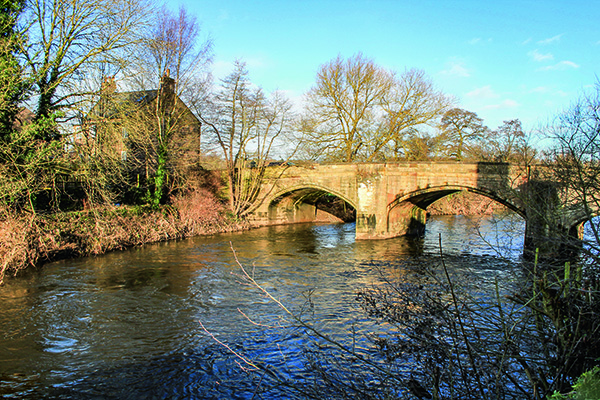
Leafy side roads lined with pleasant houses, home for many Derby commuters, fill a sheltered hollow where the Ecclesbourne meets the River Derwent. Regular flooding by the latter meant that development was kept well above the water meadows lining both sides of the meandering river. After the Norman Conquest, the village became a kind of administration centre controlling Duffield Frith, a royal hunting forest, but the only reference to its earlier Saxon occupation was in the Domesday Book when Duvelle was part of the Wapentake of Morleyside. It was in this time that foundations of the parish church were laid close to the river crossing at the opposite end of the to, and closer to the river. Dedicated to the eighth century martyred Northumbian prince St Alkmund, the church is one of only six in the country. Its position, well away from the town and close to the flood plain is explained by its original purpose, as a place of refuge for travellers crossing the hazardous River Derwent. The scant remains of a castle that once had one of the tallest keeps in Britain, stand above the north end of the village. In medieval times Duffield’s purpose in life was serving the needs of royal huntsmen who came to enjoy the chase across the Chevin and beyond. Until the 13th century wolves abounded in the area and one of the jobs of the steward in charge was to prevent them killing off the fallow deer. Duffield Frith extended from Wirksworth and the then tiny hamlet of Belper in the north, through Heage, Mackeney and Hazelwood and across to Windley. Hardly anything remains of the castle built by Henry de Ferrers. Standing on a high earthen mound above what is now the A6 before it crosses the railway line near Chevin Golf Club, there are only a few stones left plus the top of a deep well to indicate the position of the motte and its outer bailey. Originally the settlement’s main occupation was farming. Flaxholme, the area a little to the south of the main village was where flax was grown, providing textile fibres before the advent of cotton. Many of the farm houses still standing in and around the village date from at least the seventeenth century. Ashtree Farm on Duffield’s main street occasionally has cattle that seem to hark back to older times. These are English Longhorn Cattle, a beef breed whose long curling horns seem to hint of a certain wildness; wild they may look but they are remarkably docile, even if not exactly disposed to being photographed. Nearby textile magnates like Richard Arkwright and Jedediah Strutt provided cotton thread for the framework knitters who comprised the non-agricultural workers and Duffield’s gradual expansion took place in three stages. The first was when the Derby to Chesterfield turnpike replaced the old coach road on the far side of the valley in the 18th century. Several of the older buildings in and around the centre of the village date from this time and at least one of them, Archway House looks very much as though it was originally a coaching inn. The second phase was when the railway came to Duffield, offering communications into and out of Derby. This eventually led to the third and currently the greatest spread of residential properties. Starting at the north end of the village where the A6 crosses the main line, the first feature is the Chevin Golf Club and its carefully manicured greens. Next come the castle remains, the stronghold of Henry de Ferrers, steward of the royal hunting grounds. It is reached by a short flight of steps through dense undergrowth currently being cut back by the National Trust. A nearby descriptive poster shows that the scant remains look as though the castle was composed of an outer wall surrounding a palisaded tower on top of a man-made earth mound; a stone beehive structure now protects the top of the castle’s well. The main road leads through the village centre where an attractive line of shops and pleasant cafes provide for both residents and visitors alike. Just before the road swings left to cross a railway bridge, there is a side road off to the left. This goes down to Duffield’s two railway stations, but main line trains do not stop here. The Derby to Matlock trains do however, and are well used by commuters and shoppers travelling to and from Derby. The second station is adjacent, but no longer connected to the mainline. This is the southern terminus of the Ecclesbourne Valley Line from Wirksworth. Unlike many post-Beeching closures, the line was abandoned piecemeal, first to passenger services in 1947 and then to freight in 1964, but even then the line was kept open for occasional goods traffic until 1989. In 1992 a group of enthusiastic volunteers got together to found Wyvern Rail; keeping the history of the line alive by using the original logo of what became the London, Midland and Scottish Railway. Gradually and with thousands of voluntary man-hours’ labour, by 2011 the ten-miles of track was finally reopened from Wirksworth to Duffield. Running to an advertised timetable of five return trains each way, it is now possible to enjoy the unspoilt scenery of the little known Ecclesbourne Valley. For train times and running days together with details of special events throughout the year, check the web site – www.e-v-r.com Known only to narrow gauge railway enthusiasts, from 1874 until 1916 there was a fifteen-inch mile long narrow gauge track on the far side of the valley directly opposite Duffield’s twin stations. This was the brain child of Sir Arthur Heywood who lived at Duffieldbank. Something of an experimenter he not only used the line to link nearby quarries as well as running passenger services, he also saw the military advantages of the quickly laid track and lightweight rolling stock. Despite the ‘blimpish’ attitude of the military, narrow gauge railways systems were used extensively to