Dining In Derbyshire – The Bulls Head, Holymoorside
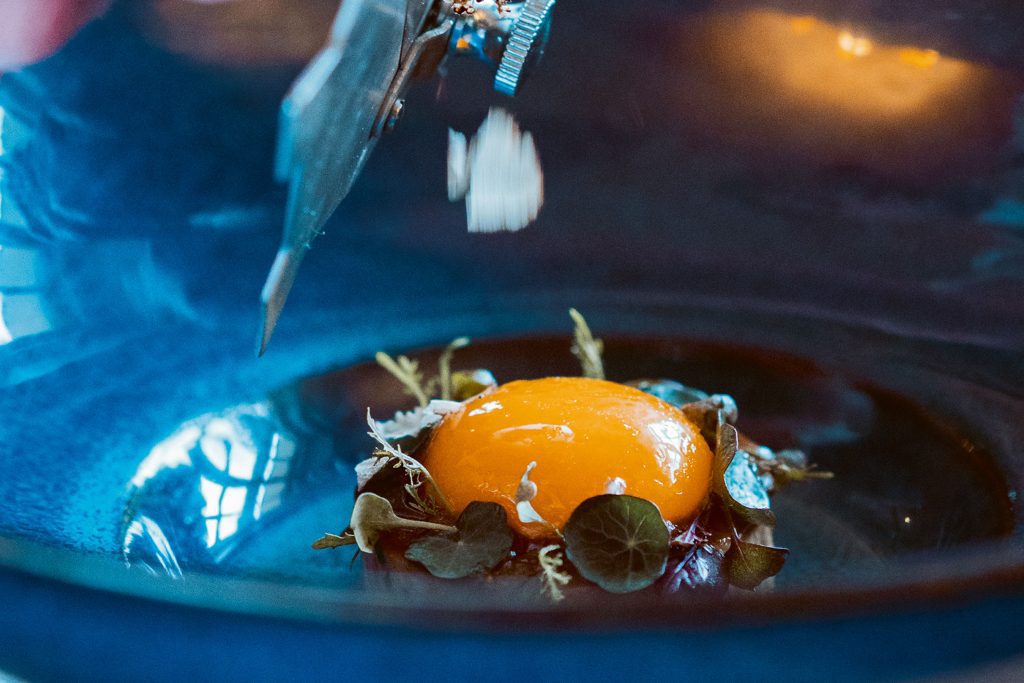
Nestled in the centre of Holymoorside on the west side of Chesterfield. The Bulls Head, has over the past 9 years become the go to place for fine dining. Travelling there on a sunny Saturday evening we passed along country lanes Nestled in the centre of Holymoorside on the west side of Chesterfield. The Bulls Head, has over the past 9 years become the go to place for fine dining. Travelling there on a sunny Saturday evening we passed along country lanes with names such as, Cotton Mill Hill, Bage Hill, Loads Road and Chandler Hill Lane all hinting at the fact that we were arriving at a village with real history. Just around the corner from The Bulls Head, which first opened its doors in 1881, was the Manlove owned Cotton mill which made cotton thread spun onto its own bobbins. Sadly the sound of the mill wheel turning no longer exists as the village throbs to the new sounds of its residents. And so we arrived at this lovely village that holds so many childhood memories for me. We were booked in at 6:00, knowing that to fully enjoy the experience we needed the whole evening. A 9 course tasting menu is very different from any other way of dining out I can think of. If you are put off by the thoughts of 9 courses being too much, then don’t be. The idea is to enjoy small plates of differing dishes, prepared and presented by an excellent chef, and to learn about the intriguing and sophisticated methods and ingredients that are used to prepare and present them. We sat in the bar, a rustic area which still very much has the feel of the old Bulls Head, and scanned the menu for the evening. We realised at this point that to fully appreciate the experience we needed the input of the well informed staff. If you enjoy a good wine then the thirty nine page drinks menu will really delight you. I asked Mark and then Tom our waiter, to recommend a wine and their choice was superb. The choice of wines from a round the world is truly amazing, with descriptions of taste and provenance on each page. With a good glass of red in hand, in our case a very smooth 7 grape variety, we were served with 2 thin slices of Spanish style chorizo and 2 slices of bresaola, both made in house and hung for 3/4 months. My favourite dish followed next; flaked Cornish crab with lemon, sweet and fresh with saffron wild rice and a pear and gooseberry dressing, Cavair and sprinkled with foraged petals. Then came my husband’s favourite; a dish of ham and egg, the egg very runny with a toasted brioche to dip, and crunchy smoked bacon crumbs on top. Sea trout followed; lightly barbecued with tomatoes serve in every way imaginable. The sea fingers added a salty crunch and the Nduja sauce brought the whole dish together. Nduja by the way is a south Italian sausage with fennel and chilli, this really was an education. I noticed that like myself, many of the diners were unfamiliar with hoggot. Hoggot, is born as lamb then becomes mutton at 12 months, then becomes hoggot when it’s had itsfirst children, as it’s raised for breeding it has a far better quality of life and flavour. Cooked slowly on the barbecue this was a meat that melted in your mouth. The minted pea purée and pearl drop of burnt lemon gel enough accompaniment with a dark jus which had a hint of cardamom. Moving to desserts and a refined take on rice pudding, cooked in coconut milk, Fig Leaf and orange this formed a base for the blackcurrant sorbet. Yogurt with pine infused sugar provided the final flourish executed by the chef at the table. Cooled to minus 200 degrees it immediately froze to be crushed into a yogurt crumble, leaving a great fresh and clean taste to the palate. And finally a chocoholics delight, decorated with edible gold and glazed hazelnuts, filled with white and dark chocolate. A strong coffee finished the evening perfectly with Petit Fours. Each course is served with an explanation of the dish which really does enhance your enjoyment and helps you to identify all the subtle nuances of flavours. The dishes vary according to both the season and what is available to be foraged and so the menu is varied. In addition to the 9 course taster menu there is a reduced version of 5 courses as well which is great. For a full breakdown of the Signature tasting, A La carte and Sunday lunch menus please visit the web site. The Bulls Head is in the Michelin guide and has 3 AA rosettes. Mark Aisthorpe is patron chef who in 2022 appeared on BBC’s Great British Menu reaching the regional final. His enthusiasm is contagious and his passion inspirational. His staff are well trained , polite and very friendly which makes for a relaxed and pleasant experience. After our meal Mark invited us into the engine room of the business to see how things work backstage and show us how the recently installed gleaming new stainless steel kitchen, functioned. It always amazes us how so much can be produced for a room full of diners in such a short time. Having all the equipment obviously helps but you need the staff to pull it all together on time and it was great to see them all at the end of a busy evening, albeit looking a bit tired, but satisfied with a job well done. 00
Dining In Derbyshire – The Bulls Head, Holymoorside
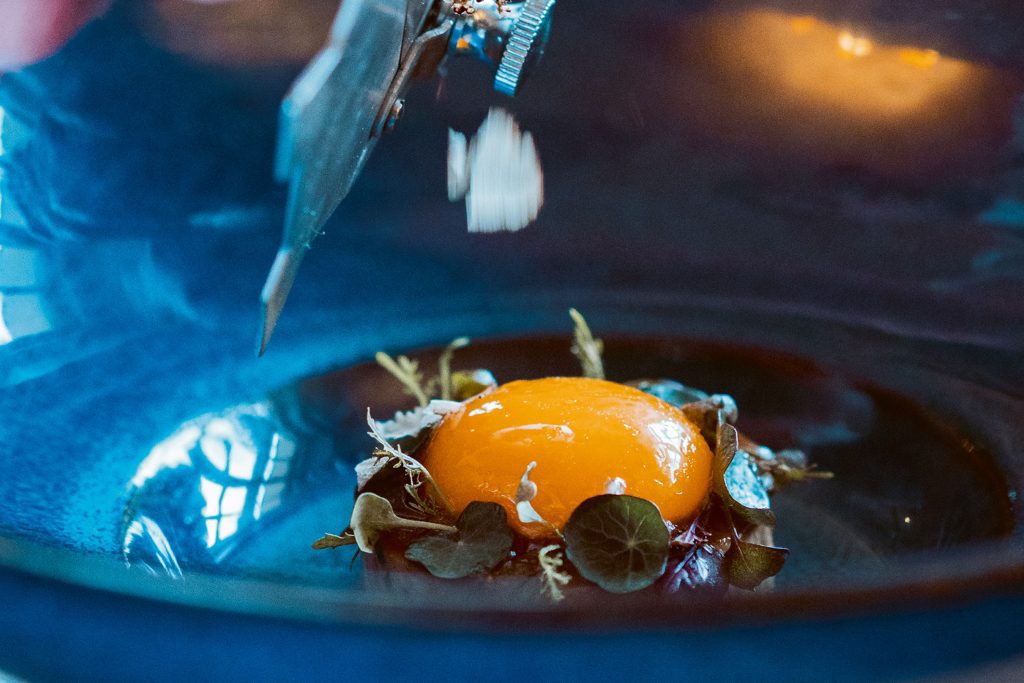
On first glance, The Bulls Head appears your typical, traditional pub; four square it hunkers down comfortably in the centre of Holymoorside, a delightful village on the moor-side of Chesterfield. Just a scenic 20 minutes or so away from the Amber Valley, it’s an area I’m well acquainted with from my childhood and easily accessible. Through the old door the general bar area belies the restaurant beyond and the food on offer here. Please don’t underestimate the experience you are about to embark on, as it truly is a remarkable journey and one that would comfortably sit in a high-end London restaurant, but which we were to enjoy much closer to home. The restaurant area has a simple decor in deep muted shades, with wooden tables well-spaced. Greeted by the friendly smile of Sharron Stone the sommelier, we were shown to our table and drinks order taken. From here we embarked on our epic journey through the 9 courses of the special taster menu, Mark Aisthorpe, head chef and owner truly at the helm in the kitchen. You’d be forgiven for thinking the name is familiar as Mark has appeared on BBC’s 2022 Great British menu as runner up in the northeast and Yorkshire heat. Mark has also worked with Gordon Ramsey and Marcus Wareing at Clivedon House and Petrus, so has an impressive pedigree. Beginning with a selection of Canapes, the deconstructed chicken wing coated with a sticky BBQ sauce and sesame seeds was soft, succulent and a gentle start to awaken our taste buds, the finely chopped venison tartare was richer with a tangy citrus flavour mellowed by the crunch of the diced turnip and served in its own pastry case, cheese and pickled walnut gougères, delivered by one of the chefs Joe Stubbs, completed a perfect trio. Amie Foster, restaurant manager, gave us an excellent description of each course as it arrived, and certainly had a great understanding of every dish. The most delicious, warm malted bread arrived with quenelles of salted butter and marmite butter, wow what a simple idea but inspired. Then a small but perfectly formed potato topped with sliced baby leeks, sprinkled with tiny crisp and airy pork puffs was surrounded in a deep flavoured dulse sauce. Dulse is both very healthy as it’s packed with Iron and proteins, but also adds a rich saltiness. The following course and perhaps my most favourite was the hand dived King scallop; cooked to perfection with tiny brown shrimps, roe which popped in your mouth and a beautifully balanced sabayon sauce. Next, the shredded ham, finished with a warm egg yolk and brioche served separately, was followed by another outstanding fish course. West coast Bass, with a crisp skin and firm flesh found its traditional complement in an asparagus spear, but with the clean taste of sea vegetable fingers, samphire and mussels the wild garlic sauce took it to another level. Spring lamb with its caramelised skin and juicy pink centre was served with a jus and a morel mushroom whose nutty flavour partnered the meat. Rounding out the dish was a carrot and a pea puree. Finishing with a spectacular flourish Mark arrived and set up a side table for his performance, juggling liquid nitrogen, to produce a desert fitting to crown our evening… but I think rather than trying the impossible task of describing it, I will leave it a secret for you to discover for yourselves!! …and just when we were ready for a little something sweet a clever selection of dark chocolate desserts arrived, crunchy, cooling, smooth, intense and spongy all not overly sweet and on one plate…. just desert heaven!! You may wonder what Mark’s ethos is behind this imaginative menu, simply put it is local produce, fresh and in season alongside foraged ingredients, to produce a refined modern British Cuisine. This is not an evening to rush, the relaxed atmosphere at the Bulls Head slowed us down to enjoy each step of this exceptional culinary experience. Tasting each nuance of flavour, some familiar and some not so brought a unique experience. We would like to thank Mark and all his staff for a most delightful evening, and the tour of the newly refurbished bedrooms afterwards. His hard work, enthusiasm and undoubted talents have rewarded Derbyshire with an outstanding venue. 00
Restaurant Review – Alfreton Golf Club

The carvery is a brilliant concept; a meal served in a pub or a restaurant where cooked meat is freshly sliced to order for diners, served in a buffet style for a fixed price. It lends itself, in a casual way, to the traditional Sunday lunch. But all too often we associate it only with the large pub and hotel chains and their corporate style of cooking. Myself and Susan had been invited to try the Sunday lunch carvery at Alfreton Golf Club where everything is cooked from fresh and served by husband and wife team Steve and Sharron Slater. The Sunday roast dinners of my childhood were huge, drenched in gravy and always accompanied by Two Way Family Favourites on the radio. So, with the promise of home cooking, how would this, our first visit to a carvery, measure up? You don’t have to be a member to visit Alfreton Golf Club and it isn’t large. It’s only 11 holes, and for that reason it’s very friendly. The car park is in front of the entrance. A few paces up to the door, through the foyer and you’re into the club house bar. From the bar area there are pleasant views of the manicured greens. The carvery has it’s own space; beyond the bar area in more intimate surroundings. We had been greeted at the well stocked bar, where I ordered our lunchtime drinks, and shown to a beautifully presented table for 2. I noticed that the other tables were a mix of sizes catering for couples and families: small and large. Unhurried, we made our way over to the carvery counter and picked up our ‘proper’ size dinner plates. There were 3 meats on the carving platters: a boned out turkey joint that was all meat and very moist, a blush pink gammon joint with a roasted finish and, my choice, a large piece of roast beef, still a bit pink in the middle, complete with just enough dark yellow fat. Steve carved me 2 generous, thick slices. All the meats are supplied by local butcher, Owen Taylor. Next to the meats was a tray of pigs in blankets and sage and onion stuffing balls. Susan chose the 4th mains option: a serving of beef casserole that was rich with meat and had a deep beef flavour. It was topped with a cheese, scone style, cobbler that was beginning to absorb the meaty juices. The cheese didn’t overwhelm the cobbler but lightly seasoned it. All the vegetables were beautifully cooked. The carrots still had a little bit of bite to them, the cabbage was green, vibrant and the flavour had not been washed away. There was cauliflower and broccoli in a tangy cheese sauce but my favourite was the cabbage and smoked bacon in a cream sauce. There was a hint of the smoky bacon in the savoury sauce that coated the tender cabbage and by the way the dish was disappearing it was a real crowd-pleaser. There were two potato dishes on offer: a buttery mash that was seasoned with a hint of pepper and a large tray of roast potatoes; golden brown with crispy edges. The stuff a generous serving of beef is crying out for. And finally, the roast parsnips. A much maligned root crop that has attracted some unpleasant folklore; but not here. This sweet, healthy, nutritious vegetable had been roasted to perfection. Yorkshire puddings are the make or break ingredient of a good Sunday roast and these ticked all the boxes. They were whoppers and served with lashings of gravy. They’d been cooked in beef dripping and were crisp on the outside with a soft inner that melted in the mouth. Something that big would fight for space with the vegetables on the plate and so, for that reason it adorned, like a crown, the very top of the meat and veg. There was a choice of 3 homemade puddings to finish the meal: a syrup sponge and 2 cheesecakes. We shared a slice of the fresh fruit cheesecake. It had a crisp biscuit base, a smooth filling and topped with a generous helping of fresh fruit. It had been a ‘proper’ Sunday roast complete with all the ‘comfort food’ vegetables and lashings of gravy. The only things that were missing (for those who remember) were the voices of Cliff Michelmore and Jean Metcalfe. The restaurant service is available for most of the time that the golf club is open; with a later finishing time during the Summer. However, the carvery is only available on Sunday. For the rest of the week there’s a varied menu; from afternoon tea to the usual pies, salads, filled baguettes, steaks and of course, fish and chips. The Golf Club can cater for a range of events and special occasions: weddings, birthday parties, christenings, baby showers and is a peaceful setting for a respectful funeral reception. 00
Taste Derbyshire – From Nut Sprinkled Discs to Chocolate Drenched Honeycombs

Two pints of lager and a cream truffle may not be the average round for most pub-goers but The Three Horseshoes Inn at Breedon on the Hill is not your average pub. Yes, it has the roaring fire, real ales and quarry-tiled floors – but they’ve also thrown in a chocolate shop for good measure. That’s right; a chocolate shop. And not just any old chocolate shop but one supplied with all manner of award-winning, artisan goodies. Moreover, re-stocking is never a problem. The Bittersweet Chocolate Co. – run by Nigel Holling and wife Dianne – is housed in nearby outbuildings; just a short stroll across the pub garden. In truth, I had been expecting the ‘shop’ to be little more than a shelf behind the bar. It turns out to be a gleaming, grandiose Victorian display counter straight from a chocoholic’s dream. It’s several feet long and decadently stuffed with all manner of moreish delights – from fruit-centred truffles to chocolate-dipped dates, nut-sprinkled discs to chocolate drenched honeycombs and fat caterpillars lying beside luscious lollipops. “The chocolate counter always stops people in their tracks,” says landlady Jenny Ison. “My business partner Ian Davison has owned it for more than forty years. We think it was a Victorian confectionary counter but Ian’s family used it to store boating paraphernalia at their chandlery at Sawley Marina. Ian was about 12 when he rescued it and it’s been moving around from garage to garage ever since. But when we bought the pub, Ian realised we’d got the perfect space for it.” Jenny says the counter – and its contents – attract people from all over the country; “People tell us it looks magnificent and it’s definitely a talking point when I tell them we have a real-life ‘chocolate factory’ in the pub garden,” she laughs. “We have a chocolate menu which is very popular as people have truffles instead of, or as well as, a desert. But we also get people having some chocolate with a bottle of wine or Prosecco. We can’t get our hands on enough salted caramel.” “We’ve been based at the pub for nine years and it works really well,” explains chocolate-maker Nigel as he shows me to the vanilla-scented workshop where his colleague, Kate Jackaman, is busy coating honeycomb with tempered chocolate. “When my wife Dianne and I first started we were working from our kitchen. We were trying to develop and manufacture hand-made chocolates all day, every day and turn it back into a family kitchen at night. It was quite a squeeze – we became very good at dancing. The Three Horseshoes were customers of ours and they offered us space in what used to be the motel rooms.” He laughs; “But having a shop in a pub is unusual. We might be in an exclusive club of one.” The Bittersweet Chocolate Co. may have started on the kitchen table but the team’s artistry with chocolate – and wizardry with flavour combinations – has earned them multiple Great Taste Awards including a prestigious two stars accolade for their cracked coffee bean in dark chocolate. “My background was in catering,” explains Nigel (54), of Chellaston, when asked how he came to master the art of chocolate-making. “I helped set up the restaurants and catering outlets for the American Adventure Theme Park. The role included involved managing stock and distribution and I ended up taking a sideways move into IT. But I loved working with food so much I’d take on part-time jobs providing cover for chefs.” Nigel realised he’d reached a crossroads when his children Charlie and Anna (now 18, 16) were born. “With two small children, I couldn’t go out and chef anymore but I wasn’t ready to ‘put up and shut-up’ until my retirement. I decided to resign in 2007 because I needed to work with food; it’s my passion.” “Chocolate was in the forefront of my mind as I was excited by the scope it would give to create new flavours and textures. I enrolled in some chocolate-making courses and began to develop a range of truffles to sell in restaurants as an alternative to a desert. I knew from the start that chocolate would be the perfect medium to express my identity and individuality. When you get it right, the sense of satisfaction is immense.” Nigel decided to bring his culinary expertise to the art of chocolate making. “I’m always thinking about flavours that will sit well on top of the chocolate,” he says. “It might be something I remember from a recipe, or a dish I’ve enjoyed in a restaurant that’s been stored in my memory and I instinctively know which flavours will work together. Popular combinations include lime and chilli, raspberry and almond and geranium rose which is our modern take on Turkish delight. We also sell a lot of chocolate flavoured with organic essential oils – our French lavender has been a huge hit.” Nigel also showcases local products in his creations; “We use sloe gin and whisky and wild damson liqueur from a brewery in nearby Rutland,” he explains. “Also, the honeycomb we make for Chatsworth Estate Farm Shop uses honey from bees on the estate.” Although there’s something a little ‘Willy Wonka meets Heston Blumenthal’ about these creations – they invariably work. Nigel can only remember one exception. “Grapefruit,” he recalls with a shudder. “We tried all different ways but it just didn’t work. Whatever we did – it still made your mouth pucker so we walked away.” The popularity of the company’s innovative flavour combinations led to an expansion of the business. “My plan had been to supply restaurants but we began to take our products to farmer’s markets and food fairs and the feed-back was incredible,” Nigel says. “We always gave people some samples and – even though the people at these markets are used to quality food and drink – a lot of customers said our chocolate was one of the best they’d
Taste Derbyshire – Rachael’s Secret Tea Room

‘Good afternoon Ms Volley, your mission – should you choose to accept it – is to drive to a secret location in the lush Derbyshire countryside and liaise with an operative bearing an orange teapot. Should you injure yourself in a rush to get up the garden path to eat buttered scones; the organisation cannot be held responsible. This tape will self-destruct in five seconds…’ Permission to eat baked goods in a mysterious location? Now that’s what I call Mission Possible. If there’s one thing I love more than tea and cakes; it’s a good mystery and putting them both together really tickles my fancy. Which is why I don’t want Rachael Hands – owner of Rachael’s secret tearoom – to tell me where she is located. “Can we meet in a car-park and you can blindfold me before you take me to your tea-room?” I ask when Rachael sensibly offers to send the address over on email. She has the patience to humour me; “Er, blindfold you? People may give us funny looks,” she says hesitantly before characteristically looking on the bright side. “But it’d be a good marketing ploy; why not?” The simple fact is there are hundreds of quaint, country tea-rooms in Derbyshire but what gets my juices really flowing is the ‘secret’ part. The exact place where Racheal’s guests will end up slurping their Lapsang Souchong is revealed only on booking. “I take a stall every year at The Roundhouse Christmas Market in Derby and people are always fascinated by the idea of a ‘secret’ tearoom,” she smiles. “But their next question is invariably – where is it?” Not that Rachael is falling for that one; ‘I do get people trying to get me to reveal my secret. The only thing I’ll say is it’s in Belper,” she explains. “I have to say this because guests sometimes imagine they might have to journey into the wilds of Scotland and they don’t want to drive too far. But most people love the idea of keeping the secret and – even if they’ve been – they won’t divulge it, even to their closest friends.” True to form, I will not reveal any clues about the location. The most I will tell you is that the quaint, vintage-inspired tea-room is situated in the home Rachael shares with husband Matt and that this cosy venue adds to the charm. “Like a lot of people, I’d always wanted to open a tea shop,” Rachael (45), explains when I ask her how the idea came about. “It may always have remained a pipe-dream but for an article in a woman’s magazine back in February 2012. I’d gone to have my hair done and I read this article about a lady called Lynn Hill who, at the time, was doing a secret tea room from her home in Leeds. I thought ‘I can do that’ and went straight home and emailed her.” Rachael was amazed to get a reply almost straight-away; “If I recall, she just told me to ‘go for it’,’ she laughs. “On a more practical level, she told me to start with family and friends just to see if it was something I really wanted to do and refine my ideas and recipes.” By September 2012, Rachael was ready to host her own event. “I do remember Matt asking if I’d be okay with strangers coming into the house. It wasn’t a worry as I love meeting people. I was more anxious about getting everything right,” she recalls. “That’s why the idea of the ‘secret’ tea room appealed. It’s not that I am a fan of mysteries – I just thought it would lower the risk. If I set up a tea room on a high street and it didn’t work, it would be devastating. As it’s a ‘secret’ tea room I could try it for six months without anyone knowing.” Rachael had no reason to be so worried. She started off with a full-time job in local government with the idea of hosting her secret shin-digs once a month. The events were so popular, Rachael cut down to part-time work so she could do them twice a week. In May 2014, she was finally able to leave her job and concentrate on the tea-room full-time. “I think when people first come they are intrigued by the secret location and not getting the address until the last-minute adds to the excitement,” Rachael says when asked about this success. “When they arrive at my door, I can see them almost thinking ‘I didn’t think I’d be coming here’ as it’s our home. But they love it for being so comfortable and cosy. I get a lot of repeat business. One mum and daughter have been around ten times. They’re always being asked about where the tea room is but they never tell as it would ruin the surprise. In fact, in six years – no one has ever revealed the location. They all buy into the fun of it.” The praise for her food is quite incredible for someone who admits that, while she was a keen cook, she hardly did any baking before launching her business. “It might be in the DNA. My parents used to own a bakery in Cromford until they sold it in 2006,” Rachael smiles. “I did help in the bakery and went on some of the delivery rounds and working in the shop but – other than having a few 5am starts – I had nothing to do with the bakery side.” Rachael turned to her favourite bakers, chefs and amateur bloggers to collate recipes and started experimenting to see which ones would work. She still devotes a lot of time to testing and tweaking recipes to delight her guests – making bubble gum flavoured macarons for instance – and adapting according to the seasons. “I love Autumn as it’s a time for using fruits like plums and berries in my recipes and I
Taste Derbyshire – Charlies Garden

Every so often I get the urge to become a self-sufficient Earth goddess, growing gigantic marrows and making jam from fruit I have nurtured from a pip. Sadly, the only things which get to munch on my apples are worms and, once again, the rhubarb has wilted all over the path. Which is why I feel humbled, fascinated and thrilled to meet Charlie Stayt; a home-grower who utilises every nook and cranny of her pretty cottage garden as a bountiful larder which supplies food for her family and forms the basis of a thriving food business, Charlie’s Country Garden. In a whirl-wind tour of the lush, multi-level garden on a hillside in Bakewell, Charlie tells me why her shrubs, trees and plants are more than their leafy, flowering parts. The plant pots by the door contain everything Charlie could ever need for an instant salad. The clump of hot pink daisy flowers is echinacea; used as a tincture to treat family colds. The over-grown shrub is not simply there as shade for the patio – it’s a rosehip which Charlie plunders for fruit and turns into a syrup which has become a must-have for her older customers. “They remember it from their childhood and love its traditional flavour,” Charlie (40), says while showing me a green, as yet unripe, Rosehip berry. “But some of my customers say it has a beneficial effect on their joints. It’s also a good source of Vitamin C, as is my raspberry vinegar. You can use a dessert spoon of it in boiled water and gargle. It’s also great on salads.” And if Charlie’s own garden cannot come up with the goods; she’ll take a trip to her allotment – currently home to 30 fine lettuces – or embark on a foraging mission accompanied by partner Lee Woodall and children George, who is three and Robin, who has just turned one. “The Peak District is such a great location for us; we practically live outdoors,” Charlie says. “There are around four or five places along the Wye Valley which, in the Spring, are great for picking wild garlic. My customers cannot get enough of it. But we’re responsible foragers – we only take what we need and only a few leaves from each plant. Using this method, rather than taking from a few plants, can sometimes take up to two hours to collect five kilograms of wild garlic which is enough for a two-litre batch of pesto or salad dressing.” Talking to Charlie, you sense how important it is for each and every ingredient to be home-grown, foraged or donated by willing friends and neighbours (often in exchange for a jar of chutney or bottle of dressing). “We used to live in Devon but I can’t see us moving south again because people have been so friendly and supportive. For instance, I have a friend near Chesterfield who has an orchard and she lets me pick apples, pears and blackberries in return for a few lifts as she doesn’t drive,” Charlie explains. “I also have neighbours and customers who let me have their apples or rhubarb. I try to give them some of the finished products as a thank you – but they’ll usually only take one. I think they can see I’m just running a small company and people are happy to help.” Charlie is also keen to pass on support to other local businesses; “Lee and I hardly use the car as we like to support independent local shops. “I like to use local suppliers. My herbs come from Hathersage, I’ve picked berries at a nursery in Dronfield and the cold pressed rape seed is by Brock and Morton, who are based in Ashford in the Water. They don’t spray the crop and it’s got a lovely earthy, nutty flavour.” It’s clear Charlie puts her all into each and every product. Charlie’s jars and bottles are crammed with good stuff – her jam is 65 per cent fruit – and low in cheaper ingredients like vinegar and sugar. This explains why some customers arrange their holidays to the Peak District around Charlie’s appearances at local markets and food festivals. “I’d say 60 per cent of my customers are regulars – both locals and tourists. One lady plans her holidays around the wild garlic season in the spring so she can buy my pesto and dressing,” Charlie says. “The feed-back we get has been amazing.” Charlie has always had a fascination with the countryside and cooking; “My mum and gran inspired my love of cooking.” “I was the youngest of three and, when my mum went back to work part-time, I’d stay with my gran who lived in a picture-perfect Cotswold’s village called Laverton. My grandparents were farm workers and lived a traditional country life. They didn’t have a TV, telephone or car so we’d cook for hours often using berries we’d foraged on our walks.” Charlie’s gran died in 1996; “I inherited one of her cook books.” “It’s a National Trust cookery book and must be one of the first of its kind. It’s full of traditional recipes like the one for the rosehip syrup and something called ‘Imperial Pop’ which is a drink using ginger and spices made just after the war. It also shows you how to make jams, preserves and chutneys using ‘old fashioned’ fruits like quince and meddlers. I cherish this book so much, it’s full of her hand-written comments.” Charlie used her gran’s recipes as a basis for her own cookery; “I worked as a nanny for 18 years. One of the couples I worked for were big foodies and I’d help them cook for dinners and parties,” she explains. “They also had a huge orchard so I’d make things with the fruit like stewed apples, tarts, pies and sloe gin. I couldn’t bear fruit going to waste so I’d even take apples and pears to give out when I collected the children from school.” Charlie also
Taste Derbyshire – Stella’s Kitchen Eyam

It is 11.30am on a blissfully sunny day in North Derbyshire and a pair of holiday-makers have pitched up at a farmhouse restaurant for a late breakfast. A few bites into a ‘fluffy as a cloud omelette made-for-two’, one of them gasps. “Hot, hot, hot,” he manages to splutter. Stella Kisob Knowles, cook and flamboyant front-of-house at Stella’s Kitchen, runs to his aid. “I told you it wasn’t tomato ketchup; can I get you some water?” A few moments later, when the unexpected encounter with Stella’s famous chilli sauce (made with Scotch bonnets) has been forgotten – the couple make plans to come back to Stella’s for an evening meal. It’s that sort of a place, once Stella’s food has been tasted; people always want more. The fact there is lip-scorching chilli sauce on the table (and a milder and sweet alternative) at all tells you this cuisine is unlike anything you’d expect to find at a Derbyshire farmhouse which lies on a quiet road between the village of Eyam and the hamlet of Foolow. You can get tea and scones but the tea is African; often from Cameroon, the country of her birth. While the scones might be fresh out of Mary Berry’s cookbook, they have been given an exotic tweak to turn it into a ‘Stella creation’. “The recipe called for sultanas but I substituted them with crystallised ginger,” Stella says quietly as though embarrassed to admit she’s customised a scone recipe laid down by the queen of puddings. “My ginger scones are very popular. People love the idea of taking an English delicacy and giving it a little West African flavour.” Even a toned-down version attracted local praise; “I entered my scones in the Eyam village show last summer. I just dropped them off at the hall and didn’t think about them again until a lady appeared at the door to drop off a red rosette,” she says. “I thought it was for my son Adey’s sunflower. When she gave me a first prize, I was shocked and thrilled.” These two words just about sum up the reaction of tourists who – on asking in the tourist hotspot of Eyam about good local eateries – are told about the fantastic Afro-Caribbean place nearby. Fortunately, Stella is more than happy to explain how a woman, raised in Africa, ended up running a business from a remote farm in Derbyshire. But first things first. “You must eat,” Stella pronounces as though I am a waif likely to be blown away by the light summer breeze. “Have some hot banana and apricot cake, my recipe. I serve it hot, never cold. It’s gluten-free with almond flour which makes it very light. I’ll give you a good slice. In Africa we have a saying ‘food is never small’. This saying clearly applies to portions but could equally sum up Stella’s childhood during which food was always at the centre of family life. “I grew up in English-speaking North-Western Cameroon. It was just after we had gained independence from colonial rule by Britain. My father, who was a senior divisional officer in the government, took over from an English colleague who also passed on his chef, Mr Philip.” Stella admits she had a privileged up-bringing enjoying dishes cooked by a talented local chef; also schooled in European cooking methods. “Mr Philip was an amazing cook who picked up a lot of ideas from his employer’s British wife. I was the fourth child of seven and we had English delicacies like pancakes for afternoon tea. We’d go to church and when the church bell rang at the end of the service, Mr Philip would put a batch of scones in the oven, we all loved them,” Stella recalls. “From the age of three, I was fascinated by food. I would follow Mr Philip around the kitchen. He called me the ‘kitchen dog’ as I was under his feet all day long.” Stella spent a lot of time making play food; “My mother brought me a fancy doll back from one of her trips but I didn’t want it – I preferred playing in the mud making pies and cakes in old milk cans,” she laughs. “Someone bought me a toy kitchen set and it was my pride and joy. I learned a lot of African cooking from my mother. She loved to prepare certain dishes for my father but – even when Mr Philip was cooking – she’d be in the kitchen laughing and chatting about food and what we were going to eat. If someone is born – you eat, if someone gets married – you eat, when someone dies – you eat. Getting together to share food is central to African life.” Stella was so passionate about cooking, everyone assumed she’d make it her career. “I had sisters but I was always ‘the cook’ of the family. If people had parties or weddings, they used to ask me to do the catering. I even started a couple of restaurants in Cameroon but I didn’t have enough money to make them a success,” she explains. “But my late father always said ‘one day Stella, you’ll make your fortune from cooking’ and I may just prove him right.” In 1996, Stella went to Rundu Namibia to do volunteer work for the United Nations; “Our brief was to talk to woman about gender and reproductive health,” Stella recalls. “But you only get so far giving formal talks about contraception. I looked into ways we could generate some income for the women – like starting up a bakery – and we’d chat more informally while we worked. I loved my time there as I was mixing with people from all nationalities like Australians, Americans and the Portuguese, and learning about what people love to eat. Eventually, a friend and I founded a little restaurant called ‘Afrika House.” Stella, who is now 55, was encouraged by her British UN colleagues to move to England to
Restaurant Review – An Evening of Tapas at The Denby Lodge

I’ve never been to mainland Spain although I once took a winter break on Lanzorote, the northernmost part of the Canary Islands. That was over 47 years ago. We flew from a misty, sub-zero Manchester on New Year’s Day, before it was a Bank Holiday in England, on a Freddie Laker Airways flight; landing at Arrecife in a balmy 21˚ of brilliant sunshine. In those days there was just a handful of hotels on the island and one tarmacked road. One of my memories is of the tapas bar at the Mirador del Rio at the north of the island and the incredible vista across the tiny strait of El Rio (so narrow it’s just called the river) to the islands of the Chinijo Archipelago. I remember the stunning view but I don’t remember the tapas. So when an opportunity arose to sample tapas again, closer to home, myself and Susan jumped at the chance. The venue was the recently refurbished Denby Lodge, Denby Village, Derbyshire. Famous for their steaks they have added tapas to the main menu. Traditionally, a tapa is a small snack served as you stand at a crowded bar but at the Denby Lodge it’s been elevated to a dining experience. Although we visited the pub on a busy Friday evening there was no problem parking in the large and well lit car park. The double doors of The Denby Lodge lead in to a large and relaxing lounge bar. It was busy but not crowded. The layout of the bar guides your eye to the entrance of the spacious restaurant area. We made our way over to it, introduced ourselves and were shown to a quiet table. The seating in the restaurant is flexible; we had a table for 2 and around us were tables for 4, a party of 6 and a birthday party of 12. The pub has recently launched a brand new menu with a wide range of new dishes including, for the first time, a tapas selection; with 15 dishes to choose from. We decided to follow the suggestion on the menu and order 3 dishes each but asked them to stagger their arrival so that we could use the first 2 as our starter. Susan chose the mussels with chilli and chorizo and I ordered the seafood stew. The stew was pieces of fresh cod and salmon, shellfish and prawns in a white wine, cream and garlic sauce. The fish was cooked perfectly and the light sauce didn’t over power the delicate flavours. The mussels with chorizo was again a perfect balance of spices and succulent shellfish. There was just a hint of chilli in the tomato and chorizo sauce. The main event was 4 dishes that we could share: Portuguese baked egg, cauliflower bites with sweet chilli jam, calamari rings and halloumi fries. It’s a colourful spectacle to see your table laden with all 4 dishes and with so many inviting aromas it makes you want to tuck in. We both sampled the halloumi fries first. The fried cheese takes on a crisp coat but has a soft, melting centre. We very quickly cleared the plate. The cauliflower bites were fresh, deep fried florets coated in a crispy batter. If you love fritters you’ll love this tender, white vegetable dipped in the sweet chilli jam. The crunchy coated calamari rings were tender and served on a bed of salad. The Portuguese baked egg dish is a lightly cooked egg sitting in the middle of a bed of spiced tomato and red onion topped by sliced chorizo and served in a hot, metal skillet. Susan sipped a glass of chilled, white wine and I drank a cold lager as we shared our meal and chatted the evening away. The restaurant has a lively but relaxed atmosphere and the ever attentive staff, who persuaded us to finish with a shared dark and squidgy chocolate torte, leave you wanting for nothing. Our thanks go to Sally, Ben and their staff for creating an evening where we could feel comfortable; take our time and chat while enjoying a very relaxed meal with a difference. 00
Restaurant Review – Lunch at The Dragon, Willington

Situated near Bridge number 23 next to the 93 mile long Trent and Mersey canal sits Willington’s original public house, the 150 year old Dragon Inn, serving fine food and quality ales. If that isn’t enough information to get you down there I don’t know what it is that floats your boat! With a population in 1828 of around 400, Willington has grown to become an extremely popular village, partly due to its situation only six miles south of Derby. Our journey by car from the office in Alfreton to The Dragon, down the A38 took us under 30 minutes or five hours by canal boat! With a car park to the rear and also a public car park next-door, parking is easy and convenient. The Dragon boasts the same standard that we have come to expect from Bespoke Inns, who also have The Boot at Repton, and Harpurs in Melbourne in their repertoire. Originally purchased in 2011, the past 7 years have seen extensive developments including the purchase of the cottages adjoining The Dragon which now incorporate boutique bedrooms, conservatory and function rooms and a formal dining room all decorated and furnished with flourish and style in keeping with this 17th building. It still retains a traditional pub feel, and from the bar you can choose from a growing selection of quality, locally brewed beers from the famous Boot Brewery. I was privileged a few months ago to test the new ‘rhubarb’ ale while still in its early stage but now in full production. Worth a try I feel. The latest addition to The Dragon is a beautiful out door area encased in glass giving you the option of dining ‘inside -outdoors’ or in the garden, which is ‘outside-outdoors’. With so much to see on this busy part of the canal you can watch as the prettily decorated boats carefully pass each other, some with skill and care and others who are decidedly novices, but hugely entertaining. Sheltered from the breeze and weather, dining here still has a classic ‘alfresco’ feel with none of the inconvenience. It was here in the new 360 degree glass garden room, only a few feet away from the Trent and Mersey canal that we settled for our lunch on a partly sunny, partly breezy, cloudy day, but that didn’t matter. The lunch menu is set to cater for all and we watched as platters of sandwiches loaded with filling, and chunky burgers passed us. We however chose the salmon from the specials board and the pasta Amatriciana from the lunch menu. My wife’s salmon was golden at the edges and beautifully cooked, served with purple sprouting and crushed new potatoes with buttered spinach, a dash of Grenoble sauce, and an addition of finely diced relish, she said it was the perfect lunchtime dish. The penne pasta chosen by myself was also delicious, scattered with pinenuts and sunblush tomatoes and a basil sauce, it also had a generous piece of grilled chicken. Feeling in a relaxed mood, we indulged in a pudding, choosing an all time favourite; summer pudding with Prosecco soaked berries, a hint of tarragon and vanilla crème fraiche, such a clean, fresh taste to finish with. The large new kitchen, spec’d up with all the latest fittings certainly produces great food and is well abreast of providing meals for 400 guests on a Sunday lunch as well as hearty breakfasts served from 8am to 11.30 weekdays and until 11am Sundays. The main menu starts from 12 noon until 9pm every day. Every sunny day a very professional looking barbeque area comes into play which is extremely popular. Offering an eclectic mix, The Dragon has quiet areas for dinning or, if you are looking to enjoy a family celebration, you can hire one of their larger rooms. The new glass garden room is also available to hire, and I can imagine what a perfect venue it would be as the sun goes down, with the boats as a backdrop We were quite disappointed when it was time to leave, I was enjoying the ambience, the food and the Clod Hopper bitter. Given a little longer I’m sure we would have seen Tim and Prunella go by along with David and Victoria, or is that fanciful thinking, such was the atmosphere. 00
Taste Derbyshire – A Taste of North Derbyshire Yogurt

Driving along a single-track road, which meanders through the craggy hill and grassy dales of North Derbyshire, I am forced to perform an emergency stop. It’s not a good time. I am – thanks to a Sat Nav intent on herding me back to an A-road – twenty minutes late for an appointment with yogurt-maker Laura Howe. But what can I do? A hare has decided to hop slowly down the road in front of my car. Unlike me, he is clearly not late for an important date. When I finally reach my destination – Leisure Farm at Cressbrook – it’s well worth all the U-turns. Sitting at the kitchen table, with a restorative mug of tea in hand, my eyes keep straying to the window. Laura’s home is surrounded on all sides by never-ending fields on which husband Tom, and his family, keep their free-range dairy herd. The cows graze over 265 acres of land known as Litton Slack at the heart of Derbyshire’s White Peak. This is rambler country; luscious green meadows dissected only by centuries old limestone walls and sheer, breath-taking ascents falling into verdant valleys. It’s easy to see why Laura wanted to create a business inspired by the location. Never mind yogurt-makers – artists and poets would be moved by this countryside setting. “We were on a family holiday in Pembrokeshire when I realised how many people were running a rural business from their farms and homes and I wanted to do something like that,” Laura recalls. “My favourite was a tea shop in Bosherston Lilypond, which was in the front garden of a ladies’ cottage. She just did simple things like cream teas and cakes. I came away thinking I’d love to put that ethos into a business of my own.” Back in North Derbyshire, Laura began to think of products which could be made using milk from the family herd. The cows are mainly made up from pedigree Dairy Shorthorns; renown for producing creamy, protein-rich milk ideal for making dairy products like cheese and butter. “My first idea was to make ice-cream but one free from any preservatives and additives,” says Laura who launched her eponymous ‘Laura’s Dairy’ in December 2014. “I did a few trial-runs and got as far as looking at machinery. But a relative of ours spoke to the manager at the Chatsworth Estate Farm Shop. He told her the real gap in the market was for a yogurt produced in Derbyshire. I did a bit of research and realised farms which make yogurt from their own milk are few and far between. The nearest one is in Leicestershire.” For Laura, the suggestion was like lighting a touch-paper. Somehow – in-between juggling a job in the public sector in Matlock and looking after her three boys William (12), George (10), and four-year-old Ted – Laura turned every bit of spare time over to developing a ‘really good’ yogurt unsullied by superfluous ingredients. “My job involves a lot research but, even with the help of my sister-in-law, it still took two years to get up and running as we had to jump through so many hoops,” Laura recalls. “We also tested a lot of yogurt. I wonder what the staff in Waitrose at Buxton thought when we were buying £20-worth at a time?” Laura says the help she got from Derbyshire Dales District Council was invaluable. “They were able to give everything from practical advice on yogurt making to advising us on what funding was available,” Laura says. “Also, we got a massive amount of input from other food producers including a lady called Christine Ashby who has worked in the dairy industry for years.” Christine, an award-winning cheese-maker, teaches dairy and cheese courses at colleges and food schools. “We met thanks to Reaseheath College in Cheshire,” Laura explained. “I’d planned to do their yogurt-making course but they thought it might be too basic and gave me the tutor’s number. Christine ended up coming to teach at my home for two days.” Laura’s aim was to make a stripped down, ‘grown-up’ yogurt; low on sugar but naturally creamy due to the protein-rich milk. “When Christine said I’d have to put skimmed milk powder to control the amount of liquid whey, I wasn’t keen on adding anything,” she says. “But she was right. The small batches were fine but once we started making yogurt in bigger quantities, a puddle appeared on the top. It tasted fine, but the texture was too runny.” Christine’s advice also proved to be invaluable when it came to perfecting the products. “I think it helped that she wasn’t a fan of yogurt,” Laura smiled. “The honesty of her feed-back was fantastic. The first batch of natural yogurt wasn’t quite right and so I spent a few months tweaking it. Getting the consistency right was the biggest challenge. When I found out Christine was running a cheese-making course in Bakewell I took her another sample. She really liked it.” With the natural yogurt perfected, Laura decided to branch out on different flavours and roped in friends, family and colleagues as ‘tasters’. “I was very popular in the office as I’d often come in with samples,” she recalls. “I’m pleased to say they loved all the yogurts. In fact, I still get lots of orders from work. My colleague Barbara uses yogurt instead of butter in a delicious orange cake.” Talking to Laura, it’s clear why the yogurts have been attracting such glowing praise from customers. Her social media page is liberally sprinkled with positive reviews; the most common adjectives used are ‘creamy’ and ‘delicious’. Small wonder two of Laura’s yogurts scooped prestigious prizes at the Bakewell Show last summer. Her salted caramel – inspired by her children’s love of caramel desserts – was pipped by her own lemon curd which won a highly contested 1st prize. “I love homemade lemon curd but wasn’t sure about making my own as I am no baker,” Laura explained. “I approached