Derby’s Iconic Market Hall is Back
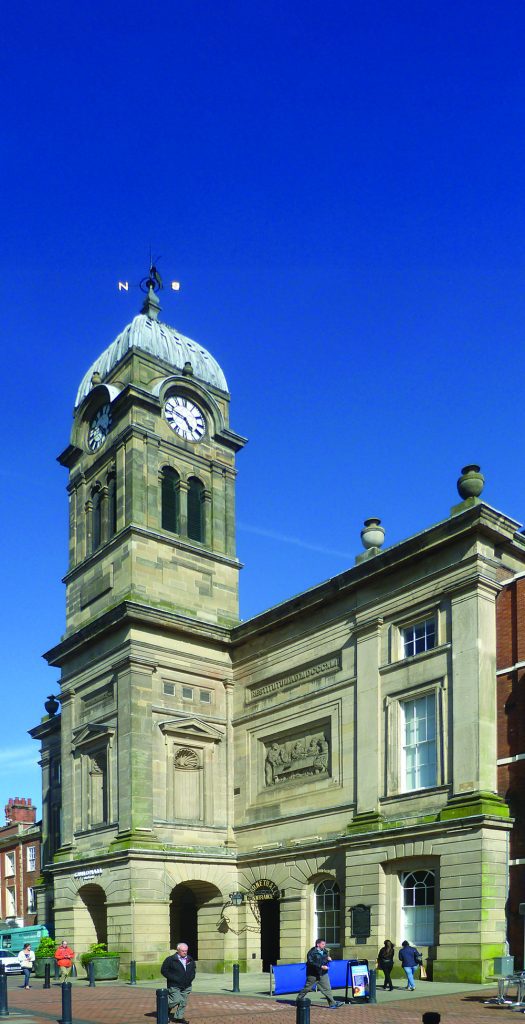
by Maxwell Craven “The design that emerged and which Thorburn built from 1863, centered upon an impressive covered hall with an iron roof made by local founder, J. & G. Heywood & Co. at their Phoenix Foundry, which covered an area of 220 x 110ft.” From Medieval times, Derby was a flourishing market town. Indeed, the Saxon mint established in the 10th century and which produced silver pennies until 1154, had more moneyers and a greater output of change than that of Nottingham, suggesting in the terms of trade, Derby then outstripped its easterly neighbour. Derby’s markets were scattered: livestock was sold at the widest part of Friar Gate between Bridge Street and Brick Street, grains were sold in the wide part of Corn Market (the clue is in the name) and most other things were sold in the Market Place, where there were areas set aside for bakeries, butcher’s stalls and other items, mainly under the control of the Abbot of Darley. By the early 19th century these arrangements were considered insufficient, and when a new Guildhall was commissioned by the Derby Improvement Commissioners from London architect Matthew Habershon (1789-1852) in 1828, a covered area of stalls was provided behind the building. This elegant Greek revival building was stone faced at the Market Place side, but largely brick to the south. Unfortunately, Habershon’s Guildhall burnt down rather spectacularly on the evening of Trafalgar Day 1841, taking most of the Borough’s precious records stored within, with it. Henry Duesbury, grandson of the founder of the China factory, was commissioned to build a replacement, which incorporated much of the ground floor of its predecessor, and much of the entire east elevation which was glimpsed from the Market Hall or Lock-up Yard. The original market area behind managed, miraculously, to survive unscathed. However, by the 1860s, even this area was considered to be inadequate and a decision was taken to clear it and build anew. The Borough engineer at the time was a Stranraer-born Scot, Thomas C Thorburn, who developed a detailed specification, before subcontracting the design to Manchester architect James Stevens (1826-1902). The design that emerged and which Thorburn built from 1863, centered upon an impressive covered hall with an iron roof made by local founder, J. & G. Heywood & Co. at their Phoenix Foundry, which covered an area of 220 x 110ft. (67 x 33.5m). The roof span soared to 86ft 6ins (26.4m), with an apex at 64ft (19.5m). Much of the engineering concept of the roof and the galleries which ringed the space was, for the time, innovative, and it was all opened to much acclaim in Spring 1866. The exterior is of brick and rusticated ashlar with a fairly restrained (for the era) Classical pedimented facade to the south, facing Albert Street and Osnabrűck Square. It is now listed grade II. Market Hall, Thornburn’s Sketch 1862, showing a much more elaborate building However, all was not well. The original opening was planned for 1865, but Thorburn suddenly resigned and very promptly departed for a new post elsewhere. His local successor, George Thompson (1833-1882), was disconcerted to find there was an inherent weakness in the iron structure, to remedy which he was obliged to come up with solutions. Thus, a scheme of remedial works and necessary alterations was undertaken in some haste to prevent the entire structure possibly descending on everyone’s heads at the planned grand opening. The structural defects thus revealed were, of course, blamed on Stevens, and on the departed Thorburn for sub-contracting the job in the first place; the real reason was that in those days the consequences of radical design could not be tested by computer modelling, and occasionally trial gave way to error. The Council spent much time and money pursuing both Stevens and Thorburn for redress, for no blame could be apportioned to the iron founders – especially as James Heywood, proprietor of the Phoenix Foundry, was an alderman of the Borough! The southern façade of the building was marred in the early years of the 20th century by a rather crude cluster of buildings constituting the fish and poultry markets, built on the site of William Strutt’s fireproof calico mill ironically burnt down in 1853. This fish market was an extension of that provided by Stevens and Thorburn in 1863 as part of the original build. A large turret clock was supplied by leading Derby clockmaker Edward Johnson, for the south gallery, but this was inexplicably removed in 1988 but, fortunately, was rescued and donated to Crich Tramway Museum when the building was completely refurbished and extended eastwards, with a new very elegant brick facade. The interior was originally fitted with stalls, the design of which was altered in the 1930s, when Herbert Aslin, the Borough Architect, designed new ones in the manner of the period, and these lasted until the 1988 rebuilding, when they were replaced by rather less pleasing ones. The hall was re-opened by the Mayor, Cllr. Les Shepley in the same year, an event commemorated in a ground glass inscription etched into the new glass doors giving onto Osnabrűck Square. The Market Hall closed to enable the current refurbishment to begin getting on for a decade ago now, but the Council failed to make any viable arrangements for the poor old stallholders – some of whom had been in business there for more than two generations – and this had led to misgivings that the Council would not be able to replicate the relaxed and positive ambience of the place as it had been previously. There have been delays and disconnected progress, but thankfully the Iconic Market Hall is finished. Now begins a new era for this grand building and for the city of Derby. Of course, the proof of the pudding will be in the eating! Maxwell Craven 00
Dining Out at Nicco Restaurant & Bar

Nicco Restaurant and Cocktail Bar is contemporary Indian dining and it doesn’t shun the lime-light. Its stylish exterior and brightly lit foyer shines like a beacon among some of the faceless buildings in Pride Park. It’s easy to get to. The Derby main line railway station is less than a 10 minute walk and several bus routes run past the restaurant. And by car or taxi it’s just off the main road (A6) that runs through the business park. The restaurant with its unmissable entrance, is adjacent to the ample car park. Susan and myself had arrived for a mid-week lunch. We made our way through the double doors that separate the glazed foyer from the car park. The space then opens up into the dining area and the cocktail bar. From the large buff coloured floor tiles to the bespoke ceiling finish; there’s a sense of understated quality. A large olive tree takes centre stage, forming a canopy over the surrounding, purpose-built, seating booths. Once through the foyer the maitre d’ conducted us to our table. The dining area at Nicco is substantial and the seating is not congested. The generous space allows the cocktail bar to perform to its best advantage. The long, sleek bar displays a backdrop of multi-coloured liquor bottles. I have very little knowledge of cocktails – anything other than a gin and tonic and I have to Google it. Plus, my visits to cocktail bars are limited to what you can count on the fingers of one hand. My worst experience was in Amsterdam. My ‘name-dropper’ experience was an evening in the subtly lit, open-air roof terrace of the The Grand Hotel Cavour in Florence with its spectacular view of the illuminated Cathedral. My Derby experience was to be a professionally made mocktail, and so, with a flush of patriotism I chose the Derby Sling. It’s a combination of pineapple, grenadine and orange juice, topped up with lemonade and poured over crushed ice. It’s a long, slow and not too sweet drink that lasted me all through lunch. Susan’s choice of beverage was less complicated: a glass of sauvignon blanc! We sat at our table and, as we sipped our drinks, consulted the menu. I would describe the food at Nicco as modern Indian fusion. There are British, Continental and even Chinese influences running through the dishes on offer. Plus a high proportion of dishes described as vegetarian and vegan. There is a wide selection of ‘small plate’ dishes. Half of which are vegetarian. These are either starters or you could combine several and enjoy you meal tapas style. From the grill section, lamb, chicken, salmon and prawn dishes top the list but there are also avocado and paneer plus a mushroom dish and a broccoli dish; both finished in the tandoor. If you’re keeping it traditional the list of mains has many familiar dishes; again, half of which are vegetarian. There’s also the Bottomless Brunch. Priced per person, it’s available between 12 noon and 4 o’clock on Saturday and Sunday; With the added bonus of unlimited Prosecco. We were tempted by the small plates. There’s a spicy calamari; light and healthy. Another that caught my eye was the mango prawn cocktail. A twist on the classic starter. This French inspired delicacy is served tropical style. Black tiger prawns marinated in tropical spices, vinegar and garlic served with a mango salsa. We selected one small plate each. I chose the chicken momo; a filled dumpling, with origins from Tibet. The delicate dumpling were filled with minced chicken, spring onion and mild spice. Steamed to cook them and fried to finish, they were light, full of flavour and with just a hint of chilli. The accompanying dipping chutney of sesame paste and tomato was creamy and light. A ketchup but without the sharp vinegar taste and excessive sugar. “Susan’s small plate was the avocado bhel. A combination of puffed rice, cucumber, avocado, pomegranate and onion, tossed together with a tangy chutney and Bombay mix.” The texture contrast between the vegetables and the rice was a good balance. The Bombay mix and chutney gave the bland avocado warmth and flavour, and the pomegranate made every mouthful burst with freshness. In a corner of the Nicco menu is the Naanwich. It’s a classic naan served as a wrap with a choice of four fillings: chicken tikka, onion bhaji, paneer tikka or (the one we chose to share) meen masala fish pakora. Described as a fish finger sandwich with a twist. The name suggests that the subtle spices for this dish are from south west India. Chunks of flakey white fish coated in a crisp, spicy batter tucked into a naan along with iceberg lettuce and red onion. A winning combination. This came with a mayonnaise dip and spicy wedges. What better secret pleasure is there than dipping spicy, masala coated chips into minty mayonnaise? We skipped desserts although I was tempted by the gulab jamun: berry sized spheres dunked in rose flavoured sugar syrup served with vanilla ice cream. We finished with two espresso. Lunch had been memorable for all the right reasons. The food had been delicious and different. The service attentive. And the ambiance: vibrant. The restaurant and cocktail bar is capacious but not overwhelming. It makes an ideal ‘events’ space. Also, there’s some outside seating and, on sunnier days, the bi-fold windows at the front of the restaurant can be opened to create a terrace feel. 00
Dining Out – Yassou Greek Kitchen, Little Eaton

We are huge fans of shared eating so Yassou suited us down to the ground and evoked memories of dining at restaurants over in the Dodecanese, especially the historical ‘capital island’ Rhodes. The huge contrast was that we set off on a freezing cold evening with coats and scarves on, rather than in the gentle balmy evening heat decked in T-shirt and shorts. But, as they say, you can’t have everything! Situated on Alfreton Road (B6179) running through Little Eaton, Yassou is an easy place to access from the A38 Little Eaton roundabout. Having parked outside on the main road we entered the warm inviting entrance and were soon immersed in the gentle strains of the traditional Greek folk music, which set the scene for the evening. In the short time Yassou has been open it was clear to see that they have built up a nice reputation based on presenting traditional Greek dishes prepared and cooked from scratch. Zoe welcomed us and after supplying us with drinks, chatted about the restaurant and how it was very much a family affair with David the Greek chef cooking healthy Mediterranean dishes in a simple traditional oven. David and Zoe are business partners and own the restaurant. Family members each play their part. A lot of the inspiration for the menu comes from Dave’s mum Zafiro – or Rula as she’s called in this country. Zoe’s sister works in the kitchen, the chefs son washes pots and the waiting staff are sisters/cousins. It’s a real family and team effort. It’s been quite a while since we were in Greece, and apart from thinking Moussaka and dips we had to dig deep to remember our nights in the Greek Tavernas. Zoe however was there to recommend some of the most popular dishes, encouraging us to order a few from the menu which she would bring to the table as they came out of the oven. You have to remember that you’re not just ordering your dish, but dishes that can be shared by the rest of your friends similar to Spanish Tapas. Pitta is a staple diet in Greece so its not a surprising that this came to the table first when we ordered it with our selection of dips, from which we chose Sweet Chilli Hummus (mildly spicy with chilli flakes and feta), Melitzanosaltava (rustic Greek aubergine with garlic, lemon juice and olive oil) and our third dip Hummus (Chickpeas blended with Tahini, lemon and garlic). The menu made me smile as it said clearly at the top…“All our Mezze plates come out of the kitchen as and when they are ready”. Good, we like that too, no rushing just a very relaxed evening, with plenty of opportunity for good conversation and gentle humour in true Greek style in between. With pitta bread, dips, a bowl of olives and some Halloumi fries served with a sweet Chilli sauce, we were on our way. Closely followed by Kalamari, Cajun fried crispy squid served with garlic mayo. Zoe recommended the Moussaka; layers of finely minced meat, aubergine and potato layered with Bechemel sauce, a pleasant contrast to the squid. Arriving with a generous number of chicken pieces on the skewer was the Souvlaki chicken. Tender marinated chicken char-grilled and interspersed with peppers and red onion, served with Tzatziki. The best choice for both of us! As you can imagine the evening was moving on and we were pretty full by now, so decided to share a dessert which we tucked into ….and then remembered we should have taken a photograph, oops sorry! However the Lemon tart which was homemade with a rich buttery pastry, a tangy filling and came with Greek Yoghurt and honey, was delicious. The thing is we have left ourselves plenty of choice for our next visit, Stifado, Soutzoukka, Pikilia or Chicken Gyros to name but four or maybe try the evening special. Next time we will take along a couple of friends as this is the place to chat, drink and graze. Booking really is important as it isn’t a large restaurant and when we left there wasn’t a spare table to be had. Open Wed – Friday: 17:00 – 22:30, Saturday: 16:00 – 22:30 Telephone 07368 483725 yassou-greek-kitchen@hotmail.com 00
Hidden Gem of Food & Drink – The Boot, Repton

Turning the corner onto Boot Hill in Repton, the self-proclaimed capital of Mercia, I immediately thought “I should have arrived on a horse!” Everything seemed to be linked to the past and, in all honesty, I love that. The Boot, a 17th Century coaching Inn, is owned, managed and run by people with a fierce passion for what they do… and they’re very good at it. Rewarded for their success with a second AA Rosette in two years is testament to Chef Rob Taylor’s passion for food supported by his highly trained kitchen team who maintain that standard when he isn’t around. At front of house is Manager Rick Graham, who exudes the same enthusiasm for customer care. Drinking a cup of coffee chatting with Rob and Rick I could see that both are keen to keep pushing ‘The Boot’ forward with expansion of the team, more training and menu development. Chef Rob has his own allotment where he grows various things to take home and experiment with, creating new recipes and dishes which he can then introduce to the restaurant when he is satisfied. He is proud to be sourcing food from local suppliers including dry aged beef from Tori and Ben’s Farm Butchery in Melbourne where their sister business ‘Harpurs’ is situated. Rob and Rick have thoroughly enjoyed their three and a half year journey working in tandem and they have a good sense of humour too which I enjoyed. When you book a table it’s yours for the evening should you so wish. They both were quite adamant at this point that those who visit ‘The Boot’ should enjoy the experience from the high quality accommodation to their award -winning food. In for a pint at ‘The Boot’. A highlight too of my visit was to enjoy a pint of beer produced from their own, on site brewery. As creatures of habit, a beer drinker will generally stick to what he knows. When faced with a bar full of pumps with beer names never seen before the mind gets very confused. Various areas of the country sport their own particular ales and tucked behind the ‘The Boot’ is the Boot Micro Brewery from which flows thousands of pints of the finest quality beers which are on sale at ‘The Boot’ Repton, ‘Harpur’s of Melbourne and The Dragon at Willington. Head Brewer Jon Archer took over the brewing just over a year ago. I asked Jon what his background was. He replied “33 years in IT”, I wasn’t expecting that. There’s obviously more to this tale and it transpired that he was an avid home brewer, a skill he developed to replicate brewing at a small commercial level. So, when the offer came from the owners of ‘The Boot’ at Repton, to manage and develop their micro brewery, it was an unmissable opportunity. Home brewing is an art this author never perfected and after two failed attempts and two bouts of illness after drinking it(!) I decided to leave it to the experts and stay firmly on the customer side of the bar. Jon explained the ins and outs of brewing to me and it’s a pretty straightforward process which becomes very complicated when trying to maintain consistency. I was taken aback by the control exercised over brewing a popular beer to maintain consistency and satisfy the regular ‘same pint’ drinker. Asking anyone how they like their beer will elicit numerous replies ‘hoppy, malty, fruity, strong, dark, pale” are among many of the responses, but how do you cater for that on the bar. Much can depend on type of hop, where it comes from, yeast used etc. John selects the finest hops from around the country and from abroad to blend them into great tasting beer. The latest brew ‘Willow’ was launched in April and, as a low alcohol light ale, is harder to brew because low alcohol beers can feel too thin so need building up, but to his credit it has gone really well and is proving extremely popular. I watched as Jon checked the progress of fermentation in stage for the latest batch of ‘Clod Hopper’ which gave me an insight to the accurate records needed to maintain consistency. Ten percent of this, so much of that, this specific temperature and much more. (The exact details are a secret though and not for my eyes!) This is recorded ready for the next batch. Jon shared with me his knowledge of how life works in the Boot brewery, from designing to creating a beer influenced by Jon’s skilled palette which is suitable for production. I smiled as he took me to see and taste a drink in its early stages of creation, of which the base ingredient was rhubarb. I love rhubarb crumble, but I’ve never drunk it! The first taste was quite pleasant and I thought maybe a good drink but then came the next tasting made with a different yeast which took it to a whole different level on the taste buds. And that, as they say is the crux of the matter, the master brewer, in this case Jon, is using his skills and taste buds to create something everyone will love. Some of his great creations haven’t made it to front of house yet as they are still being developed. Passion and creativity rules everywhere at ‘The Boot’. By now it was time for lunch and, having been shown the brewery I needed to sample some of the 13 ales! Obviously, that’s not practical so Jon just let me select one that I fancied from the bar. At this point I wished I had come on a horse because I could just have jumped on and said, “Home Trigger”. It seems to me that whatever your passion, you’re going to be very spoilt at ‘The Boot’, the gastronomic hidden gem capital of Mercia. 00