The Lost Houses of Derbyshire – Beaufort House, Derby

By Maxwell Craven “Some years ago, a friend who is a keen collector of local postcards, Don Gwinnett, sent me a copy of a postcard of a delightful house with Gothic windows, labelled Cowsley Fields. I loved the look of the house, and decided to try and identify it, which I may say I had great difficulty in doing. Being on the edge of Chaddesden and just down the slope from the termination of the memorable Stanley Footrill Colliery Tramway, but (just) within the Borough boundary, I consulted Peter Cholerton, who has researched and understood the history of Chaddesden most thoroughly, and he was very helpful.” What emerges is that this photograph is of Beaufort House in Cowsley Fields – the area due north of Nottingham Road, abutting the cricket ground/racecourse (as was) and a few hundred yards north east of St. Mark’s Church – hence, of course, Beaufort Street, which runs N-S across the site, and is the only street in the area not named after a British or Irish county. We came to the conclusion that the name on the card got there because the house lay in Cowsley Fields and not because it was itself called that, although it wasn’t called Beaufort House either prior to 1853. Nearby Cowsley Field House and Cowsley Farm (also long vanished) looked completely different. Peter told me that by 1853 the house was The Pavilion Tea Gardens, built as a place of public resort and refreshment which faced west and would have provided a pleasant view across the racecourse. The racecourse at Derby had been on The Holmes from the turn of the century, but in 1833 racing was discontinued and, by the time a new committee had been set up to effect a revival, plans to build the new Trijunct railway station on the site had been mooted. A new venue had to be found. For some years the new Derby Race Committee – chaired by the Duke of Devonshire – had a struggle to find a new venue. Eventually, some of the land in Little Chester, to the east of the canal, including Cowsley Fields, was lighted upon and after some years’ development, the first meeting at the new racecourse was held in May 1848. This upheaval therefore, led to the foundation of the Pavilion Tea Gardens for, in that era of temperance, it was clearly felt that a place of refreshment should be available for racegoers. Furthermore, temperance notwithstanding, it is clear from the sale particulars of 1853, that it was not only tea that was on offer! That the house was there before the racecourse though is clear from its appearance and from its design: it does not have the partly open-fronted façade of those tea rooms one sees in architectural pattern books of the period. From the only extant (to my knowledge at least) photograph of the building, it was of brick with stone dressings, of two storeys and seemingly five bays wide, with a eastward (rear) extension for kitchen and services. The entrance, sheltered by a picturesque timber gabled portico, was centrally placed and was flanked on either side by Tudor Gothic fenestration with depressed pointed arched tops and filled with cast iron glazing bars set out as elongated hexagons, of a type being produced locally from the first decade of the 19th century. Coach house of Richard Leaper’s demolioshed Rycote House, Kedleston Road, c 1828 Beyond this set-piece portion of the façade it sported an extra bay in the picture, clearly added, with more conventional fenestration and one suspects that the bay to the right of the person taking the photograph was similar. The house, from its absence from early maps, must have been built in 1835 or ’36, and its architectural congruence with various ancillary buildings designed by the amateur architect, Derby Alderman Richard Leaper, at Rycote House, Kedleston Road, and the neat lodges to The Pastures, Littleover (now the Boys’ Grammar School), Hilton Lodge and Bladon Castle would suggest the hand of Leaper himself, although at 76, he might well have given up by this date and we are more likely looking at the hand of a follower, like his former right-hand man, Joseph Cooper. Either way, we know that the ground later occupied by the racecourse and that lying east of it, 50 acres in all, was owned by George Wallis (1791-1851) stage coach proprietor and the third of his family to be landlord of the New Inn, Bridge Gate, Derby (on which see Country Images November 2022). The Wallises had begun as blacksmiths in King Street, but had built the New Inn and established an ever-increasing network of coaching routes. George’s uncle John had married Sarah Yates, son of John Yates, a notable Crown Derby China painter and close relative of Joseph Wright, whilst George’s sister Anne married his fellow China painter George Robertson and her sister later became the sister-in-law of the most famous China painter of all, William Billingsley. Recently widowed and with a young family of five, George had also succeeded to the proprietorship of the King’s Head, a coaching inn in Corn Market, by marrying in 1834 Joanna, the relict of John Hoare of Litchurch Lodge, its previous landlord, and seems to have disposed of the land to the Race Committee for the new racecourse. That part of the land not required, however, he sold to Chaddesden freeholder and gentleman farmer William Holland, ‘Gent’ who seems to have built the house before the end of the 1830s. Secure in the knowledge that the races were coming to the fields below his house, Holland only a few years afterwards decided to adapt his new house to serve as a refreshment establishment to cater for racegoers, adding a plan bay at each end and rebuilding the service wing. He called it the Pavilion Tea Gardens, wisely put it into the ownership of an independent trust and installed a manager, called John Ward. 1852 Board of
Lost Houses of Derbyshire – Lockett’s House Wardwick, Derby
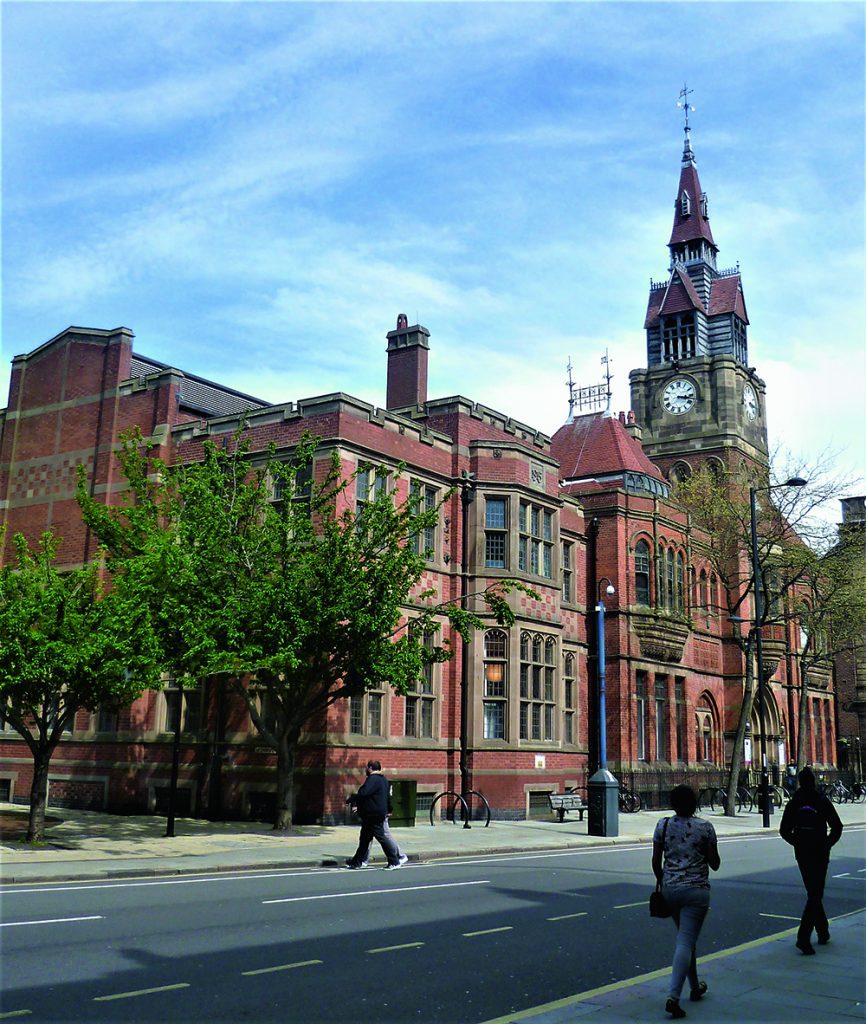
The Wardwick is, even today, one of Derby’s most elegant streets; in Georgian times it was the bees’ knees as a place to live, despite having Markeaton Brook flowing along the back gardens of the houses on the north side and the Odd Brook as a meandering feature in the pleasure grounds of those on the south. Originally a pre-Norman settlement, separate from Derby, Wardwick, with its parish church dedicated to the Mercian Princess, Werburgh, was absorbed by its bigger neighbour after the Conquest, but the name survived in the street, which ran from St. James’s Bridge westward to join the main road to Ashbourne, where now is Ford Street. The south side has survived tolerably well, although the pitching of Becket Steet, resulted in the loss of two thirds of the Jacobean House, but the north side suffered more ‘improvement’, with the Mechanics’ Institute being built on the site of a town house and a jumble of cottages, in 1836, the Museum replacing the impressive town residence built for the Locketts of Clonterbrook , Swettenham, Cheshire, in 1879, and its extension plus road widening put paid to Dr. Francis Fox’s house in 1913. The house built for the Lockett family boasted a facade less than seven bays wide, three full storeys high and the three bay centrepiece broke forward about a foot and contained the porticoed entrance, reached up steps to a perron embellished by iron railings, probably by Benjamin Yates, Robert Bakewell’s foreman and successor. It was entirely of brick, very severe, with a banded parapet and gauged brick lintels over the windows. A single storey Regency brick bow was later added to the west (garden) front in the 1810/1820 period. However, the only known picture of it, by S. H. Parkins of Derby, was done retrospectively, so we cannot fully rely on it as a true rendering of the original. One is inclined to suspect that it was a lot better proportioned and may also have included more detailing; one suspects a first-floor sill band might have been included, for instance. The house was built for William Merrill Lockett (1732-1777) in 1751, on the legacy left by his father, William, an opulent parson, who had long been incumbent of the combined parishes of St. Werburgh and St. Michael, Derby, as well as serving as perpetual curate of Osmaston-by-Derby. He was the second son of Jeffery Lockett of Clonterbrook, Swettenham, Cheshire, a house built in 1697, sold by the parson’s cousin once removed (another William who preferred to live in Knutsford) and re-purchased by the family in 1939. The family had extensive trading and shipping interests in Liverpool. William Merrill Lockett himself went to Derby School and Inner Temple, before setting himself up as an attorney in 1757, and being appointed Town Clerk of Derby in 1765. The plain-ness of the house is typical of the period, and it is not impossible that the architect was a London acquaintance of the young Lockett. The alternative is that it may have come from a London pattern book and have been put up by a Derby builder. Certainly, it is unique in Derby in its austere façade. Unfortunately, Lockett died in 1777, unmarried, and the property devolved upon his cousin twice removed, William Jeffery Lockett (1768-1839), in whose time Stephen Glover described the place as ‘a large and handsome house’. However, W. J. Lockett was only nine when he inherited his cousin’s Derby property, and it is likely that the house was let in the interim. In the event, he took up occupancy there on his marriage in 1794 to Anne, daughter of William Bilbie of Berry Hill Hall, Mansfield, whose mother was an heiress of a member of the Barber family of Greasley; Anne Lockett’s bother was indeed another lawyer, and it may be that he occupied the house for a while. Prior to being culverted to create The Strand in 1870 (at the expense of opulent railway contractor Sir Abraham Woodiwiss) the Markeaton Brook, running along the northern boundary of the property, tended to overflow when it backed up, due to the Derwent, into which it flows, being in spate. The Revd. Thomas Mozley – brother-in-law to Cardinal Newman – knew Lockett’s House well, writing in around 1825: The gas came in 1820, sponsored by William Strutt. Thomas Mozley described W J Lockett as ‘Copley’s friend’, here referring to the Anglo-Irish but American born artist, John Singleton Copley (1738-1815), who came to England in 1774 and never returned to his native land. The friendship’s origin is difficult to disentangle, but it is said that Copley and his wife were frequent visitors to the house, and that Lockett stood by him during his least, lean years, during the French wars. Indeed, Lockett’s influence may have been seminal in inspiring their son John (later 1st Lord Lyndhurst, thrice Lord Chancellor) to take up law. There must be a portrait of Lockett by Copley (whose portraits are highly rated over his historical scenes) and it may be it is with the family still, in Cheshire. The only surprise is that there are not more Derby or Derbyshire people amongst his known commissions, but maybe his visits were to escape the tyrany of his easel. Lockett became a member of the Derby Philosophical Society at about the time that Copley died, where he was befriended by William Strutt. He served on the Derby bench and, on his death in 1839 – the year of the first great exhibition of the arts and sciences in the new Mechanics’ Institute next door – the house passed to his only child, William, then forty-two and his father’s partner in his legal practice, which he continued until his own death, unmarried, in 1848. Following the success of the exhibition of 1839, those behind it, including William Strutt’s son Edward (later 1st Lord Belper), Douglas Fox (whose family lived next door to the Locketts) and other members of the Derby Philosophical Society had gathered together a